🏛️ Introduction to Ashgabat's Architectural Phenomenon
Ashgabat, the capital of Turkmenistan, is unlike any other city on the planet. Rising amid the sand dunes of the Karakum Desert and the foothills of the Kopet Dag, it dazzles with the brilliance of Italian white marble, gilded domes, and wide, remarkably quiet avenues. In 2013, the city was officially recognized by Guinness World Records as having the highest concentration of white marble buildings in the world: at that time, within an area of just 22 square kilometers, there were 543 new buildings clad in over 4.5 million square meters of pristine white marble. Since then, those numbers have only grown.
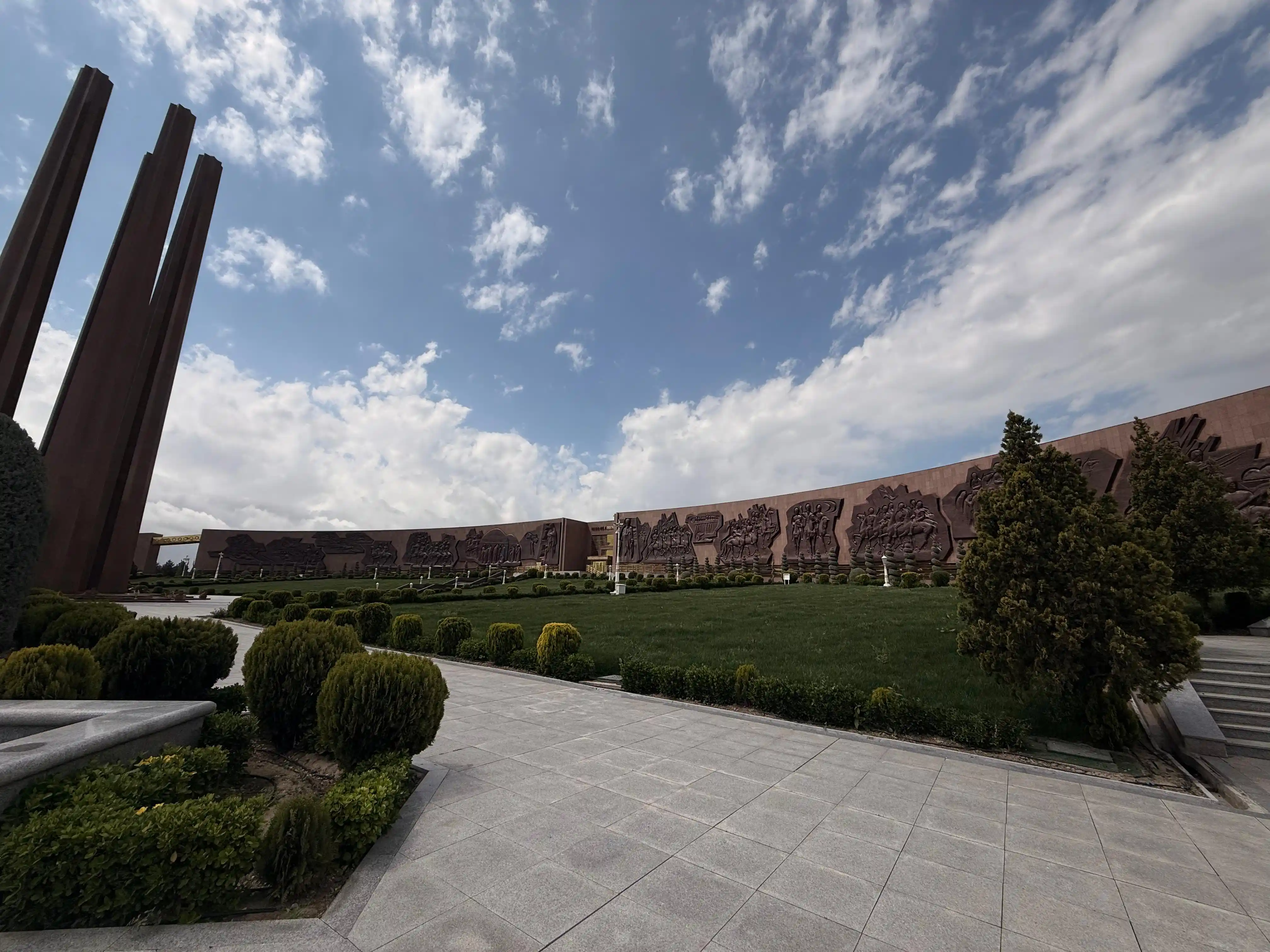
Ashgabat's architecture is the calling card of modern Turkmenistan. Here, monumental Soviet Empire style and classical modernism are interwoven with futuristic high-tech and deep national traditions. Every major structure is symbolic: the building shapes mirror national carpet patterns (göls), nomadic tents, the eight-pointed Star of Oguz Khan, and books. To fully appreciate this urban planning scale, it is well worth embarking on a well-thought-out walking tour. For more context and history of the city, explore our comprehensive guide to the world's white marble capital.
🎨 Style, Materials, and Symbolism: How Ashgabat's Urbanism Works
To understand how this unique ashgabat architecture was shaped, one must look at three key elements: material, geometry, and lighting.
| Style Element | Description and Function |
|---|---|
| 🏛️ Snow-White Marble | Highest-quality Thassos and Carrara marble from Greece and Italy is used. It not only gives the city a majestic appearance, but also effectively reflects the scorching sun rays, reducing heat buildup in buildings. |
| ⭐️ Star of Oguz Khan | This ancient Turkmen eight-pointed symbol is ubiquitous: in building layouts, fountain designs, decorative grilles, windows, and lampposts. |
| 🌟 Gold and Azure | The domes of government residences, mosques, and memorials are covered in gold leaf and gleaming smalt mosaic, creating a striking contrast with the white stone. |
| 📐 Scale and Symmetry | Buildings are designed along classical proportions: wide esplanades, expansive park areas with fountains, and strictly geometric, meticulously balanced facades. |
If you want to experience this architecture as part of a comprehensive journey across the country, an excellent choice is the 2-day circular tour of Turkmenistan, combining an introduction to the capital with excursions to out-of-town highlights.
🚶♂️ The Main Walking Route: Through the Center of the White Marble City
Although Ashgabat is a city of impressive distances, its central government and cultural axis is ideally suited for an enriching walking tour. The route is designed for roughly 4–5 hours of moderate-paced walking, with stops to rest and explore key sites.
| Route Stop | Main Sights and Architectural Features |
|---|---|
| 1. Government Quarter | Independence Square, Oguzkhan Presidential Palace Complex, Ruhyyet Palace, ministries. |
| 2. Independence Park | Independence Monument (118 m) shaped like a yurt, sculpture avenue, the Ruhnama book monument. |
| 3. Arch of Neutrality | A 95-meter structure on three pylons (tripod/taganok) with a golden statue and an observation deck. |
| 4. Constitution Monument and Alem | Constitution Monument (185 m) and the Alem center featuring a record-breaking enclosed Ferris wheel. |
| 5. Bagt Koshgi Wedding Palace | An 11-story cube composed of eight-pointed stars with a globe inside, offering the finest panoramic view. |
1️⃣ Stop 1: Independence Square and the Government Quarter
Begin your walk early in the morning at Independence Square (Garaşsyzlyk meýdany). This is the ceremonial heart of the city, flanked by grand structures. Here stands the official residence of the president—the Oguzkhan Presidential Palace Complex, with its golden domes and snow-white colonnades. Nearby are the State Bank, the Ministry of Justice, and the Ruhyyet Palace (Palace of Spirituality), built to host official state events, summits, and concerts.
ℹ️ Sightseeing Tip: Take note of the impeccably manicured lawns, marble balustrades, and intricately carved lampposts. Strict security regulations apply in this zone, as detailed below.
2️⃣ Stop 2: Independence Park and the Independence Monument
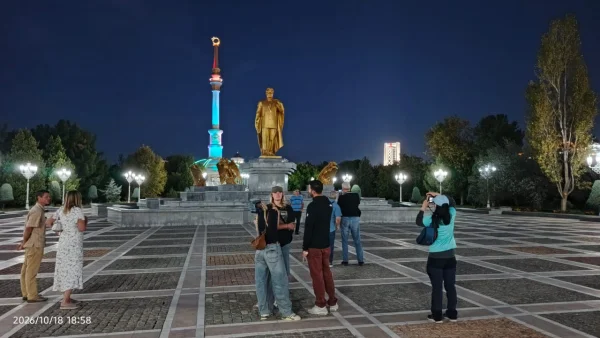
From the government district, head south along Turkmenbashi Avenue toward the southern park zone. Here stands the Independence Monument—a 118-meter white marble column crowned with a gilded crescent and five stars (representing the country's five velayats/provinces). The base of the monument is designed in the shape of a traditional Turkmen yurt (gara öý).
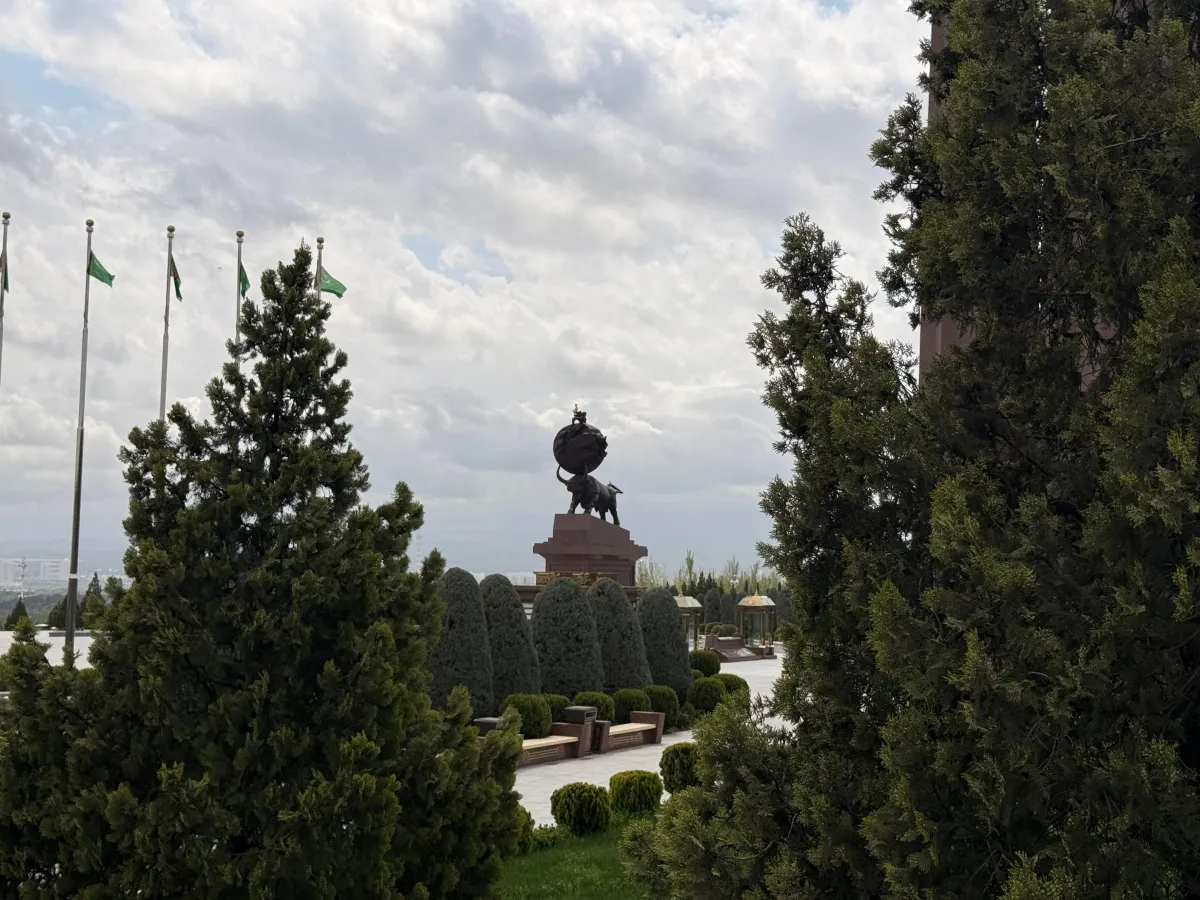
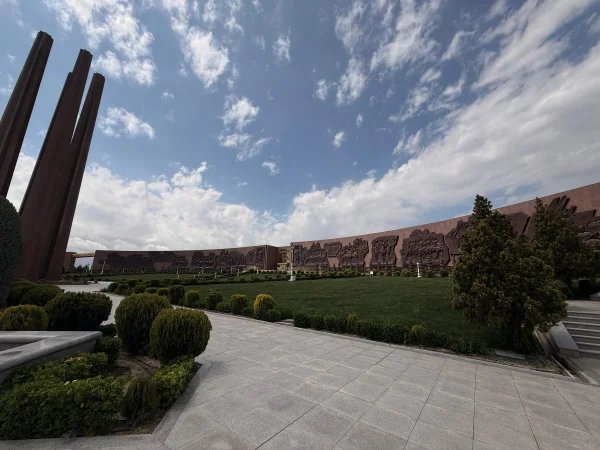
The monument is surrounded by a ceremonial promenade lined with statues of prominent historical figures, poets, and military leaders of Turkmenistan—from Oguz Khan and Alp Arslan to Magtymguly Pyragy. It functions as a true open-air sculpture museum. Directly opposite the monument rests a giant golden monument of the book "Ruhnama".
3️⃣ Stop 3: Arch of Neutrality
The next stop on the itinerary is the Arch of Neutrality (Bitaraplyk binasy), relocated to the southern part of the city along Bitarap Turkmenistan Avenue. This 95-meter three-legged structure symbolizes a traditional Turkmen hearth tripod (taganok).
At the top of the arch stands a 12-meter gilded statue of the first president of Turkmenistan. Panoramic elevators operate inside the pylons, whisking visitors up to observation decks that offer mesmerizing vistas of Ashgabat's white marble avenues and the Kopet Dag mountain range. Many travel itineraries, such as the 4-day Turkmenistan tour visiting Ashgabat, Merv, and Darvaza, include a visit to this viewing platform as an essential highlight.
4️⃣ Stop 4: Constitution Monument and the "Alem" Cultural and Entertainment Center
Continuing along Archabil Avenue, you will reach the Constitution Monument. Standing at 185 meters, it is the country's second-tallest monument, styled as a soaring stele adorned with carpet göls and gold ornamentation. A museum dedicated to the history of Turkmen statehood is housed in its base.
A short distance away sits the Alem Center ("Alem" means "Universe"). In 2012, it entered the Guinness World Records for the world's largest enclosed Ferris wheel. Resembling an intricate stepped pyramid of white marble and glass, crowned with a 17-meter spire and a stylized silver star, it is an outstanding example of modern futuristic architecture.
5️⃣ Stop 5: "Bagt Koshgi" Wedding Palace
The best spot to conclude the daytime portion of your walk is on the elevated terrace near the "Bagt Koshgi" Wedding Palace ("Palace of Happiness"). This 11-story building is shaped like a geometric cube, with each facet formed by the eight-pointed Star of Oguz Khan, enclosing a massive 32-meter sphere displaying a map of Turkmenistan.
The viewing terraces of Bagt Koshgi offer the best vantage point overlooking the southern white marble avenues and the many newly built ministries, designed to resemble objects linked to their functions (such as the Ministry of Education shaped like an open book, or the Ministry of Communications resembling a telephone handset).
🌙 Ashgabat by Night: The Fiery Transformation of Marble
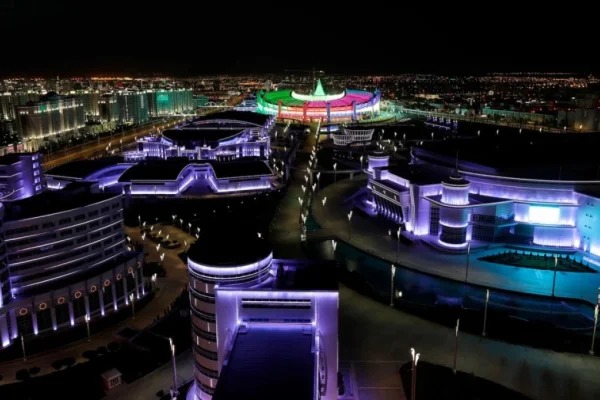
A walking tour of Ashgabat cannot be considered complete without an evening stroll. As darkness falls, the capital undergoes a dramatic transformation. While by day it is an orderly, dazzlingly white city, by night it turns into an extravaganza of lighting design and dynamic illuminations.
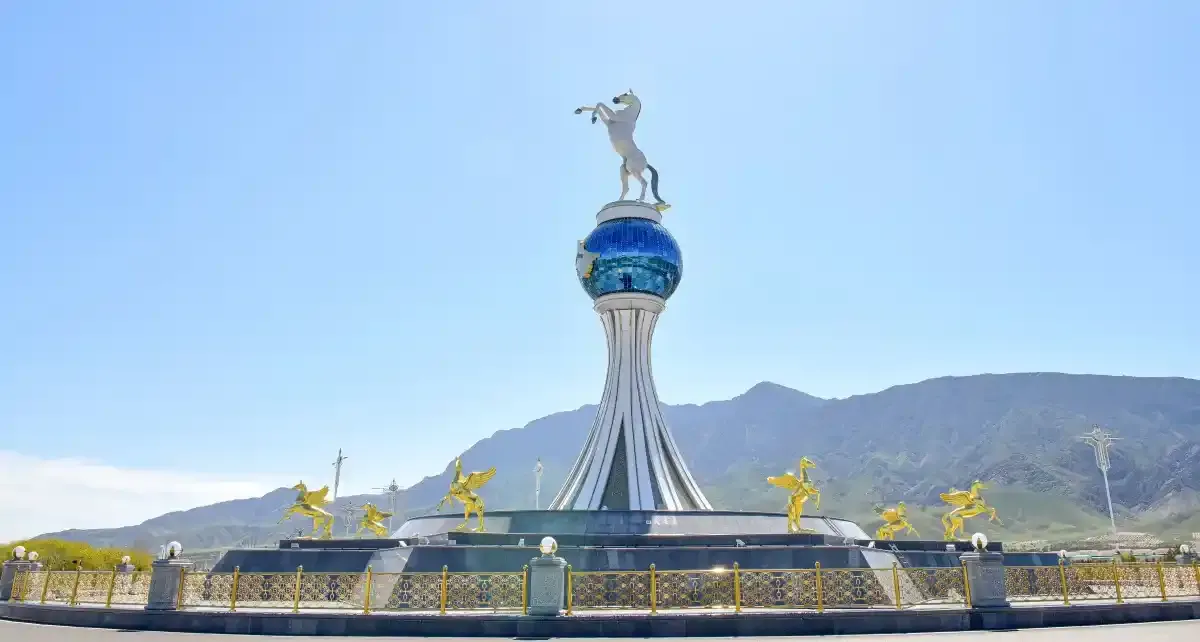
Every major architectural landmark is equipped with a custom illumination system. The facades shimmer in shades of emerald green (Turkmenistan's national color), gold, sapphire, and purple. The Akhal-Teke horses monument, the Alem Ferris wheel, and the TV tower perched atop the Kopet Dag ridge create an illuminated ensemble visible from dozens of kilometers away. To learn more about the capital's evening life and amenities, explore our overview of Ashgabat's top sights.
💡 Practical Tips for a Walking Tour
When planning a walking excursion to explore ashgabat architecture, keep in mind the city's unique climatic and logistical factors.
1️⃣ Seasonality and Time of Day
During the summer (May through September), daytime temperatures in Ashgabat regularly surpass +40 °C (+104 °F). During these months, daytime walking tours can be extremely taxing. The best seasons for walking are spring (March–April) and autumn (September–November), when the weather is mild and sunny. In summer, walking is strongly recommended only before 10:00 AM or after 6:00 PM.
2️⃣ Photography and Videography Rules
Turkmenistan takes security matters very seriously. While walking your route, be sure to follow these guidelines:
| Site Category | Photo and Video Rules |
|---|---|
| 🏛️ Government Sites | It is strictly prohibited to photograph the Oguzkhan Presidential Palace, Ministry of National Security and Ministry of Internal Affairs buildings, military sentries, and police checkpoints. Any sign showing a camera with a slash, or a verbal remark from security staff, requires an immediate stop to filming. |
| 🗽 Monuments and Parks | Civic architecture, monuments (Arch of Neutrality, Independence Monument, Alem, Bagt Koshgi), public fountains, and residential districts can be photographed freely. |
| 🛸 Drone Filming | Operating drones or quadcopters without special governmental authorization is strictly prohibited. |
3️⃣ Gear and Essentials
- 👟 Footwear: Wear comfortable, flat walking shoes; distances between major sights can range from 1 to 3 kilometers.
- 🕶️ Sun Protection: Bring sunglasses (white marble creates intense glare in direct sunlight) and a hat.
- 💧 Carry Along: Always keep bottled water and your identification document (passport) with you.
If you are visiting Turkmenistan on transit or as part of a shorter getaway, you can easily pair an architectural tour of Ashgabat with further travels along the Silk Road. Consider our 2-day express transit tour from Ashgabat to Bukhara or our rich 5-day tour from Ashgabat to Khiva via Darvaza.
🕌 Architectural Treasures Beyond the City Center
In addition to the modern monuments of the southern districts, Ashgabat's architectural landscape boasts impressive sacred landmarks that merit a dedicated visit.
🕌 Ertugrul Gazi Mosque
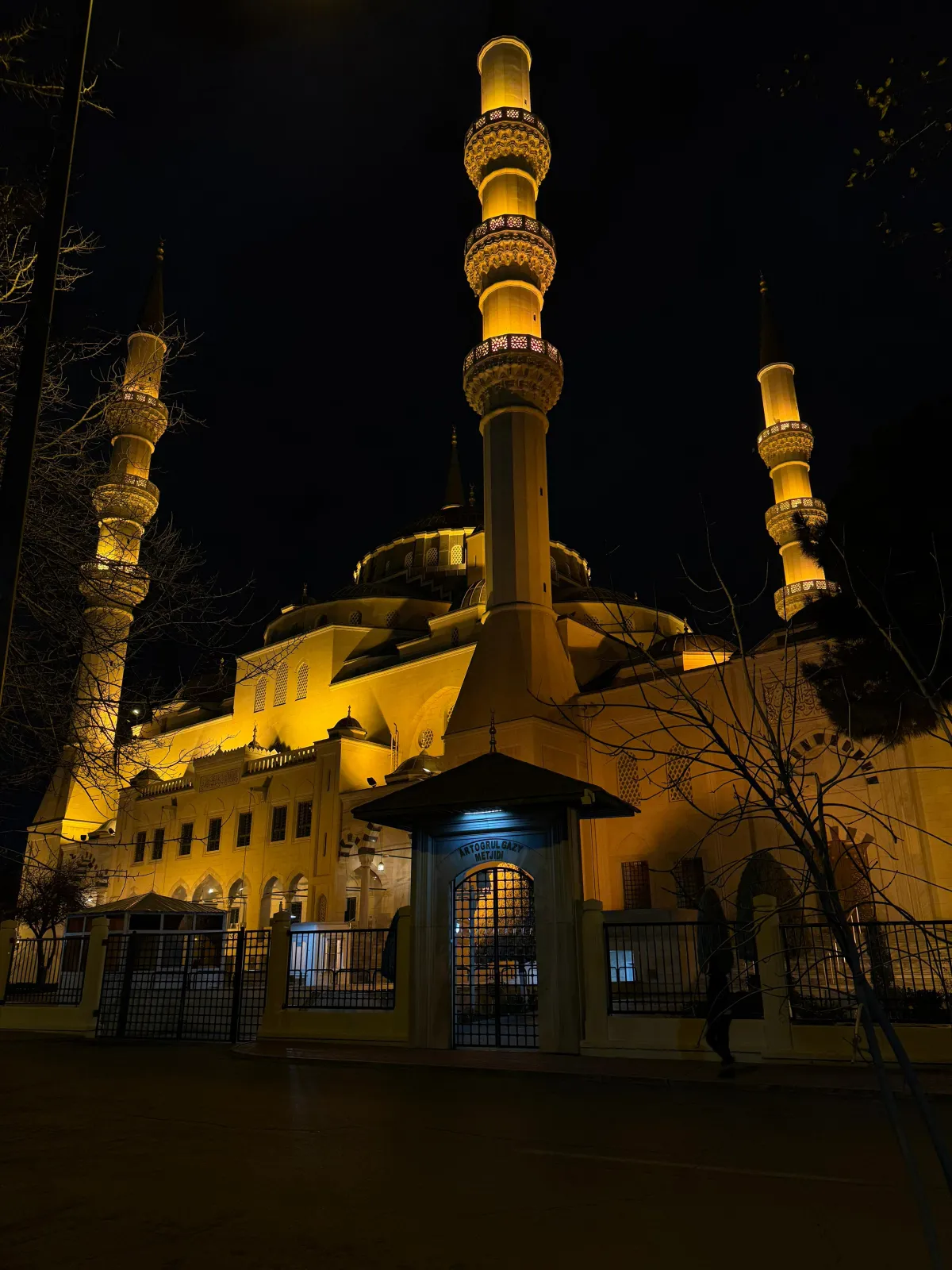
Built in the Turkish Ottoman style in the late 20th century, the Ertugrul Gazi Mosque evokes Istanbul's famed Blue Mosque. It features four elegant minarets and an opulent interior filled with stained glass, handcrafted tiles, and detailed calligraphy. It blends seamlessly with the capital's marble setting while adding a classical Islamic charm.
🕌 Turkmenbashi Ruhy Mosque (Gypjak)
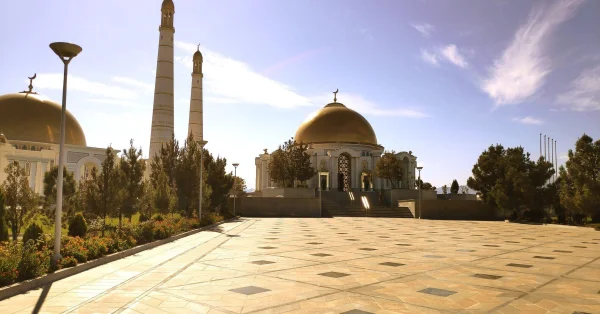
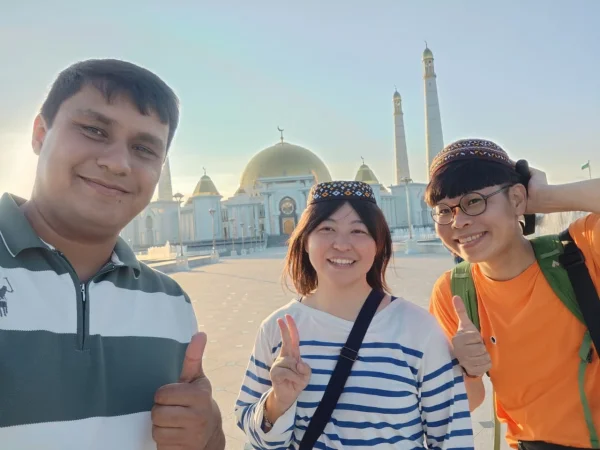
Located roughly 15 kilometers west of central Ashgabat in the village of Gypjak, this is the main mosque of Turkmenistan and the largest single-dome mosque in Central Asia. Constructed from white marble, it can accommodate up to 10,000 worshippers. The mosque is framed by four 91-meter-tall minarets. Its architecture is distinctive for intertwining verses from the Quran with quotes from the "Ruhnama" carved into the marble walls. The family mausoleum of the country's first president sits adjacent to the mosque.
✨ Conclusion: Why Ashgabat's Architecture Deserves Your Attention
Ashgabat's architecture is a singular urban planning experiment unmatched in the modern world. The purity of white marble, ceremonial symmetry, Eastern symbolism, and bold futuristic silhouettes make a walking tour of the Turkmen capital a truly memorable journey.
TmTourism is delighted to assist you in arranging custom or group walking tours of Ashgabat with professional guides, comfortable transportation, and complete visa support assistance. Discover Central Asia's premier white marble wonder with us!