🍚 Turkmen Plov: The Culinary Heart and Soul of Turkmen Culture
In Turkmenistan, plov is much more than just a hearty meal. Locals refer to it with respect and simplicity as “ash” (aş), which literally means “food” or “meal” in Turkmen. This highlights the paramount status of the dish: whenever a festive dastarkhan is set, a steaming cauldron of aromatic plov will undoubtedly take center stage. Authentic turkmen plov accompanies all key moments in life—from weddings and the birth of children (toy-ash) to major national holidays and welcoming esteemed guests.
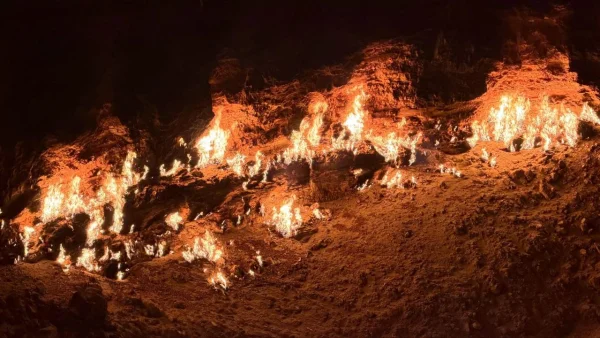
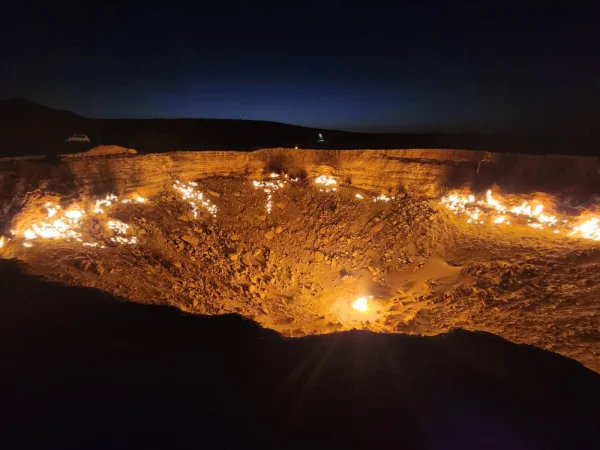
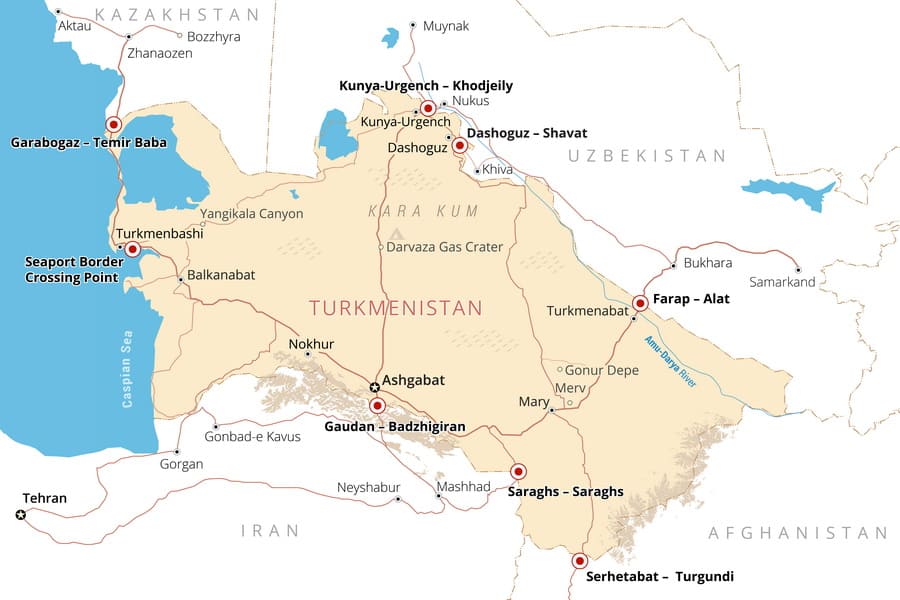
The culinary tradition of making plov in Turkmenistan dates back to the Silk Road era, when merchant caravans traversed the Karakum Desert. The dish brought together the bounty of the oases—premium rice, sweet carrots, fragrant cumin—and the rich heritage of nomadic pastoralism: the finest juicy lamb and rendered tail fat. If you are planning a gastronomic adventure and choosing the 4-day Turkmenistan Tour: Ashgabat, Ancient Merv, and Darvaza Gas Crater, tasting authentic plov will be one of the brightest highlights of your journey.
🌾 How Does Turkmen Plov Differ from Other Central Asian Versions?
Although plov is cooked throughout the entire region, the Turkmen variety has a unique character readily recognized by connoisseurs of Oriental cuisine:
- 🧂 Pure flavor and minimal spices: Unlike Fergana or Samarkand plov, Turkmen master chefs (ashpaz) avoid an excessive variety of spices. Saffron, turmeric, or complex herb blends are rarely used here. The main spices are wild mountain cumin (zira) and whole heads of garlic, which allow the natural flavor of premium meat and sweet carrots to shine through.
- ✨ Bright golden hue: The onions for Turkmen plov are not browned until dark, allowing the rice to retain its bright, sunlit amber color.
- 🥕 Special vegetable cut: Yellow or juicy red carrots are hand-cut into thick, long julienne strips so they do not turn to mush, retaining their shape while lending the dish a tender texture.
- 🫙 Regional variety of cooking fats: In addition to traditional mutton fat (kurdyuk), some regions use pure cottonseed oil, sesame oil, or even clarified camel milk butter, which imparts an exquisite creamy aroma.
🛒 Essential Ingredients for Classic Turkmen Plov
To cook authentic Turkmen plov for 6–8 people in a traditional cast-iron cauldron (kazan), you will need quality fresh ingredients in a balanced 1:1:1 ratio (meat, rice, carrots):
| Ingredient | Quantity |
|---|---|
| 🐑 Lamb (or young beef) | 1 kg (preferably a mix of boneless meat and bone-in cuts—ribs or shank for a rich broth) |
| 🍚 Rice | 1 kg (medium-grain starchy varieties with good liquid absorption, such as local Turkmen rice or Alanga/Lazar types) |
| 🥕 Carrots | 1 kg (preferably sweet, juicy carrots hand-cut into 4–5 mm sticks) |
| 🧅 Onions | 3–4 medium heads (about 400 g), sliced into half-rings |
| 🫒 Fat/Oil | 250–300 ml vegetable oil (or a mixture of 150 g mutton tail fat and 150 ml vegetable oil) |
| 🧄 Garlic | 2–3 whole heads, with outer husks and roots cleaned off |
| 🌿 Spices | 1–1.5 tablespoons cumin seeds (zira), 1 tablespoon dried barberries (optional) |
| 🧂 Salt and water | about 1.2–1.5 liters of boiling water, salt to taste (approx. 1.5–2 tablespoons) |
👨🍳 Step-by-Step Recipe: From Zirvak to Fluffy Rice
1️⃣ Step 1: Preparing the Rice and Ingredients
Thoroughly wash the rice under cool running water at least 5–6 times until the water runs completely clear. This removes excess surface starch and ensures the cooked plov turns out light and fluffy, with every grain distinct. Soak the washed rice in warm, lightly salted water for 30–40 minutes before adding it to the kazan.
2️⃣ Step 2: Heating the Oil and Searing the Meat
Place a heavy cast-iron kazan over high heat and warm it up well. Pour in the oil (or render the mutton tail fat into golden cracklings, then remove them with a slotted spoon). When a light haze appears above the oil, carefully add the meat cut into large pieces (4–5 cm cubes and bones). Sear the meat over high heat until a flavorful, golden-brown crust forms on all sides to seal in the juices.
3️⃣ Step 3: Adding Onions and Carrots
Add the sliced onions to the meat. Sauté, stirring occasionally, until translucent and lightly golden (about 5–7 minutes). Then spread the sliced carrots in an even layer over the top. Do not stir immediately—let the carrots steam for 2–3 minutes, then gently mix them with the meat and onions. Fry for another 10 minutes until the carrots soften and release their sweet juices into the oil.
4️⃣ Step 4: Simmering the Zirvak (Plov Base)
Reduce the heat to medium. Pour boiling water into the kazan so that it covers the ingredients by about 1.5–2 cm. Press whole garlic heads into the center, add half of the cumin (rubbed between your palms to release the aroma), barberries, and salt. The zirvak broth should taste slightly salty, as the rice will absorb a significant amount of salt later. Lower the heat to minimum and simmer the zirvak uncovered for 40–50 minutes. The meat should become tender and the broth clear and rich.
5️⃣ Step 5: Adding the Rice and Final Cooking
Remove the garlic onto a separate plate. Drain the soaked rice and gently layer it over the meat and vegetables using a slotted spoon. Do not mix the layers under any circumstances! Turn the heat to maximum so the liquid boils evenly across the entire surface. The water should cover the rice by about 1–1.5 cm (if needed, carefully add boiling water along the rim of the kazan over the slotted spoon).
Once the rice has absorbed all free water from the surface, gently gather it with a slotted spoon from the edges to the center into a neat mound. Return the garlic heads to the center, sprinkle with the remaining cumin, and make 5–6 vertical punctures down to the bottom of the kazan using the handle of a spoon to let steam escape. Reduce the heat to the absolute minimum, cover the kazan tightly with a deep lid (or a plate wrapped in a clean towel), and let it steam for 20–25 minutes.
🗺️ Regional Varieties of Plov in Turkmenistan
Traveling through the country's different provinces (velayats), you will notice that recipes and flavors vary significantly across regions:
- 🏺 Merv and Lebap Ash: In the east of the country, plov is exceptionally juicy and served with large cuts of bone-in lamb. When exploring ancient fortress ruins with our guide on Ancient Merv: A Complete Guide, be sure to stop by local teahouses where plov is cooked in massive cauldrons over saxaul firewood.
- 🏛️ Ashgabat Ceremonial Plov: In the capital, sophisticated variations of the dish are served, often garnished with quail eggs, pomegranate seeds, and thin slices of boiled tongue. You can discover more about the city's gastronomy in our article Ashgabat: A Complete Guide to the World's Most White-Marble Capital. If you have limited time, a great choice is the convenient 2-Day Turkmenistan Circular Tour Starting and Ending in Ashgabat.
- 🐟 Balykly Yanakhly Ash (Caspian Fish Plov): In the coastal areas of Turkmenbashi and Balkanabat, a unique plov made with sturgeon or pike-perch is popular, where the fish is marinated in herbs and simmered in narsharab pomegranate sauce.
- ⛰️ Nokhur Mountain Plov: In the mountain settlements of Kopet Dag, the dish is prepared using fresh spring water, local dried mountain barberries, and wild mountain goat meat. To immerse yourself in this atmosphere, check out the guide Nokhur: A Complete Guide to the Lost World in the Kopet Dag Mountains.
🍽️ Serving Traditions and Dining Etiquette
Serving plov in Turkmenistan is a true ritual of hospitality:
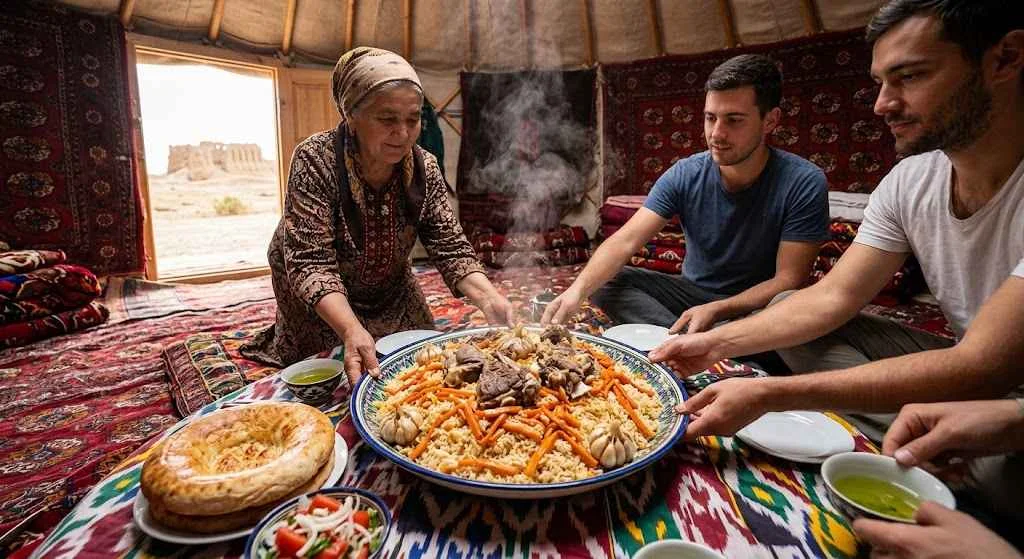
- 🍛 Large communal platter (Ash-tabak): The finished plov is gently mixed or arranged in layers on a large painted porcelain platter: first the fluffy rice, followed by juicy carrots, and crowned with tender sliced meat and garlic.
- 🍅 Essential side dishes: Plov is always served with freshly baked tandoor bread (choregy) and a light "shakarob" salad (thinly sliced sweet tomatoes, white onion, and hot pepper). The acidity of the fresh tomatoes perfectly balances the rich savoriness of the meat dish.
- 🍵 Hot green tea (Gok chay): The meal is paired with bowls of freshly brewed unsweetened green tea, which aids digestion and provides refreshment on hot days.
💡 Practical Tips for Cooking at Home
- 🍳 Use the right cookware: Non-stick pans cannot replace a heavy cast-iron kazan with a spherical bottom, which ensures even heat distribution across the entire surface.
- 💧 Do not rush the rice rinsing process: The water must run crystal clear. This is the key factor preventing the rice from becoming sticky.
- 🔥 Control the cooking temperature: Keep the heat moderate while simmering the zirvak (the broth should only gently ripple), and turn it to high when evaporating the liquid after adding the rice.
- ⏱️ Let the plov rest: After turning off the heat, do not open the lid for at least 15–20 minutes to allow the rice to finish cooking to perfection in the residual steam.