The Art of Hospitality: The Heart of a Turkmen Home
Imagine the aroma of freshly baked bread from a tamdyr, the soft clinking of porcelain bowls filled with hot green tea, and a sincere smile that makes you feel at home, even if you are thousands of kilometers away. In Turkmenistan, hospitality is not just a matter of etiquette. It is a philosophy, an art, and a vital part of the national code, passed down from generation to generation.
Whether you are familiar with Eastern culture or are just beginning to discover it, Turkmen traditions of welcoming guests will leave no one indifferent.
"The guest is more important than the father"
The attitude toward a guest in a Turkmen family is best described by an ancient proverb: "Myhman ataňdan uly" (The guest is older/more important than the father). It is believed that a guest brings grace, joy, and good luck into the home.
The doors of a Turkmen house are always open. If a traveler knocks, they will never be left on the doorstep. The hosts will do everything possible to ensure the person who enters feels like the most important and long-awaited person in their life.
Sachak: The Sacred Tablecloth of Abundance
The central element of any gathering is the sachak (tablecloth). Turkmens treat the sachak with reverence and almost sacred respect. One must not step on it or walk over it.
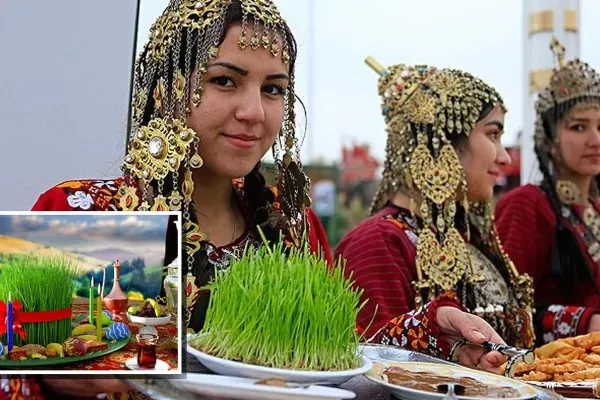
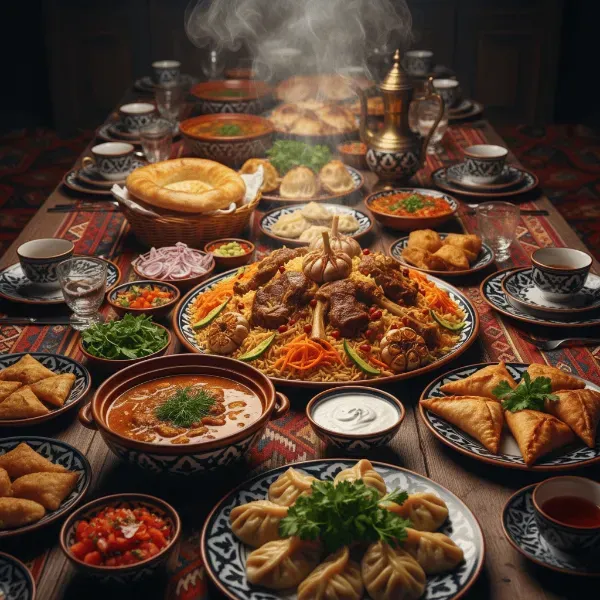
As soon as a guest crosses the threshold, the hosts immediately spread out the sachak and place refreshments on it, even if the person has only dropped by for five minutes. What awaits you on a traditional sachak?
Churek (bread): A symbol of life. It is never cut with a knife—only broken by hand so as not to “wound” the bread.
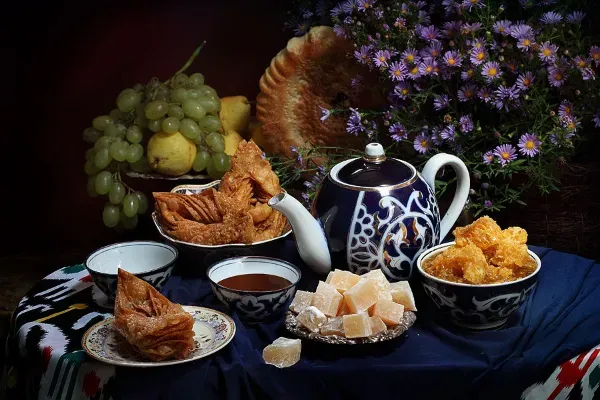
Pishme: A traditional fried dough treat that symbolizes joy.
Dried fruits, nuts, and sweets: A mandatory attribute of the beginning of the meal.
There is an unspoken rule: you cannot ask a guest about the purpose of their visit or discuss business until they have had tea and eaten.
The Secret of the Half-Full Bowl
The tea ceremony in Turkmenistan is a distinct ritual with deep meaning. The host always serves the guest a bowl of hot green tea (gök chai), filling it only to a third or half.
For someone unfamiliar with this tradition, it may seem strange: why not fill it to the brim? But this contains the highest expression of respect. By pouring only a little tea at a time, the host shows their readiness to care for the guest, refilling it with fresh, hot tea again and again. If a bowl were to be filled to the brim, it could be an unspoken signal: "Drink and be on your way."
Tör — The Most Honorable Place
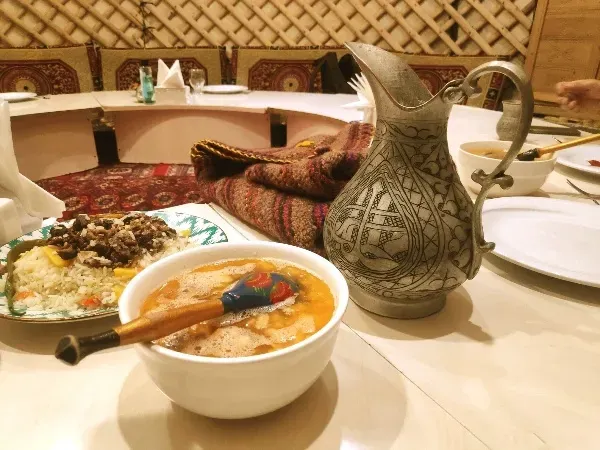
In every Turkmen home or yurt, there is a tör — the place of honor located as far from the entrance as possible. This is where guests are invited to sit. The older and more respected the person, the closer to the center of the tör they are seated.
The host sits closer to the exit to serve the guests and ensure that the sachak is always full and that the tea in the bowls does not go cold.
Taking a Piece of Warmth with You
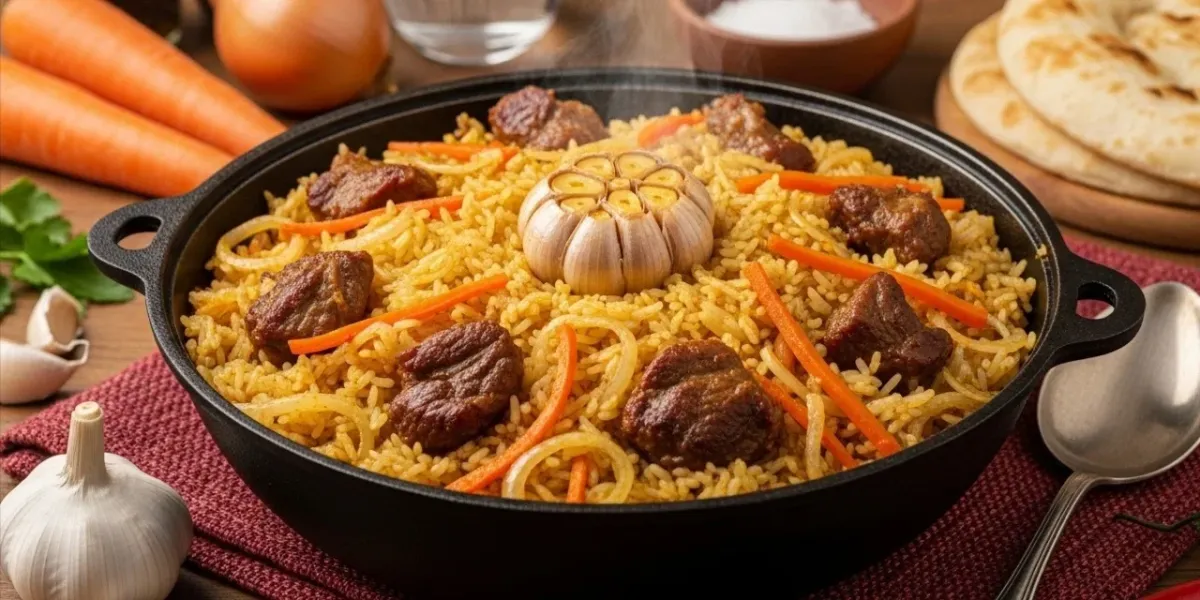
A Turkmen feast is defined by slow conversations, storytelling, and a sincere interest in the guest's life. The main dish, whether it is hearty shurpa, dograma, or the famous Turkmen plov, is served later as the culmination of the meal.
When it comes time to say goodbye, a guest is never let go empty-handed. They will always be given gifts (pay) for the road: sweets, fruits, or fresh bread. This is done so that the warmth and abundance of that home accompany the traveler on their way.
In a rapidly changing modern world, where people increasingly communicate through smartphone screens, Turkmen hospitality remains a true anchor of humanity. It reminds us of how important it is to open the doors of our home and our heart. And if you ever happen to be a guest in a Turkmen family, rest assured: you will arrive as a traveler, but you will leave as a close friend.