📷 Introduction to the Magic of the "Gates of Hell"
The Darvaza gas crater, known worldwide as the "Gates of Hell," is one of the most unique and visually stunning places on the planet. Burning in the middle of the vast Karakum Desert for over fifty years, this man-made phenomenon has become a Mecca for landscape photographers. However, behind the apparent simplicity of photographing a giant bonfire lie many technical challenges: from extreme dynamic range to harsh environmental conditions. In this guide, we will break down in detail how to prepare for darvaza photography and bring home shots that truly capture the grandeur of this place.
For those looking to combine photography with an in-depth exploration of the region's culture, the 4-Day Turkmenistan Tour: Ashgabat, Ancient Merv, and Darvaza Gas Crater is an ideal option. This journey will allow you not only to shoot at the crater but also to capture other iconic landmarks across the country.
🎒 Essential Equipment for Desert Photography
The first rule of shooting at Darvaza is being prepared for dust and sand. The Karakum Desert is constantly in motion, and fine dust can pose a serious threat to your camera sensor. Therefore, try to minimize changing lenses outdoors.
🔭 Lenses: From Wide-Angle to Details
To capture the vast scale of the crater, you will definitely need a wide-angle lens (14–24mm on a full-frame sensor). This will allow you to frame not only the flames themselves, but also the crater's rim and the starry sky above. However, don't forget zoom lenses (e.g., 24–70mm). They can be used to take intriguing abstract shots of individual tongues of flame tearing chunks of rock out of the darkness.
🪜 A Tripod — Your Main Tool
Shooting at Darvaza is 90% nighttime work. A reliable and sturdy tripod is indispensable here. Desert winds can be very strong, so make sure your tripod is heavy enough or has a center-column hook for counterweights. Long exposures are necessary not only for the night sky, but also to "smooth out" the movement of the flames, creating a soft, enveloping glow.
🌇 Daylight and Choosing the Best Time to Shoot
Many travelers arrive at the crater an hour before sunset, which is the best approach. When planning your itinerary, consider the 2-Day Turkmenistan Circular Tour Starting & Ending in Ashgabat, which provides a full overnight stay by the crater in yurts, giving you unlimited time for creativity.
🌅 Golden Hour and Blue Hour
At sunset (golden hour), the light softens, accentuating the texture of the sand dunes around the crater. But the real magic begins during the "blue hour" — the short window after sunset when the sky turns a deep navy blue and the orange glow of the crater begins to dominate the landscape. This is the best time for balanced exposures, capturing details in both the desert shadows and the bright flames.
🌌 Night Photography and the Milky Way
Darvaza is situated in an area with minimal light pollution (apart from the crater itself). This makes it a fantastic location for astrophotography. The combination of the fiery abyss and the Milky Way is a classic shot pursued by professionals. If you are planning a longer trip, the 5-Day Turkmenistan Transit Tour: Ashgabat to Khiva or Nukus via Merv and Darvaza will give you ample time to prepare for this challenging session without rushing.
⚙️ Technical Camera Settings
The main challenge of darvaza photography is contrast. The brightness of the burning gas in the crater's center is thousands of times higher than that of the surrounding night desert. If you expose for the sky, the flames will turn into a blown-out white hotspot. If you expose for the flames, everything else will be pitch black.
| Parameter | Recommendation |
|---|---|
| 🎛️ Shooting Mode | Manual (M) only. Auto modes are useless here. |
| 🔆 ISO | For night landscapes with stars — ISO 1600–3200. If shooting only the crater and looking to preserve flame details — ISO 100–400. |
| ⭕ Aperture | f/2.8 for stars and f/8–f/11 for maximum sharpness across the crater itself. |
| ⏱️ Shutter Speed | To "freeze" the flames — 1/100s or faster. For night landscapes — from 15 to 25 seconds. |
💡 Pro Tip: Use exposure bracketing (HDR). Take 3–5 shots at different shutter speeds and merge them in post-processing. This is the only way to retain detail in both the fire and the starry sky.
✨ Composition Techniques
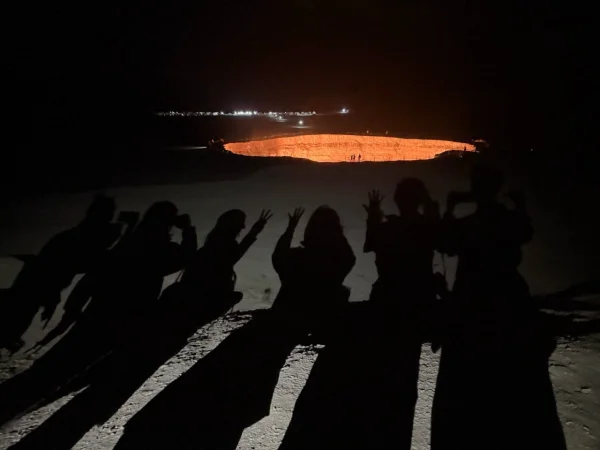
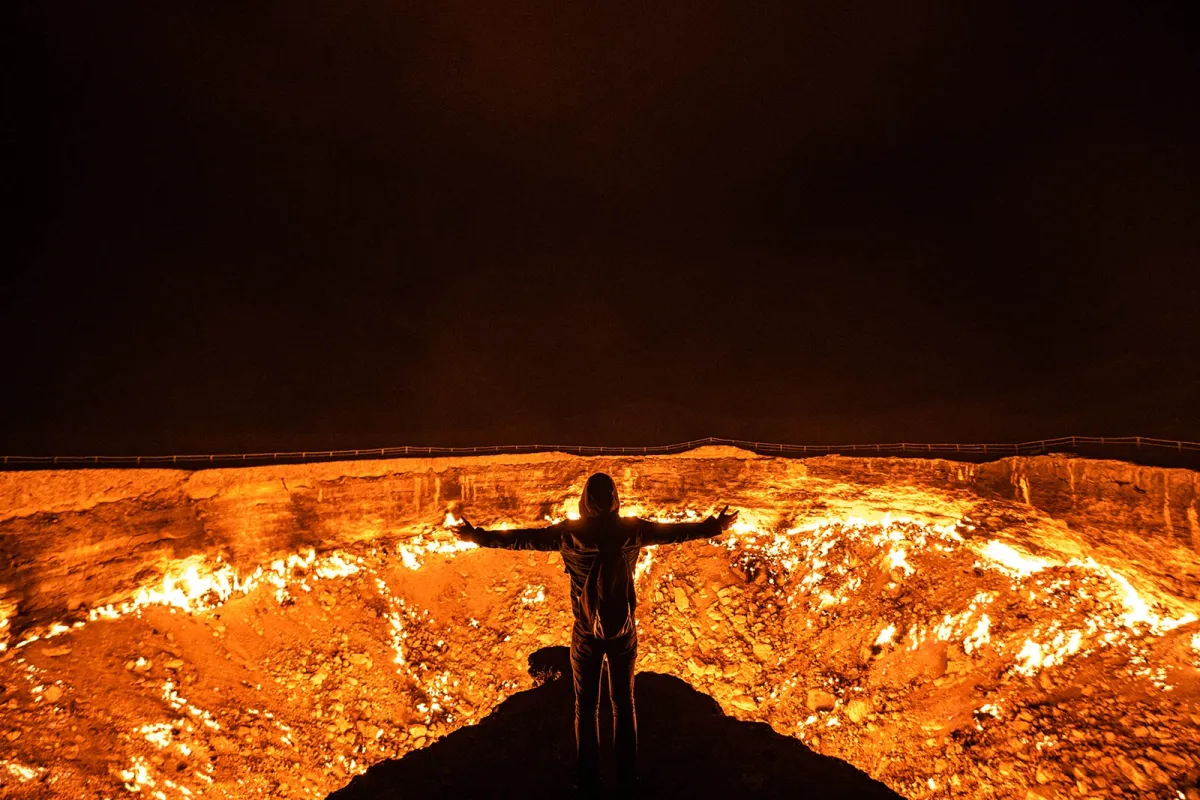
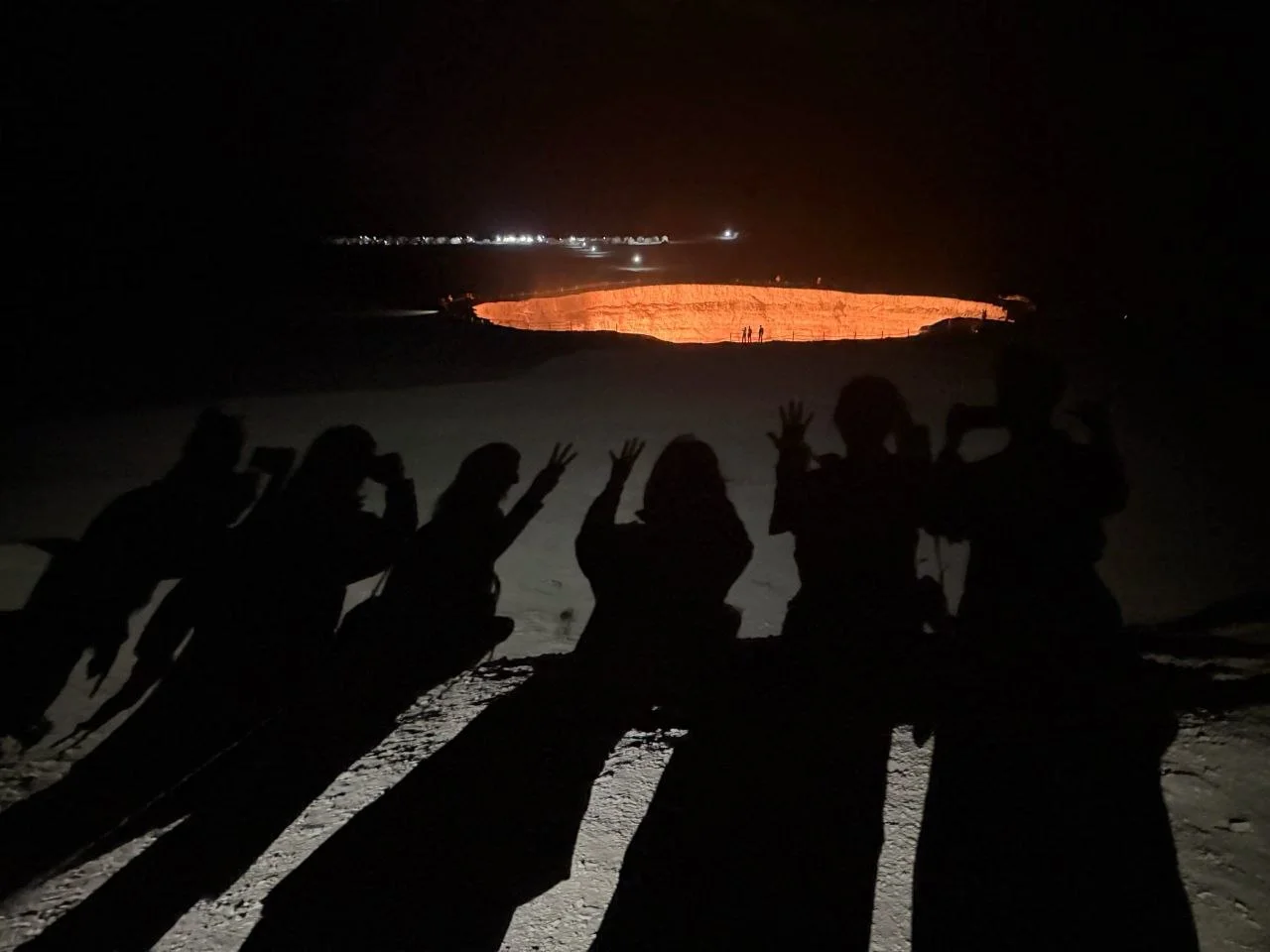
How do you make your Darvaza shot stand out when there are thousands of similar photos online? Try working with the foreground. Incorporating ground cracks, sparse saxaul bushes, or even the shadow cast by your tripod can add depth. Shots featuring human silhouettes against the crater's edge look stunning and help viewers grasp the immense scale of the "Gates of Hell."
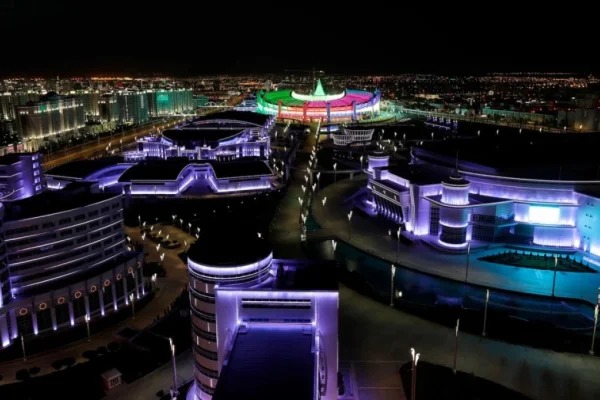
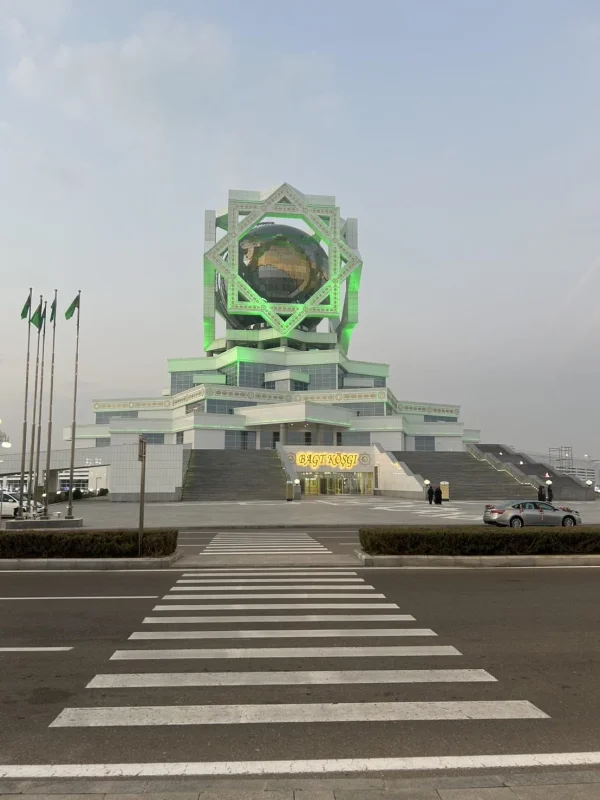
Don't forget that your trip will likely begin in the capital. Be sure to check out Ashgabat: A Complete Guide to the World's Most White-Marble Capital to discover which architectural masterpieces to photograph before heading out into the desert.
⚠️ Photographer Safety and Ethics
⚠️ Darvaza is not only beautiful but also hazardous. The rim of the crater consists of unstable, crumbling rock. Never step too close to the edge, especially carrying a heavy tripod. Wind gusts can be unpredictable, and the intense heat from the crater can damage your lens front coating during prolonged exposure nearby.
Furthermore, be considerate of other travelers. If you use powerful flashlights to "light-paint" the dunes, do it quickly so you don't ruin the long exposures of fellow photographers nearby. If your journey takes you further north, check out our Ancient Merv: A Complete Guide to plan your shoots at historic ruins, which require a completely different lighting approach.
🎞️ Post-Processing Your Shots
Editing in software like Lightroom or Photoshop is critical for Darvaza photos. Pay special attention to white balance. The fire produces very warm, near-orange light, whereas the night sky should remain cool and blue. Color grading (Split Toning) or local masking will help you balance these two contrasting worlds within a single frame.
Also, don't hesitate to pull down the Highlights in the flame area — this recovers the flame textures that are often lost in standard exposures. Boosting micro-contrast (Clarity/Texture) on the sand and rock textures along the crater rim will emphasize the ruggedness of the landscape.
🏁 Conclusion
Photographing Darvaza is a rewarding challenge for those who are patient and well-prepared. This location demands not only quality gear but also a deep understanding of light, fire dynamics, and composition. Whether you are a professional or an enthusiast shooting on a smartphone, the "Gates of Hell" will leave an indelible mark on your portfolio and in your memory. Turkmenistan is a country of contrasts, and Darvaza is its brightest manifestation in every sense of the word. Plan your trip in advance, choose the right tours, and get ready for the Karakum Desert to reveal its secrets under the cover of night.