🔥 What Is the Darvaza Gas Crater: A Phenomenon in the Middle of the Karakum Desert
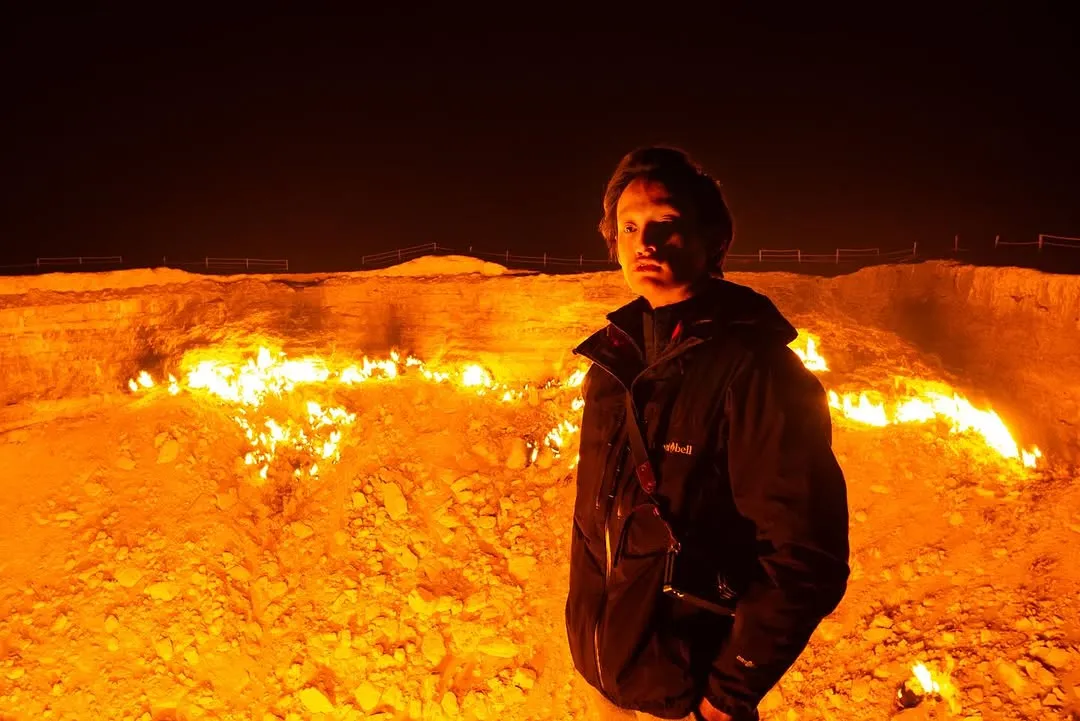
In the midst of the endless golden sands of the Karakum Desert, which covers more than 70% of Turkmenistan's territory, lies one of the most mesmerizing and surreal sights on our planet — the Darvaza gas crater. In global media and among travelers, this place is most often referred to by the poetic and sinister moniker "Gates of Hell," while at the state level in Turkmenistan, it has received a more majestic name — "Shining of Karakum" (Garagum Ýalkymy).
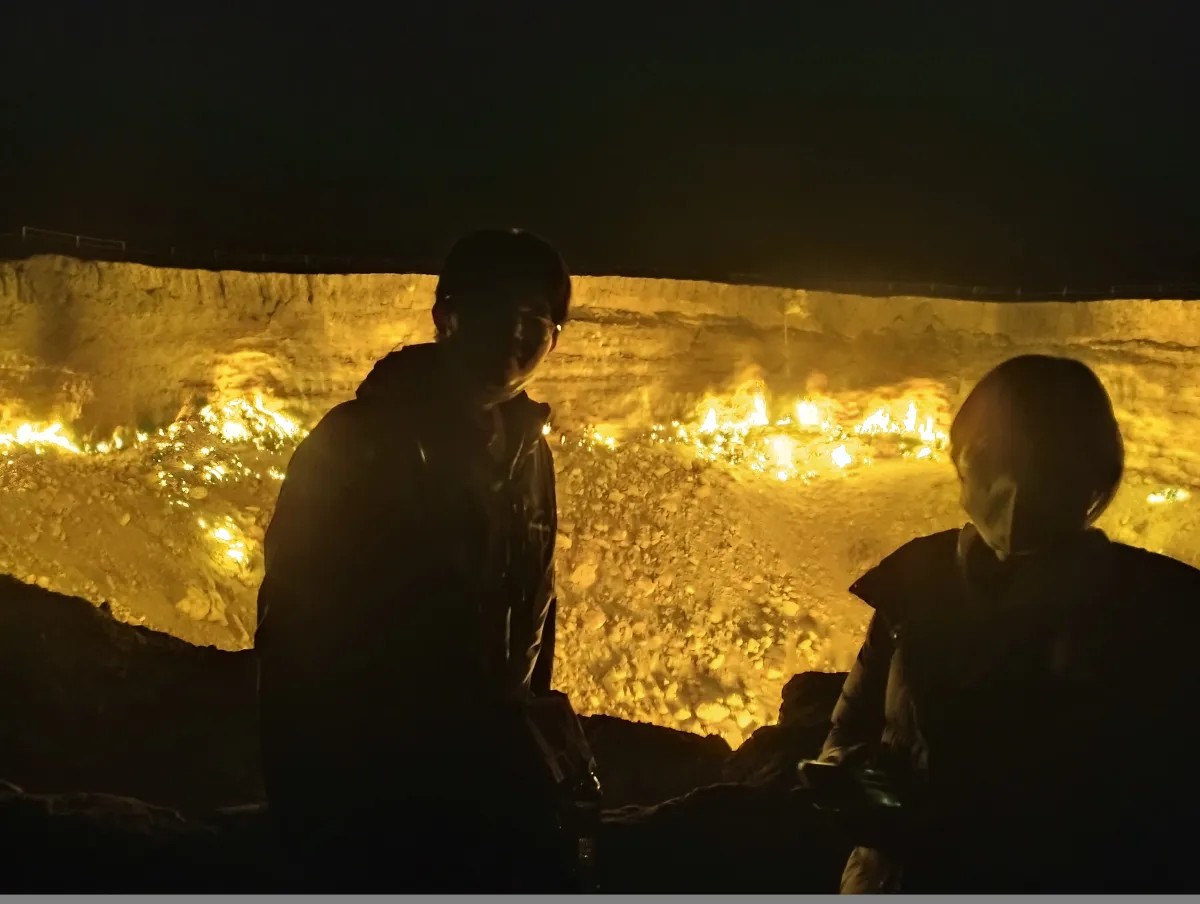
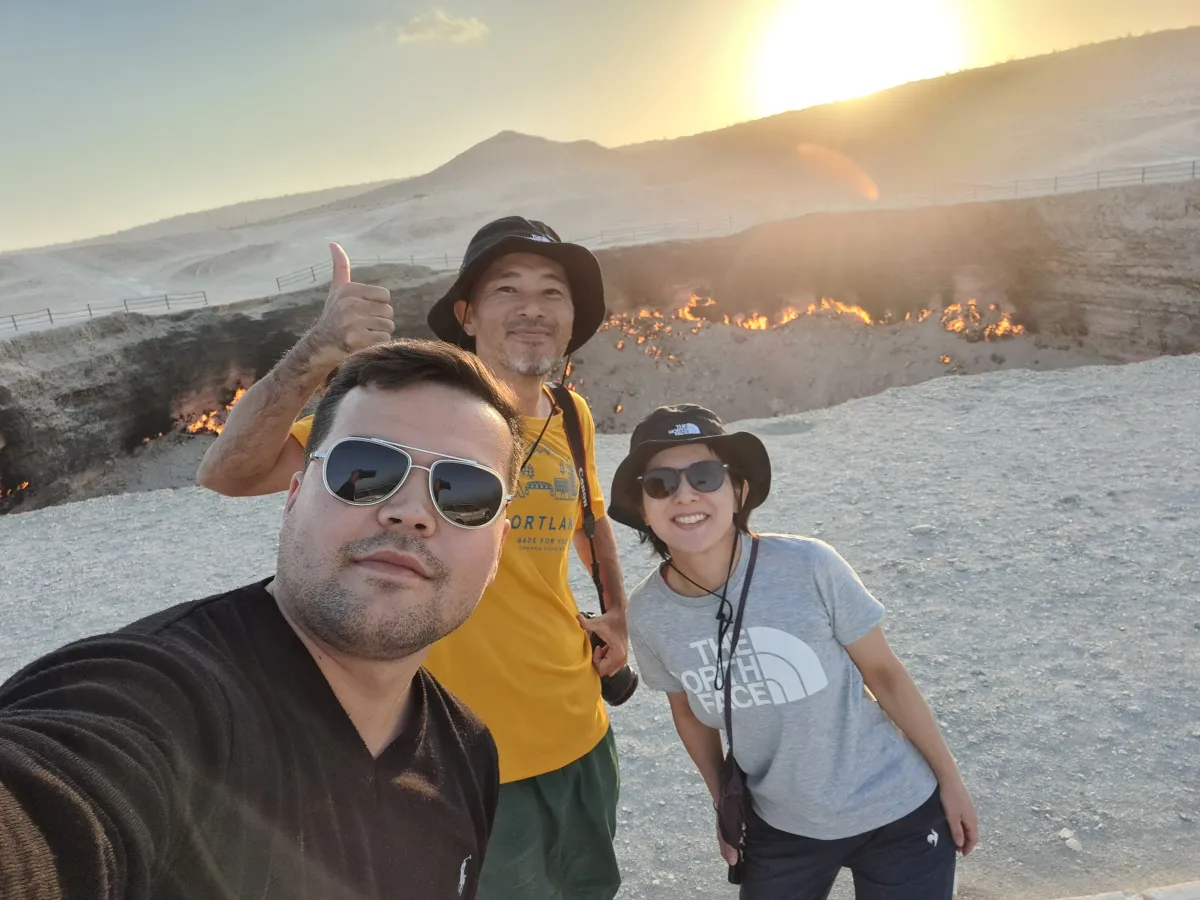
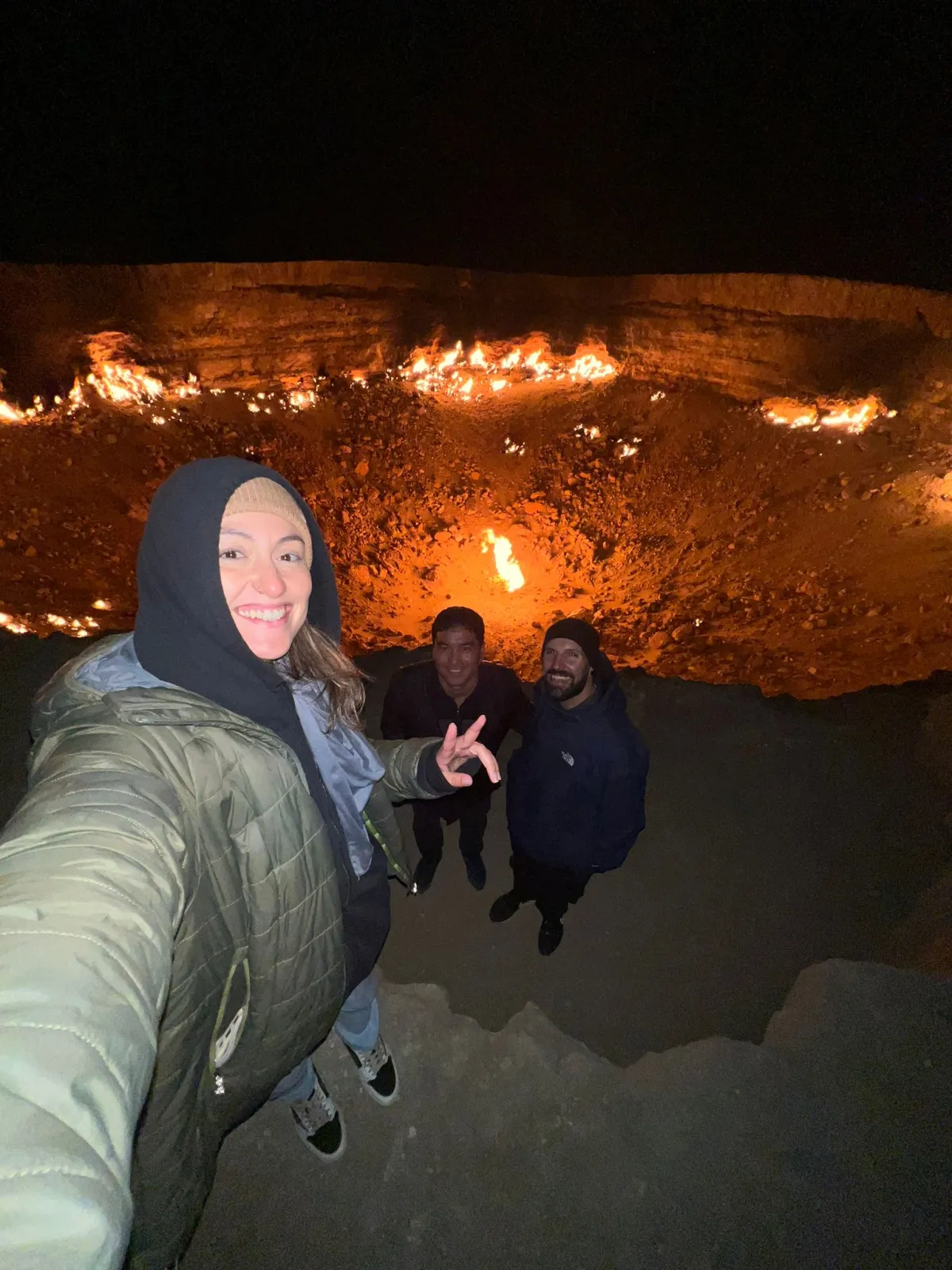
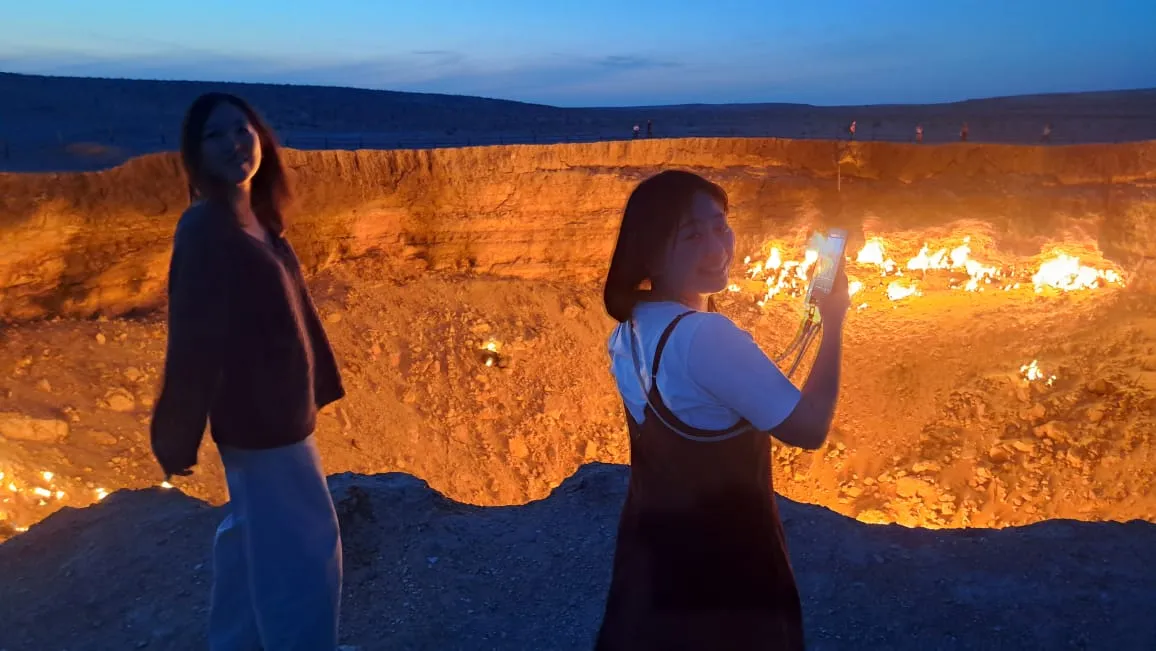
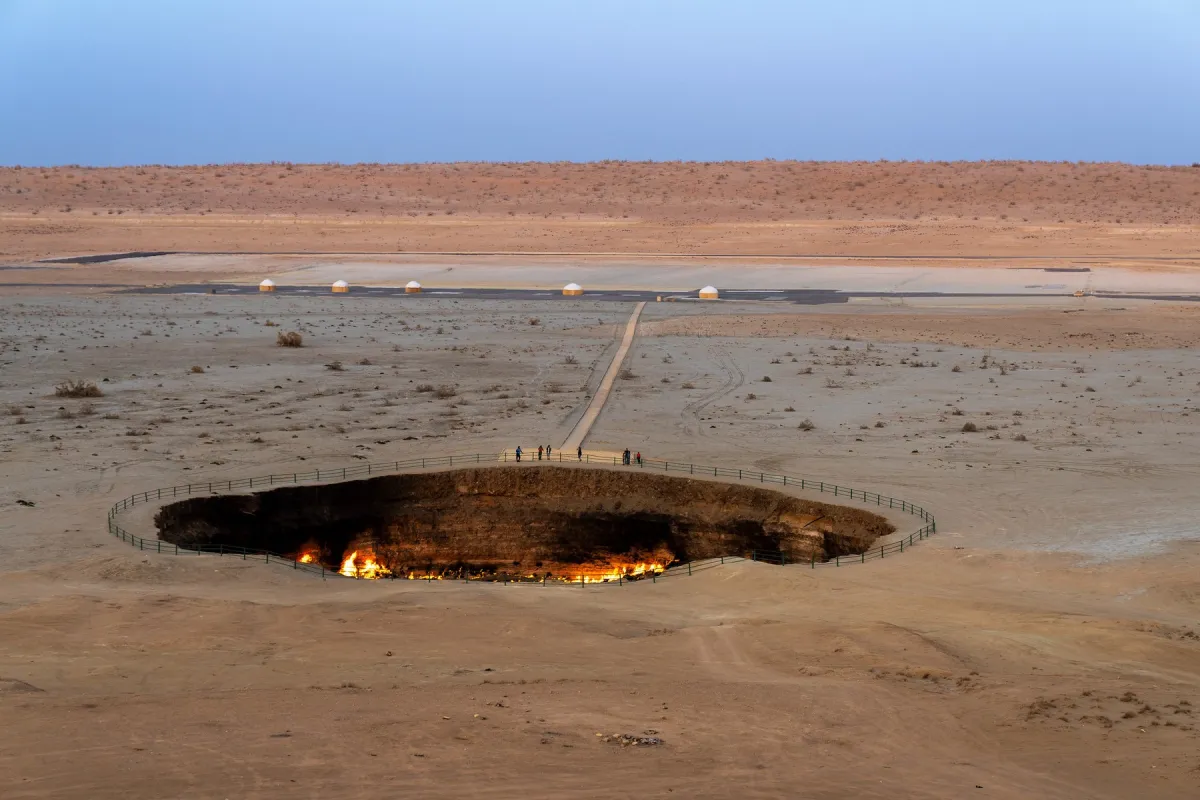
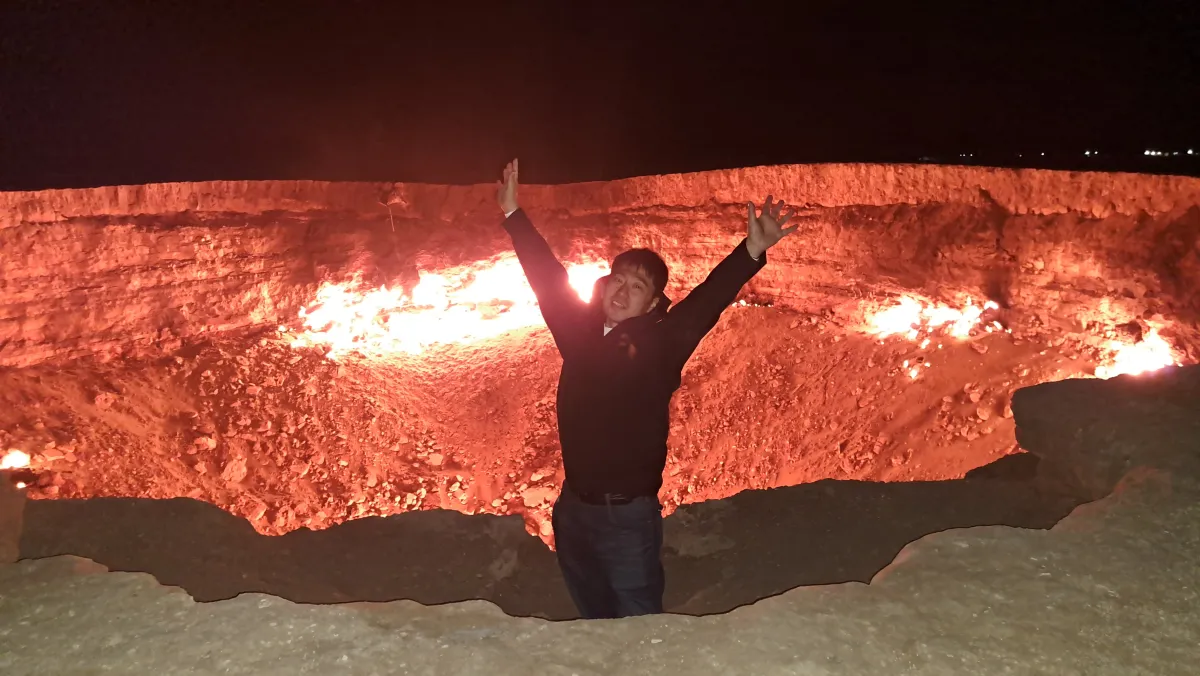
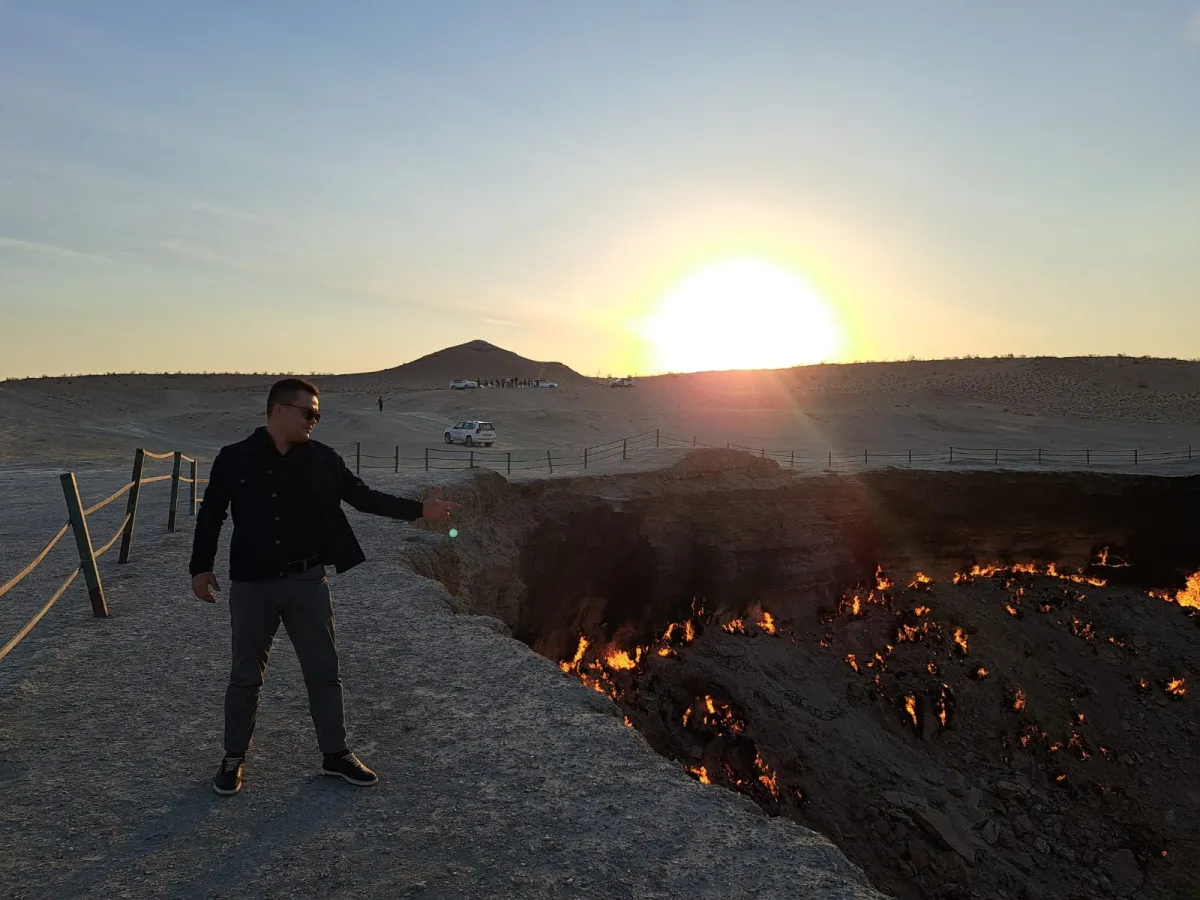
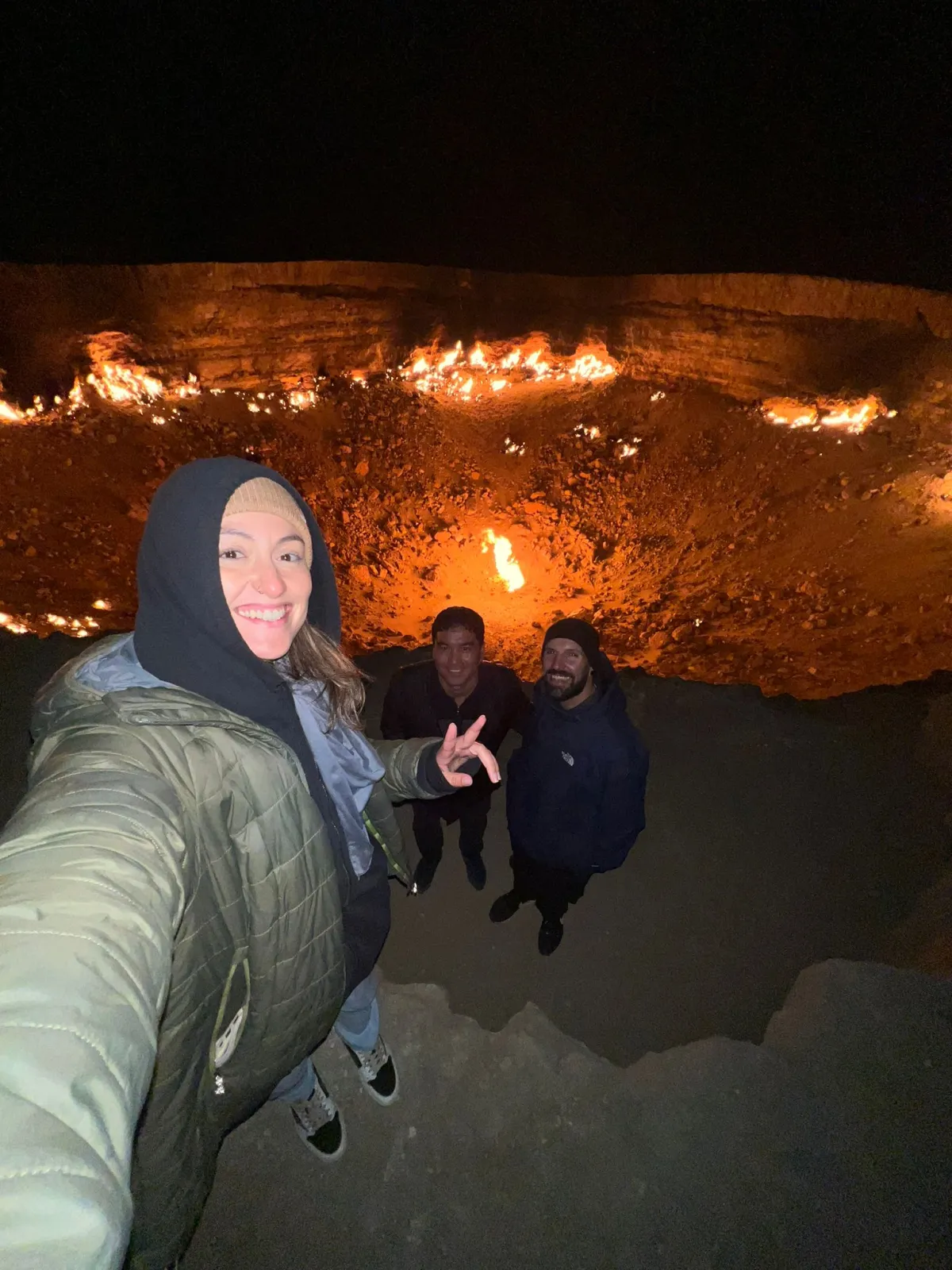
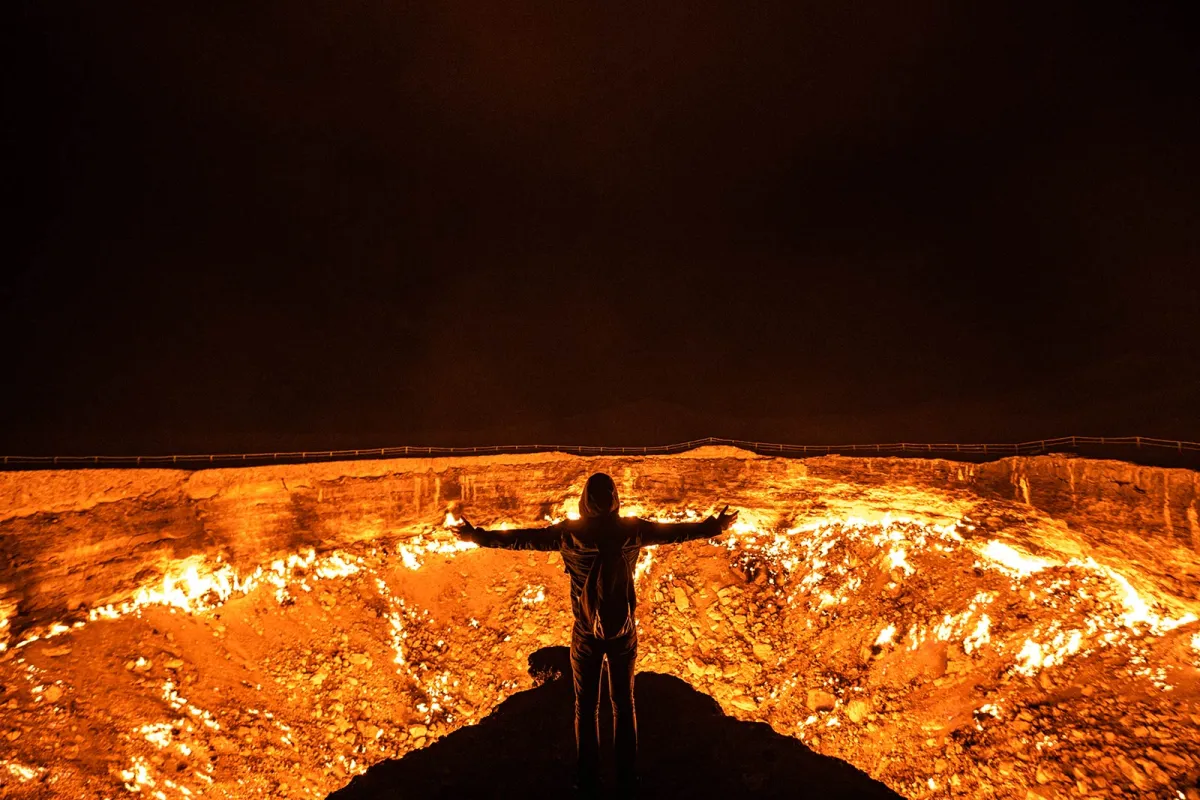
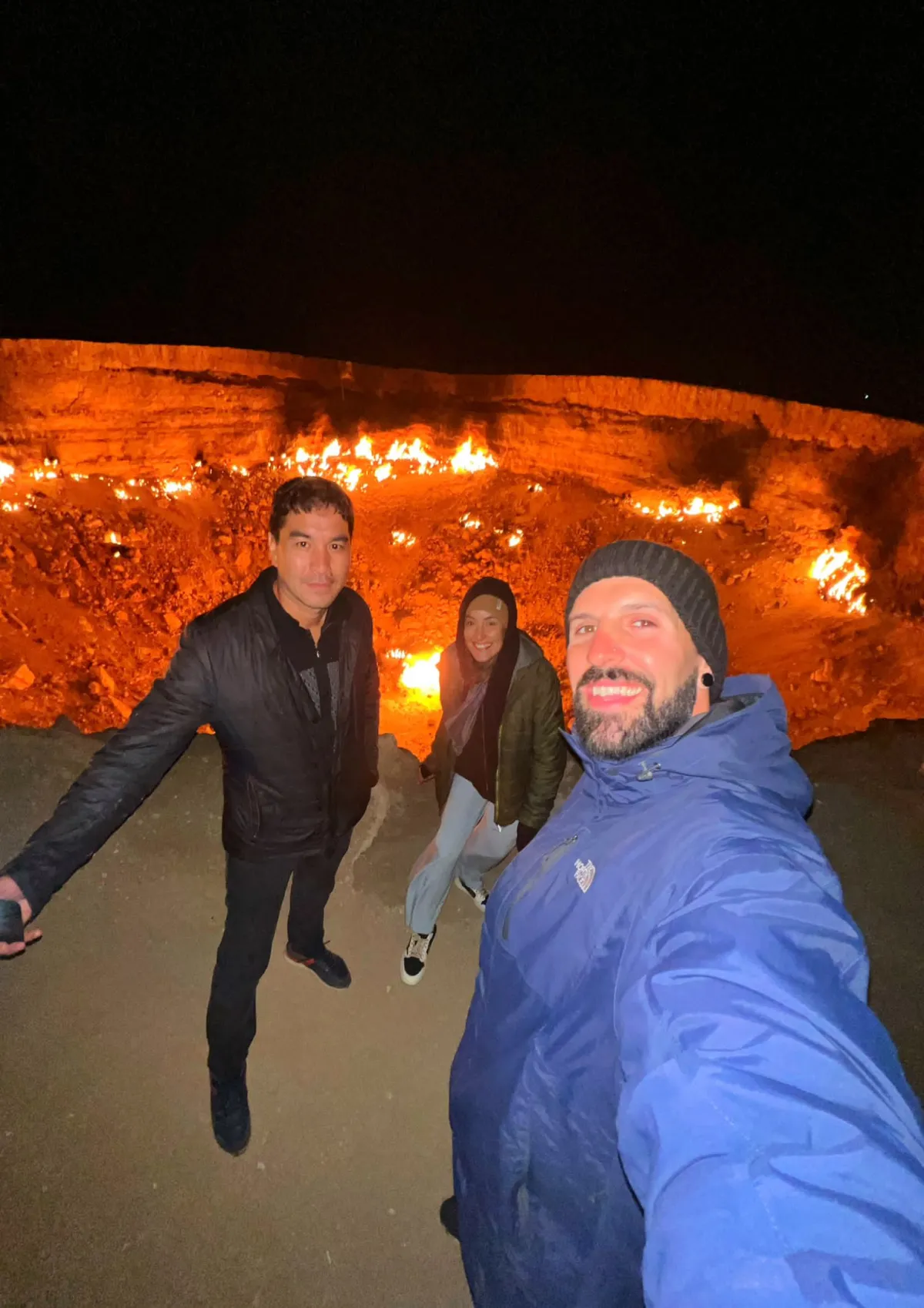
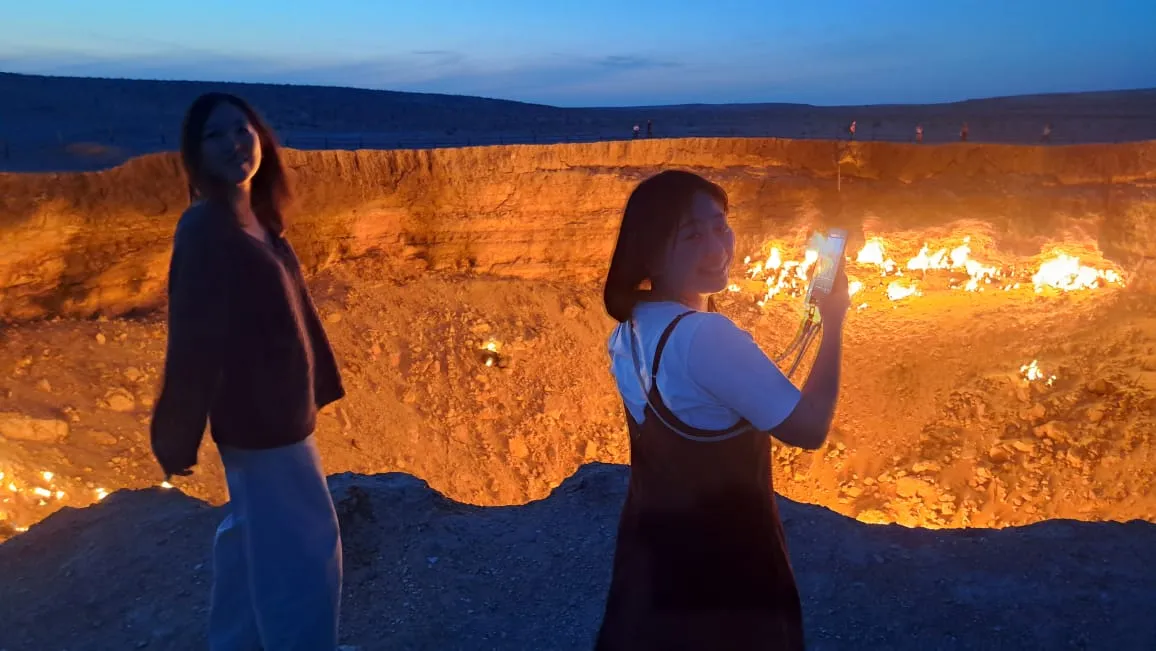
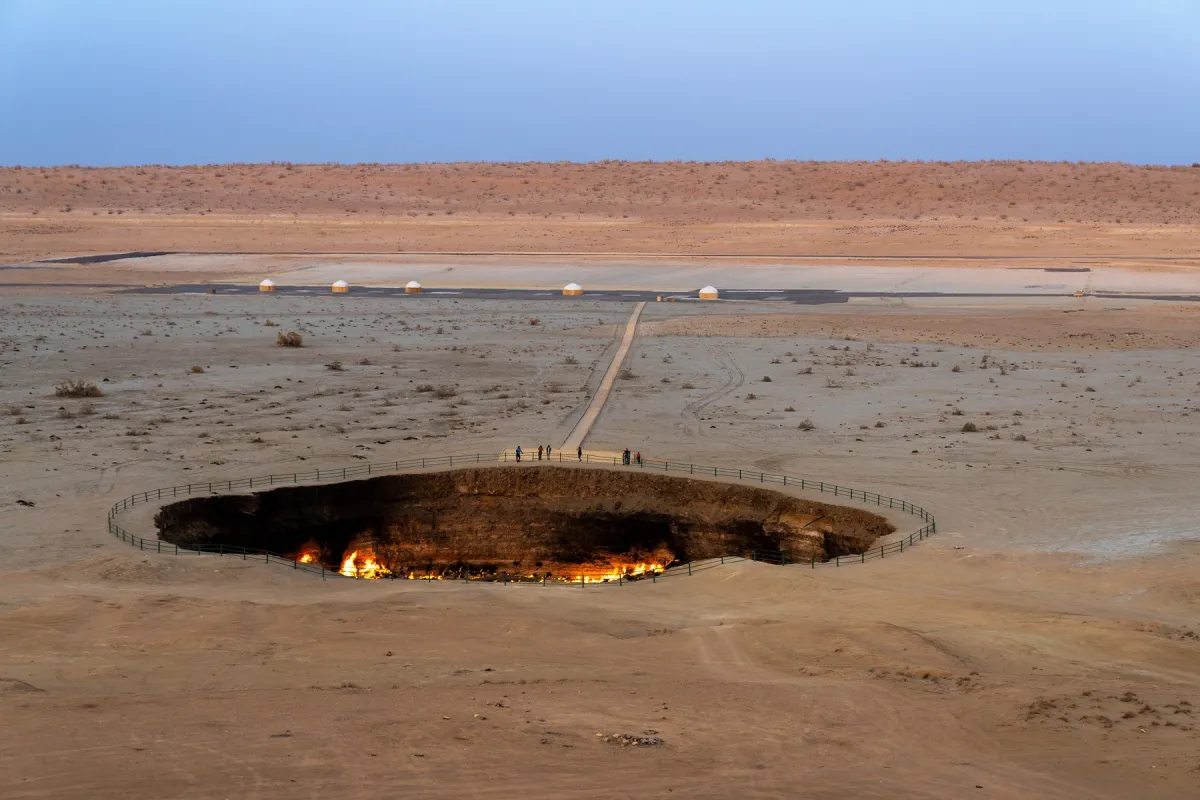
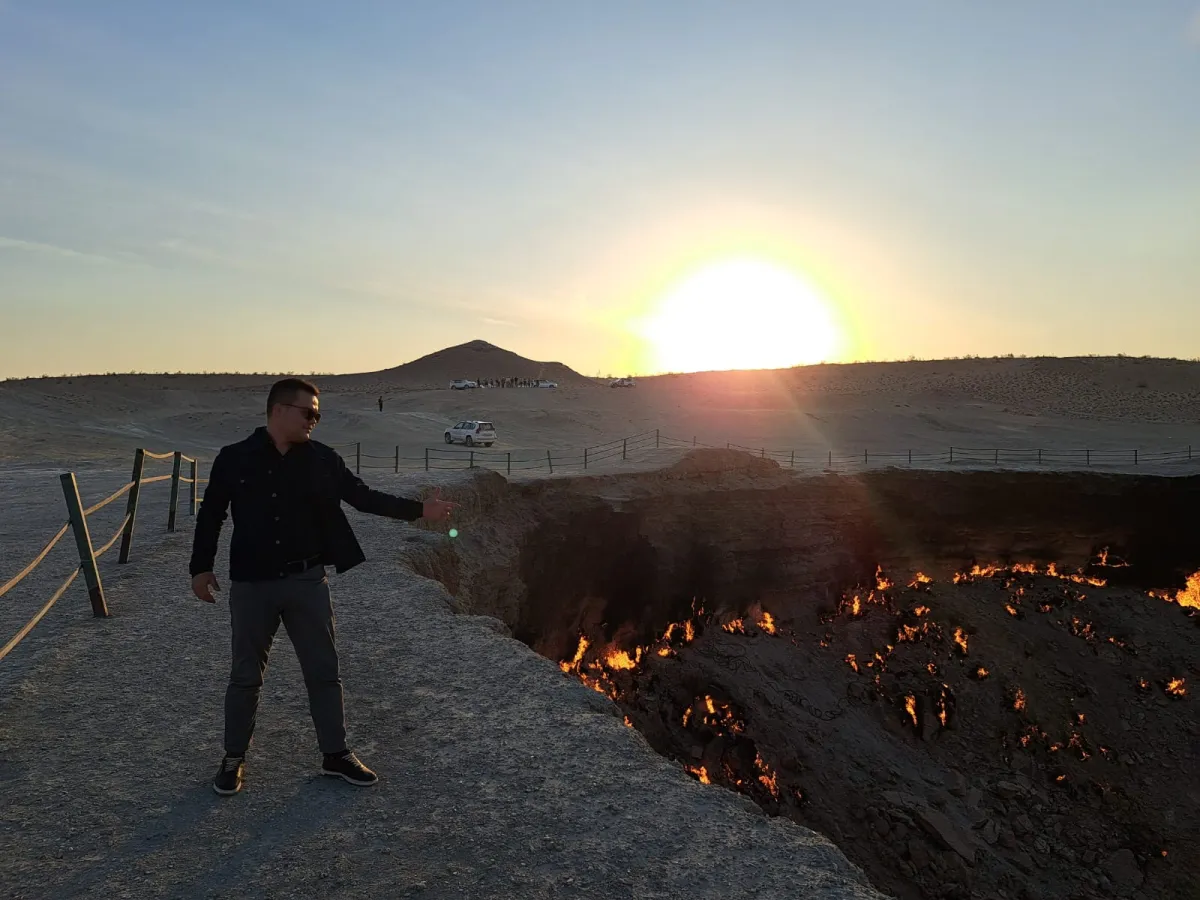
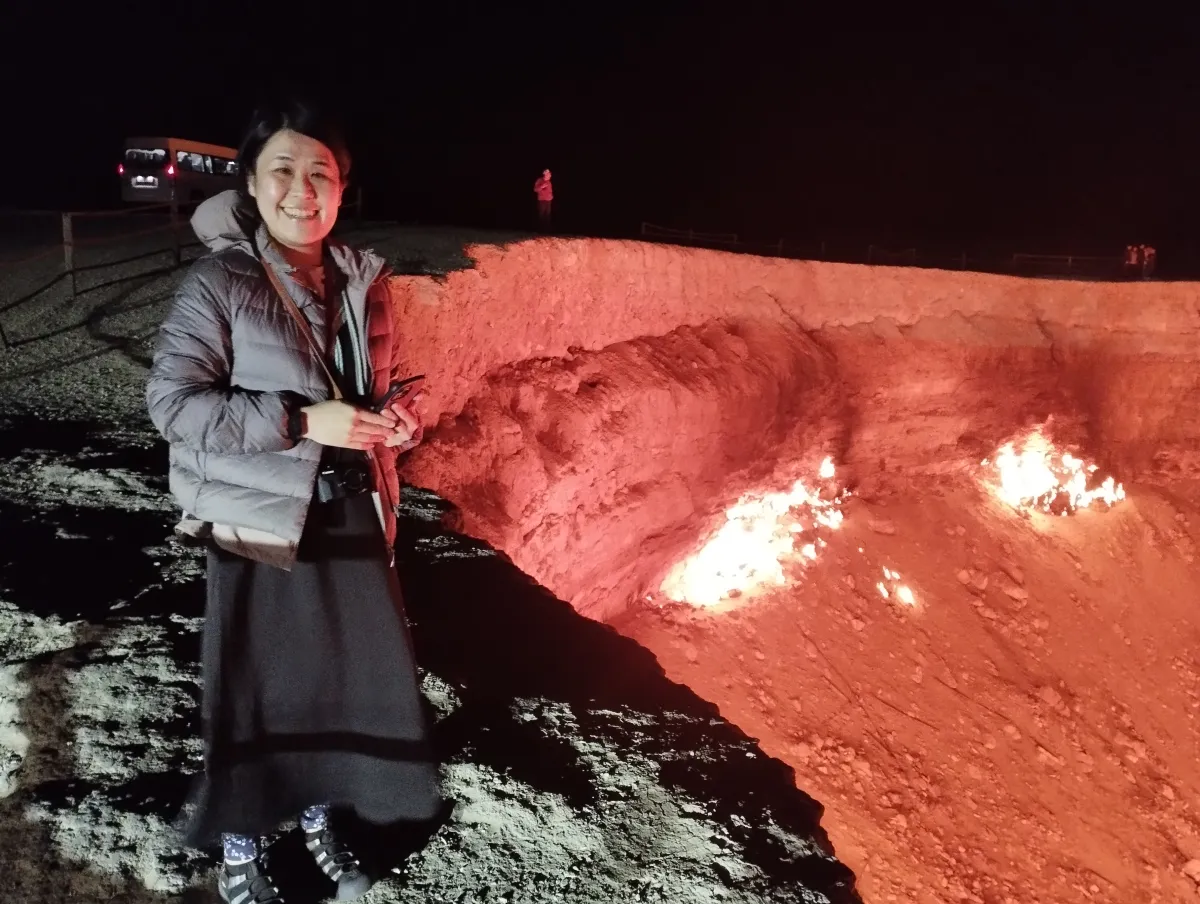
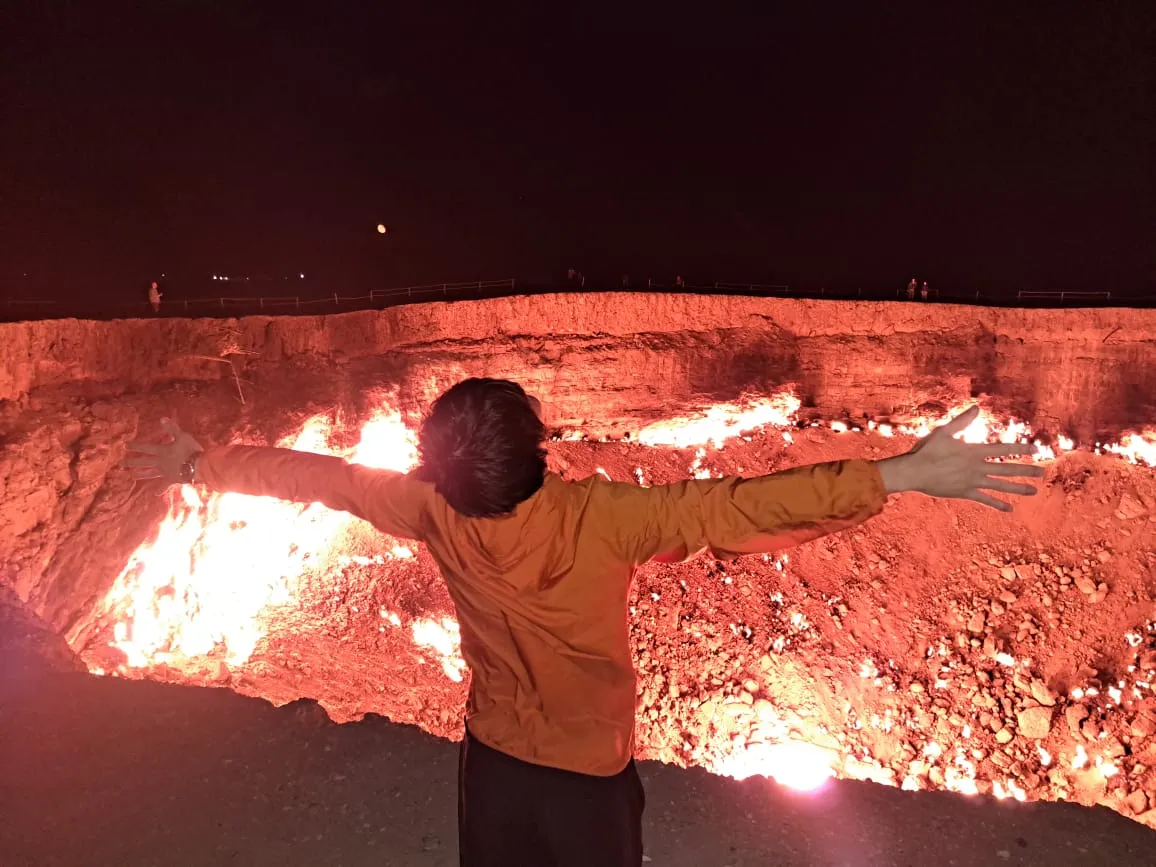
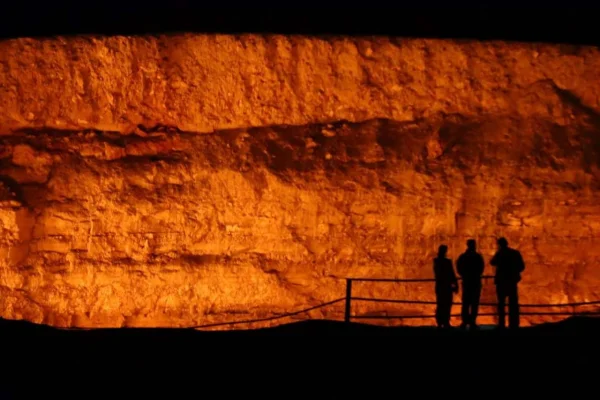
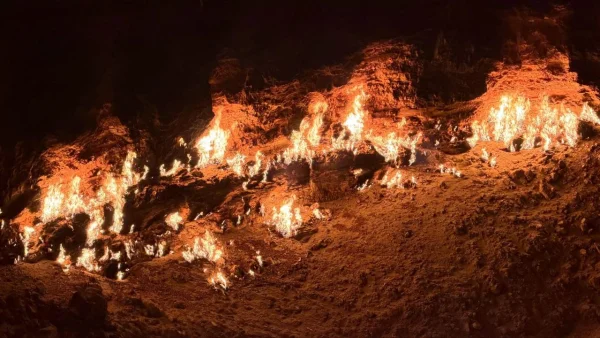
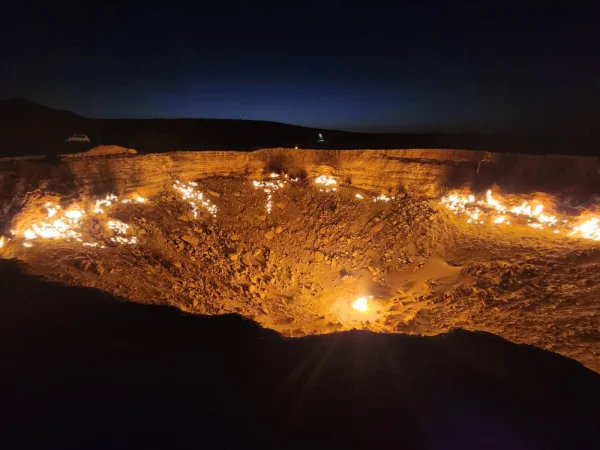
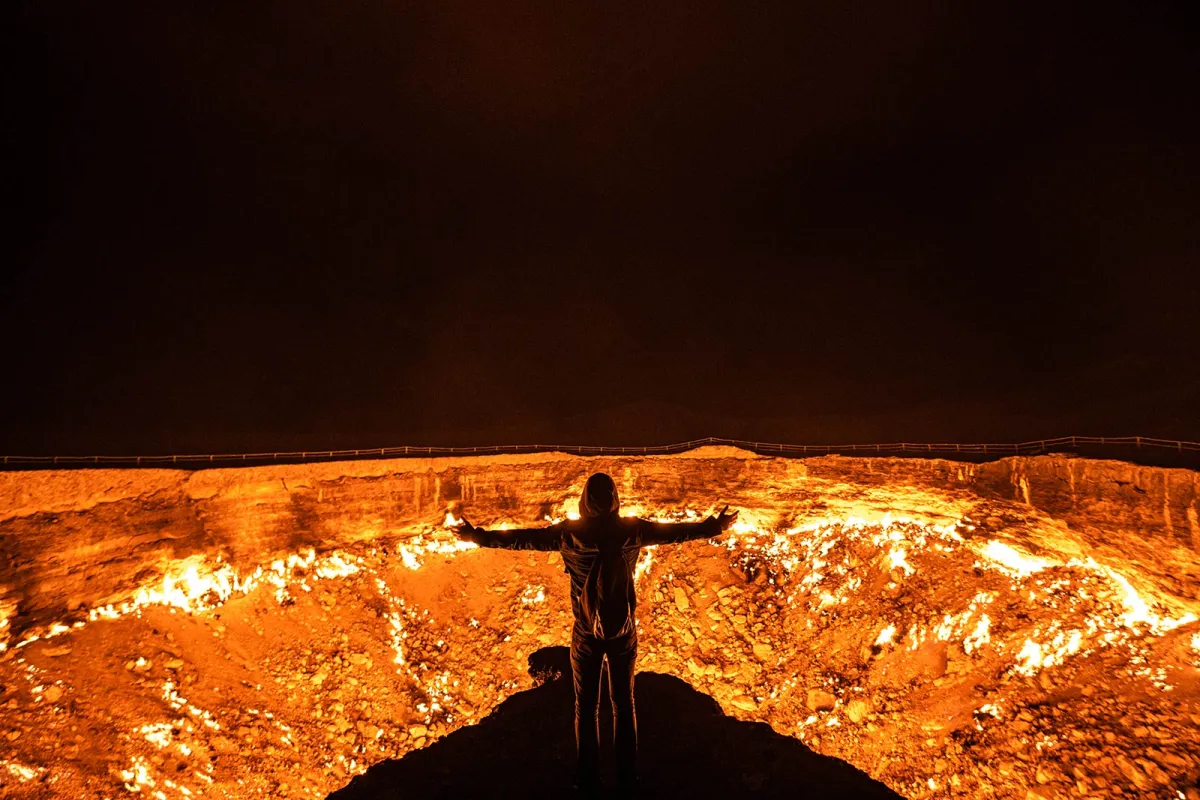
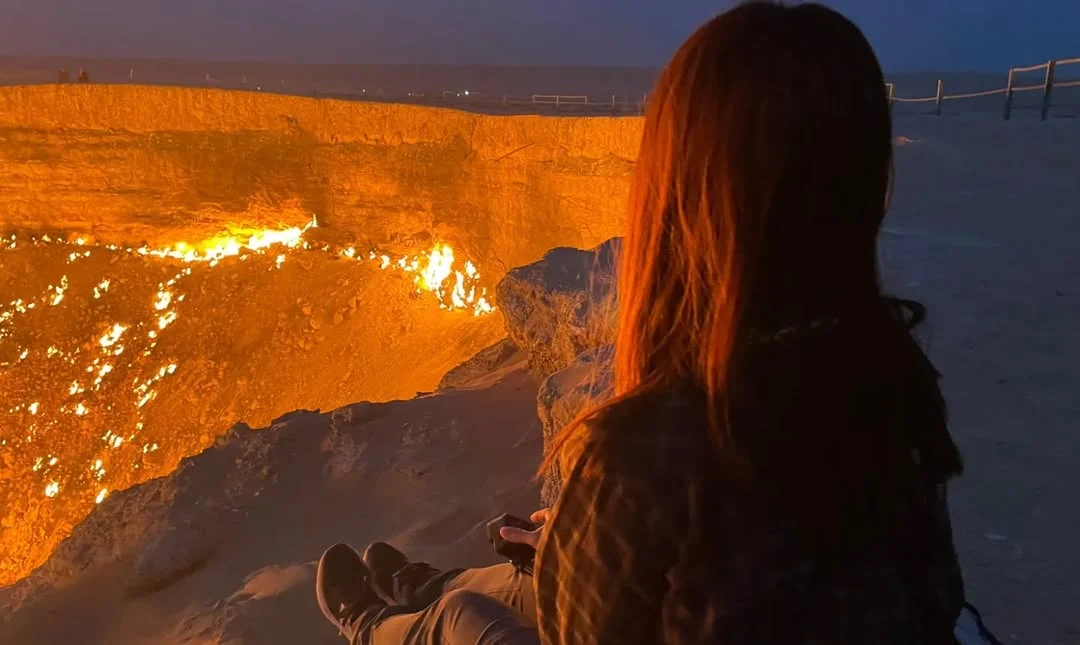
The crater is a giant burning pit with a diameter of about 69–70 meters and a depth of over 30 meters. By day, it is an impressive sinkhole in the sandstone, at the bottom of which hundreds of natural gas torches constantly burst from underground. But the real magic begins at dusk. When the sun sinks behind the sand dunes, the crater turns into the fiery heart of the desert. The golden-orange glow is visible from dozens of kilometers away, the roar of escaping flames resembles the breath of a dragon, and the heat radiating from the crater warms the cool desert night.
For many travelers, a trip to the Darvaza crater becomes the main highlight of their visit to the country. The best way to witness this natural-industrial phenomenon is to book a classic 4-day tour of Turkmenistan: Ashgabat, Ancient Merv, and Darvaza Gas Crater, which brings together the key historical and natural treasures of the region.
📜 Origin Story: The 1971 Scientific Mistake and Geological Facts
The origin story of the "Gates of Hell" is shrouded in myths, but documented geological records provide a clear understanding of how this gigantic furnace in the Karakum Desert came to be.
⚒️ Soviet Geological Exploration and Drilling Rig Accident
In 1971, Soviet geologists conducted exploratory drilling near the small village of Darvaza (translated from the Turkmen language as "gate"). The Karakum region is rich in colossal reserves of natural gas and oil. While drilling an exploratory well, the drill bit struck a massive underground pocket (cavern). Unable to support the colossal weight of the heavy equipment, the upper layers of limestone and sandstone collapsed, forming a deep crater.
The drilling rig, auxiliary machinery, and some vehicles were swallowed underground. Fortunately, none of the workers or scientists were killed, but methane and associated gases began to release at an immense rate from the depths of the newly formed crater. This posed a deadly hazard to residents of nearby settlements, shepherds, and wildlife, as well as a risk of a massive uncontrolled explosion.
ℹ️ Why has the fire been burning for over half a century? To prevent toxic gas poisoning, geologists made the standard decision: ignite the escaping gas. They expected the localized pocket to burn out in a couple of weeks. However, beneath the crater lay not an isolated pocket, but a massive gas-bearing reservoir. The flames flared up in 1971 and have been burning continuously for more than five decades.
🔬 National Geographic Expedition (2013)
For decades, it was believed that life inside the fiery abyss was impossible due to extreme temperatures (up to 400–1000 °C). However, in November 2013, Canadian explorer George Kourounis, supported by National Geographic, made the first descent to the bottom of the crater. Wearing a heat-resistant protective suit, he spent 17 minutes on the scorching floor and collected soil samples. Under these extreme conditions, unique bacteria were discovered that thrive in ultra-high temperatures and feed on hydrocarbons.
🗺️ Geographic Location and Nature of the Karakum
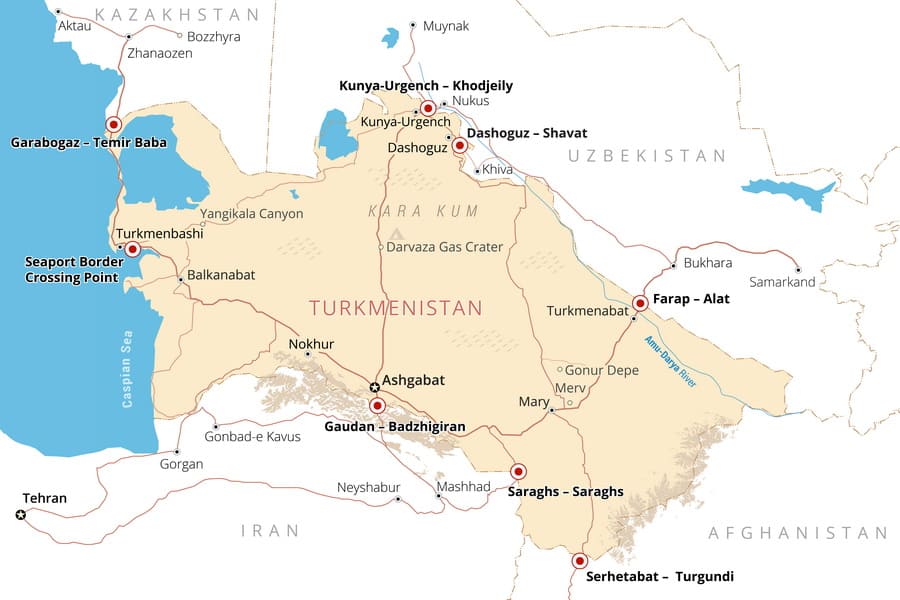
The Darvaza crater is located in the Ahal Province (welayat), approximately 260 kilometers north of the country's capital. A trip here is often combined with visiting cities such as white-marble Ashgabat, where most organized expeditions in specially equipped 4x4 SUVs originate.
The Karakum is a living desert. Sand dunes alternate with thickets of saxaul and sand acacia. At night, the desert comes alive: you can spot jerboas, corsac foxes, and birds of prey. The absence of light pollution reveals a pristine view of the Milky Way right above the burning abyss.
🕳️ Neighboring Craters: Water and Mud
A complete journey to Darvaza should definitely include a visit to two other sinkholes that formed in the 1970s:
- 💧 Turquoise Water Crater (Suloy): A crater about 15 meters deep containing emerald-turquoise water. Hydrogen sulfide and methane bubbles rise from the bottom, and the water is highly mineralized.
- 🌋 Mud Crater: A sinkhole with a gray silty bottom where cold mud mixed with gas emerges. Bubbles burst with a squelching sound, resembling miniature volcanoes. Occasionally, a small flame flickers in the center.
🚙 How to Get to Darvaza: Logistics and Routes
🚙 From Ashgabat (260–270 km)
The first 240 km run along the paved M37 highway. The final 10–15 km cross pure sand and rough off-road terrain (4x4 only with an experienced driver).
Recommended: 2-Day Circular Tour from Ashgabat.
🛣️ Transit from Uzbekistan
Darvaza is situated midway between the south and north of the country. Perfect for those traveling from Khiva/Bukhara to Ashgabat with a stop at Kunya-Urgench.
Recommended: 5-Day Transit Tour.
⛺ Overnight Stay at the Crater: Yurt Camps and Nighttime Magic
Visiting Darvaza without an overnight stay means missing out on the lion's share of its charm. The primary goal is to see the crater after dark and greet the sunrise.
- 🏕️ Yurt Camps: Located 300–500 meters from the crater, these traditional Turkmen yurts are equipped with beds, carpets, and basic sanitary facilities.
- 🔥 Dinner in the Desert: In the evening, enjoy shashlik grilled over saxaul coals, hot tea, and fresh flatbreads (chorek) under the starry sky to the roaring backdrop of the flames.
- 🌅 Watching the Sunrise: At dawn, the sands turn soft pink, the flames become gentle, and a thermal haze billows over the crater.
📅 Best Time to Visit
| Season | Weather & Conditions |
|---|---|
| 🌸 Spring (March–May) | Ideal. The desert blooms, daytime is comfortable (+20...+28 °C), and nights are fresh. |
| 🍂 Autumn (Sept–Nov) | Excellent. The heat subsides. In October–November, nights get cold (warm layers required). |
| ❄️ Winter (Dec–Feb) | Around 0...+8 °C by day, dropping to −15 °C at night. Visually striking, but requires proper winter gear. |
| ☀️ Summer (June–Aug) | Extreme. Temperatures exceed +45 °C in the shade during the day. Trips are scheduled strictly from sunset to sunrise. |
🎒 What to Pack: Practical Checklist
- 🧥 Layered Clothing: Windbreaker, fleece jacket, long trousers, closed-toe shoes (nighttime temperatures drop significantly).
- 🕶️ Sun Protection: Sunglasses, SPF 50+ sunscreen, sun hat.
- 🔦 Gear: Flashlight/headlamp (essential), Power Bank.
- 🩹 Other Essentials: Wet wipes, first-aid kit, cash (cards are not accepted).
⚠️ Safety: Do not approach the very edge (the ground can crumble), take wind direction into account (avoid inhaling smoke), and always use a flashlight in the dark.
🔮 The Future of Darvaza: Will the "Gates of Hell" Be Extinguished?
In recent years, the possible containment or extinguishing of the crater has been discussed to preserve energy resources and minimize methane emissions. Scientists are exploring engineering solutions, but for now, the "Gates of Hell" continues to burn bright into the night. Knowing that the crater might be closed in the foreseeable future makes a visit to Darvaza an even more valuable and unique experience that is definitely worth having as soon as possible!
Plan a grand journey: combine the crater with a visit to the martian Yangykala Canyons and ancient Silk Road ruins.