🍲 Introduction: The Art of Taste on the Great Silk Road
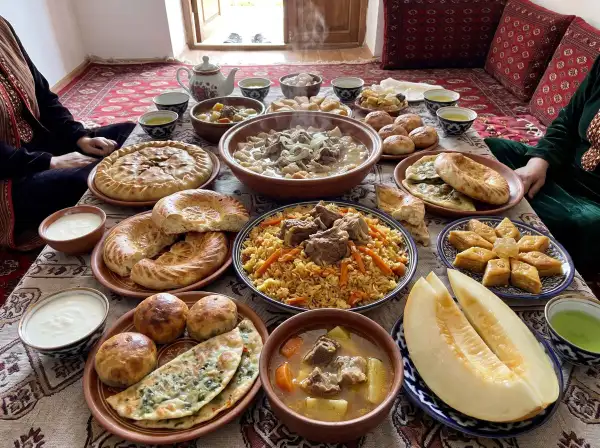
Turkmen cuisine is one of the most authentic, distinctive, and least time-altered culinary traditions in Central Asia. Formed in the harsh conditions of the Karakum Desert, within the fertile oases of the Murghab River delta, and among the majestic Kopetdag Mountains, it represents a perfect balance between the nomadic heritage of herders and the agricultural culture of the ancient oases of the Great Silk Road.
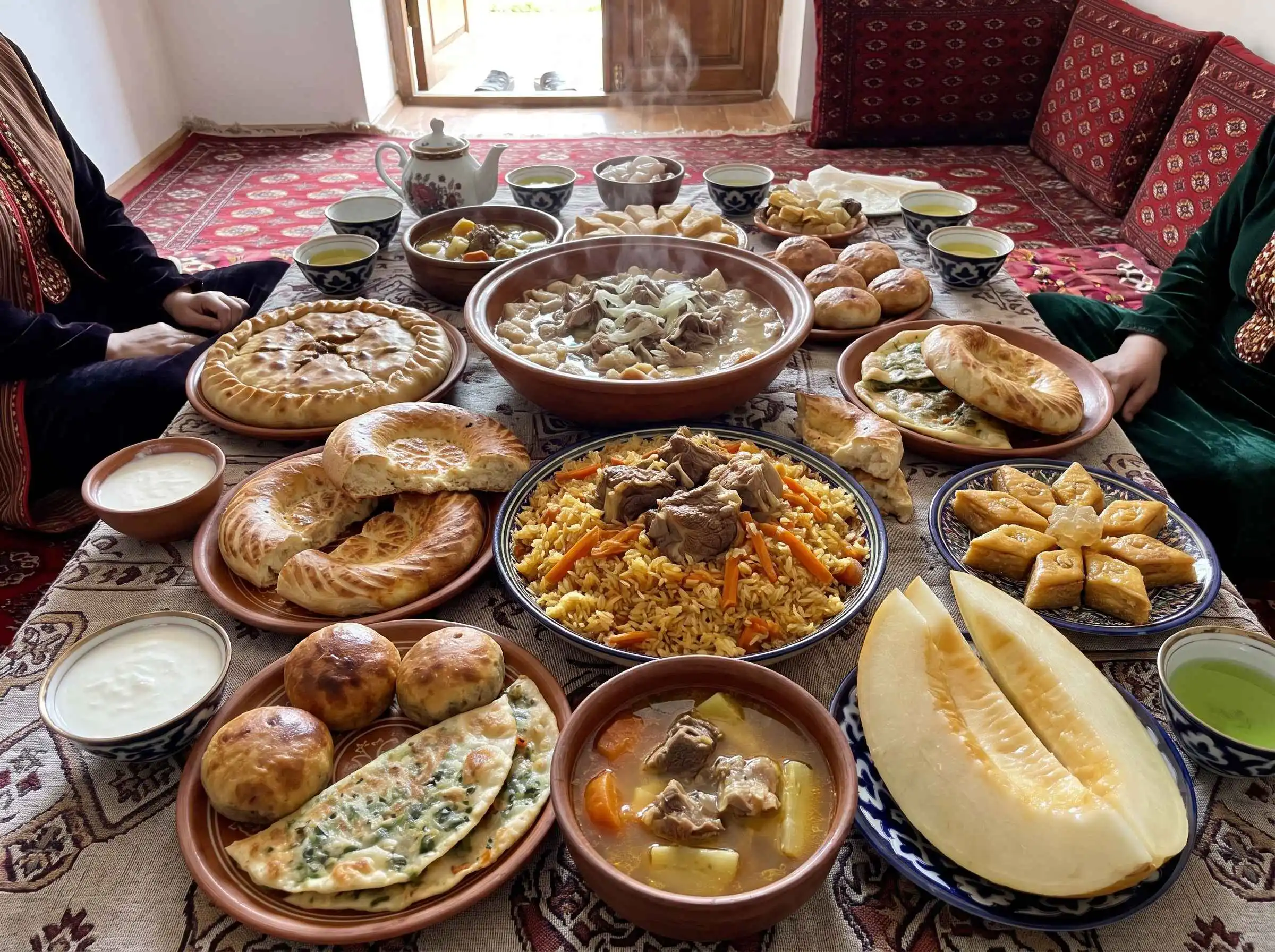
Unlike its regional neighbors, Turkmen cuisine has preserved a surprising simplicity of flavors, where the natural quality of products, the pure aroma of meat, freshly baked bread, and the natural sweetness of the world-famous Turkmen melons take center stage. Here you will not find an excessive abundance of burning spices that mask the natural taste; instead, Turkmen masters use wild herbs, sesame oil, garlic, and special baking techniques in clay tandurs (tamdyrs) and cast-iron cauldrons.
A journey through Turkmenistan cannot be considered complete without immersing yourself in its gastronomic culture. Setting off on your journey — whether exploring the marble avenues of the capital, which are described in more detail in our guide to Ashgabat, or taking a trip to the flaming Darvaza crater — you will everywhere encounter the cult of the sacred dastarkhan tablecloth (sachak) and boundless steppe hospitality.
📜 History and Origins of Turkmen Cuisine: Nomadic Heritage and Oasis Traditions
To understand the essence of Turkmen gastronomy, it is necessary to turn to the history of the Oghuz tribes. For centuries, Turkmens led a semi-nomadic lifestyle. The harsh desert climate and the necessity of constant migrations shaped a specific set of ingredients and cooking methods capable of preserving nutritional value and simplicity in transport.
🌾 Key Historical Factors in the Formation of Cuisine
| Factor | Impact on diet and traditions |
|---|---|
| Animal Husbandry | Mutton and camel meat became the basis of the diet. Drying, curing (kakmach), and frying meat in its own fat (govurma) allowed hearty supplies to be preserved for long months of pasture migrations. |
| Oasis Agriculture | Wheat, rice, sesame, cotton, and melons have been grown for centuries along the riverbeds of the Amu Darya, Murghab, and Tedjen. This is precisely where the famous pastries and various types of pilaf originate. |
| The Silk Road | Trade caravans brought tea culture, rice, specific spices (cumin, barberry, saffron), and the secrets of making puff pastry to the region. |
The main spiritual principle of a Turkmen feast is the attitude towards bread (chorek) and salt as sacred gifts. Throwing away bread or stepping on a crumb is considered sacrilege, and guests are always greeted with freshly baked flatbreads straight from the tamdyr.
🥩 Main Ingredients and Features of the Turkmen Table
The culinary code of Turkmenistan is built on basic yet impeccably high-quality components. Local culinary specialists prefer the purity of taste, avoiding complex marinades and overly fancy sauces.
1️⃣ Meat: Mutton, Beef, and Exotic Camel Meat
The main meat in the country is mutton, with a particular value placed on the meat of fat-tailed sheep grazed on lush desert grasses (wormwood, saxaul), which gives it a special, subtle aroma. Beef is also popular, especially in foothill and northern regions. A separate place is occupied by camel meat — tender, dietary, and very nutritious meat, which is often used for minced meat in juicy pies and cutlets.
2️⃣ Vegetable and Animal Fats
Turkmen cuisine actively uses fat-tailed sheep fat (ychkyn), which gives dishes juiciness and richness. Among vegetable oils, historically sesame oil (sargash yagy) and cottonseed oil predominate. Sesame oil is not only used for frying meat and pilaf, but also gives authentic dishes an incomparable nutty flavor.
3️⃣ Vegetables, Herbs, and Spices
The basis of the vegetable set consists of onions, both bulb and wild-growing, tomatoes, turnips (shalgam), pumpkin, and potatoes. Among herbs, preference is given to cilantro, dill, green onions, mint, and wild mountain garlic. The main spices are black and red paprika, zira (cumin), and barberry.
🍽️ Culinary Masterpieces of Turkmenistan: What You Must Try
For every traveler choosing a 4-day tour to Turkmenistan, getting acquainted with national cuisine becomes one of the brightest impressions. Below are the dishes that make up the pride of the Turkmen people.
| Dish | Category | Main ingredients and features |
|---|---|---|
| Dograma | Ritual / festive | Mutton, unleavened petyr-chorek bread, onion, meat broth |
| Turkmen Pilaf | Main hot dish | Anrau/sedri rice, mutton, carrots, sesame oil |
| Fitchi and Ishlekli | Meat pastries | Unleavened dough, chopped mutton/beef, onion, juice/broth |
| Shorpa | Traditional soups | Rich mutton broth, potatoes, pepper, noodles/mung beans |
| Gutabs | Thin pies/flatbreads | Thin dough, herbs, pumpkin, minced meat, or cottage cheese |
| Balykly yanyakhly | Caspian fish dish | Sturgeon/sevruga, rice, saffron, pomegranate juice |
🍲 Dograma — The Culinary Soul of the Turkmen People
If you had to choose one dish symbolizing Turkmen culture, it would be dograma. This is a ritual and festive dish prepared during major family celebrations, religious holidays (Kurban Bayrami), and community gatherings (sadaka).
The process of making dograma is a true collective ritual:
1️⃣ Bread baking: First, a special yeast-free flatbread called petyr-chorek is baked in a clay tamdyr.
2️⃣ Boiling meat: Simultaneously, fresh mutton is boiled in huge cauldrons with onions and fresh tomatoes until perfectly tender.
3️⃣ Chopping: Then the diners manually crumble the cooled bread into small pieces, mix it with finely chopped boiled meat, and thinly sliced raw bulb onions.
4️⃣ Serving: The resulting mixture is placed into pialas and poured over with boiling rich broth.
The taste of dograma strikes with its harmony: crunchy onions, tender meat, rich broth, and bread soaked in juices create an incredible feeling of warmth and satisfaction.
🥘 Turkmen Palow (Pilaf): Differences and Uniqueness
Unlike Uzbek or Tajik pilaf, Turkmen pilaf (palow) is distinguished by greater conciseness and the use of original ingredients. Here, the main emphasis is on the quality of the meat and the quality of the rice (local long-grain rice anrau or sedri is often used).
In classic Turkmen pilaf, the meat is often cut into small cubes, fried with onions and carrots, and the carrots are usually cut into fine strips or even grated. In some regions, especially closer to the Caspian Sea, dried fruits, dried apricots, pomegranate juice, or even sesame oil are added to the pilaf, giving the rice a beautiful golden hue and delicate aroma.
🥧 Fiççi and Işlekli — Legendary Meat Pastries
For lovers of meat pastries, Turkmenistan will seem like a true paradise. Here you will find pies famous throughout Central Asia:
- 🥧 Fiççi: Juicy round meat pies made from unleavened dough with a generous filling of minced mutton or beef with onions and plenty of broth inside. They are baked in special metal molds inside the tamdyr. Fiççi should be eaten carefully so as not to spill the hot, fragrant juice.
- 🥟 Işlekli: A traditional shepherd's pie. Historically, desert shepherds baked it right in the hot sand and coals (kümmä), trapping the meat filling between two layers of dough. Today, işlekli is cooked in an oven or tamdyr, but its round shape with pinched edges and rich meat and onion filling remain unchanged.
🥣 Çorba (Shurpa) and Traditional Soups
Soups hold an important place in Turkmenistan, especially during the cold season or after long journeys across the desert. The most popular is gaynatma-shurpa (made from mutton with coarsely chopped potatoes, onions, tomatoes, and bell peppers). You should also try ugra-çorba (soup with homemade thin noodles and beans) and machli-çorba (soup with mung beans and meat).
🫓 Gutap — Thin Flatbreads with Various Fillings
Gutaps are the Turkmen equivalent of chebureki or kutabs, consisting of semi-circular thinly rolled unleavened flatbreads fried on a dry flat skillet (saj) and then generously greased with clarified butter. Fillings for gutaps vary by season:
- 🌿 Greens: wild onions, spinach, sorrel, mint — a spring favorite;
- 🎃 Pumpkin: with onions and aromatic spices;
- 🥩 Meat: minced fresh lamb or beef;
- 🧀 Cottage Cheese: curd and local homemade cheese.
🐟 Caspian Fish Cuisine: Balykly Yanakhly
A unique feature of Turkmen gastronomy that distinguishes it from the culinary traditions of other Central Asian countries is the presence of a developed fish cuisine on the Caspian Sea coast (the cities of Turkmenbashi, Awaza, Hazar).
A signature dish of the Caspian Turkmen is balykly yanakhly (fish pilaf) and balyk-gavurma (fish fried in a cauldron with vegetables). Traditionally, sturgeon, stellate sturgeon, or inconnu fish are used for their preparation. The fish is marinated in unripe pomegranate juice, layered with saffron, sesame oil, and served with a special sweet-and-sour gravy.
🥛 Dairy Products and Beverages: From Gatyk to Chal
A nomadic past gifted Turkmenistan with a rich culture of fermented dairy products, most of which have healing properties and perfectly quench thirst in the heat.
| Name | Description | Taste and Characteristics |
|---|---|---|
| Chal (Çal) | Fermented camel milk beverage | Refreshing, naturally carbonated, with a light tartness and a salty undertone. A true superfood. |
| Agaran (Agaran) | Rich cream skimmed from the surface of chal | Ethereal, incredibly delicate texture, served with morning bread. |
| Gatyk (Gatyk) | Thick traditional sour milk / yogurt | Base for sauces, soups, or enjoyed as a refreshing standalone drink. |
| Süzme (Süzme) | Strained gatyk, thick curd mass | Used as a savory and hearty appetizer. |
| Gurt (Gurt) | Dried balls made of süzme with salt | The perfect long-lasting snack for travelers. |
ℹ️ Good to know: A true culinary exotic is chal. Fermented camel milk is exceptionally rich in vitamins C and B, microelements, and natural antibiotics. On a hot day in the desert, nothing refreshes better than a piala of cold, fresh chal.
🫖 Turkmen Sweets, Legendary Melon, and Tea Culture
The sweet table in Turkmenistan is a celebration of natural flavors. Here you will not find heavy cream cakes, but you will appreciate traditional pastries and fruits.
☕ Tea Ceremony (Gök çaý)
Tea is the main artery of Turkmen hospitality. In most regions of the country, people drink green tea (gök çaý), while in the western Caspian regions and in the north, they prefer black tea with milk. Tea is served in porcelain teapots and pialas. According to etiquette, the host pours literally a couple of sips into the piala — this is a sign of respect, meaning that the host will constantly take care of the guest, replenishing the fresh hot drink.
🍬 Sweets: Pishme, Shekerbura, and Navat
- 🍩 Pişme: Yeast dough diamonds, deep-fried until golden brown. They are a must-have on every festive table.
- 🥠 Shekerbura: Cookies with a nut and sugar filling and an intricate carved pattern.
- 🧊 Navat: Crystallized grape sugar served with tea.
🍈 The Turkmen Melon — Queen of the Melon Field
When speaking of Turkmenistan's sweets, it is impossible not to mention the Turkmen melon (gawun). Turkmenistan is rightly considered the global homeland of the sweetest and most aromatic melon varieties. There are over 400 varieties here! The most famous are Gulyabi, Vakharman, and Garry-kyz. Local melons are so juicy and sweet that their flesh literally melts in your mouth, leaving a honey-like aftertaste. In autumn, melons are also dried by braiding them into graceful little braids (kak), which are stored all winter long.
🗺️ Regional Gastronomic Features: Where to Go for the Best Taste
Turkmenistan's culinary map is as diverse as its landscapes. When planning your trip, be sure to pay attention to regional specialties.
🏛️ Ashgabat: The Modern Gastronomic Center
In the capital of Turkmenistan, traditional cuisine blends harmoniously with high-end restaurant service. Here you can try both flawless classic dograma in atmospheric national restaurants and creative interpretations of traditional dishes. A culinary stroll through the city is perfectly complemented by excursions that can be booked as part of our 5-day transit tour from Ashgabat to Khiva.
🕌 Dashoguz and Kunya-Urgench: The Heritage of Khorezm
The northern region is famous for its close historical ties with ancient Khorezm. Amazing homemade noodles, special types of pilaf with mung beans, and meat and pumpkin dough rolls (manti) are prepared here. Once you plan your trip, check out our historical guide to Kunya-Urgench or book a convenient 1-day transit tour to Kunya-Urgench to combine sightseeing of ancient minarets with a tasting of local cuisine.
🏛️ Mary and Merv: Traditions of an Ancient Oasis
The Mary region is the heart of the ancient Murghab delta. Local masters are famous for their unmatched skill in cooking mutton in its own juices, as well as traditional dograma. While exploring the ruins of ancient civilizations described in the article about Ancient Merv, be sure to visit one of the local tea houses to try classic shurpa made from the freshest lamb.
🏔️ The Mountain Village of Nohur: Sacred Recipes of Kopetdag
In the unique mountain village of Nohur, located in the Kopetdag mountains, culinary traditions differ significantly from those of the plains. Game dishes, special pastries with mountain herbs, and unique methods of baking meat on hot stones are popular here. Read more about this amazing place in our article on the village of Nohur.
🛒 Bazaars of Turkmenistan: A Traveler's Gastronomic Paradise
A bazaar in Turkmenistan is not just a place for shopping; it is the epicenter of social life, a riot of colors and aromas. The most prominent among them is the legendary Oriental bazaar "Altyn Asyr" (commonly known as Tolkutcha) on the outskirts of Ashgabat, as well as the "Teke" bazaar and the "Russian Bazaar" (Gulistan) in the center of the capital.
🛍️ What to Buy at the Bazaar for a Foodie Tourist?
- 🍈 Dried melons (Dondurma / Kak): Sun-dried strips of melon braided into plaits, sometimes with added nuts.
- 🧈 Turkmen sesame and sesame oil: Natural cold-pressed oil.
- 🧂 Spices: Mountain cumin, dried barberry, sumac, and pilaf spice mixes.
- 🥜 Pistachios and almonds: Local mountain nuts are incredibly delicious and nutritious.
- 🧀 Dried camel kurt: A salty, savory snack cheese.
💡 Practical Tips for Tourists and Food Etiquette
To ensure your gastronomic journey goes perfectly, follow a few simple rules of local etiquette and food safety:
🤝 Etiquette Rules at the Turkmen Dastarkhan
Respect for bread:
- 🍞 Never place bread upside down and do not cut it with a knife if it is customary to break it by hand at the table.
- 👟 Take off your shoes: Always remove your shoes when entering a house or a teahouse platform (tachan).
- ✋ Eating with the right hand: If you are eating with your hands (for example, traditional ishlekli or dograma), use only your right hand.
- 🤲 Gratitude for the food: At the end of the meal, the eldest at the table or the host recites a short blessing prayer (pata), passing their palms over their face. Wait for this moment before getting up from the table.
🛡️ Safety and Adaptation Tips
- 💧 Water regimen: Drink only bottled water. During hot excursions, regularly drink hot green tea or chal — they regulate heat exchange much better than cold soda.
- 🥛 Trying chal: Camel milk is an active probiotic. Start trying it in small portions (half a piala) to let your stomach get used to it.
- 🥗 Vegetarianism: Turkmen cuisine is very meat-centric. Vegetarians should look out for gutabs with herbs or pumpkin, fresh vegetable salads, fresh bread, lentil soups, and an abundance of fruits.
📌 Conclusion: How to Plan a Culinary Trip to Turkmenistan
The gastronomy of Turkmenistan is a sincere reflection of the soul of the Turkmen people: generous, open, and carefully preserving its centuries-old traditions. By making culinary discoveries part of your itinerary, you will discover this country from a completely new perspective.
ℹ️ The TmTourism team is ready to help you organize an unforgettable trip with visits to the best authentic restaurants, traditional teahouses, and vibrant oriental bazaars. Choose one of our popular itineraries or contact us to create a custom gastronomic tour!