🤍 The Phenomenon of the White City: An Oasis of Marble and Gold
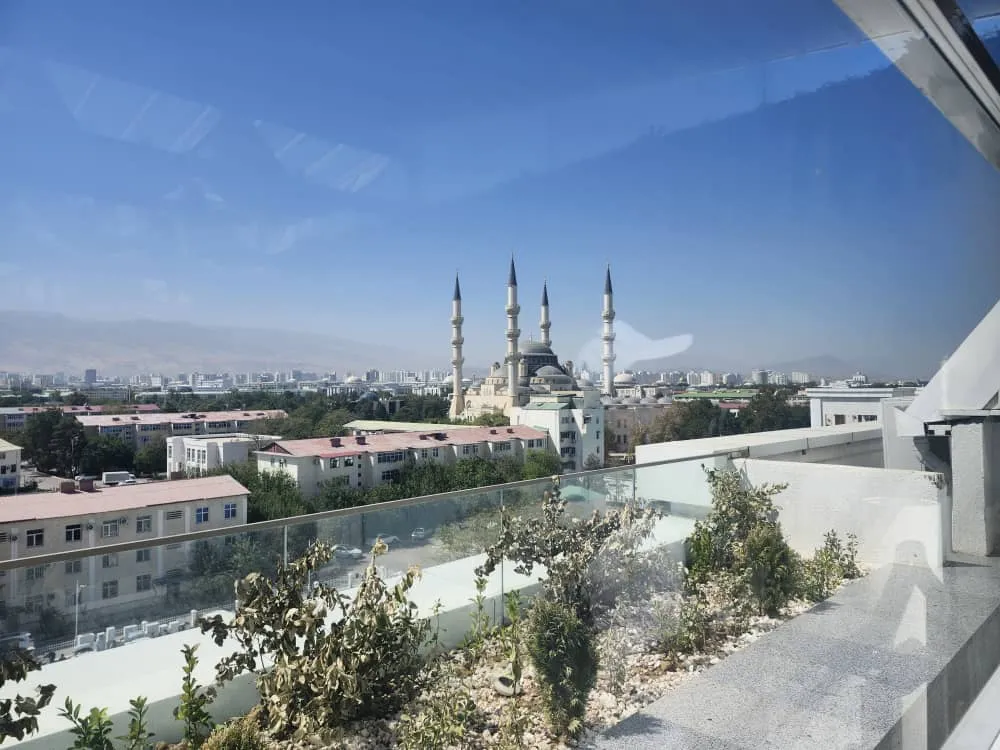
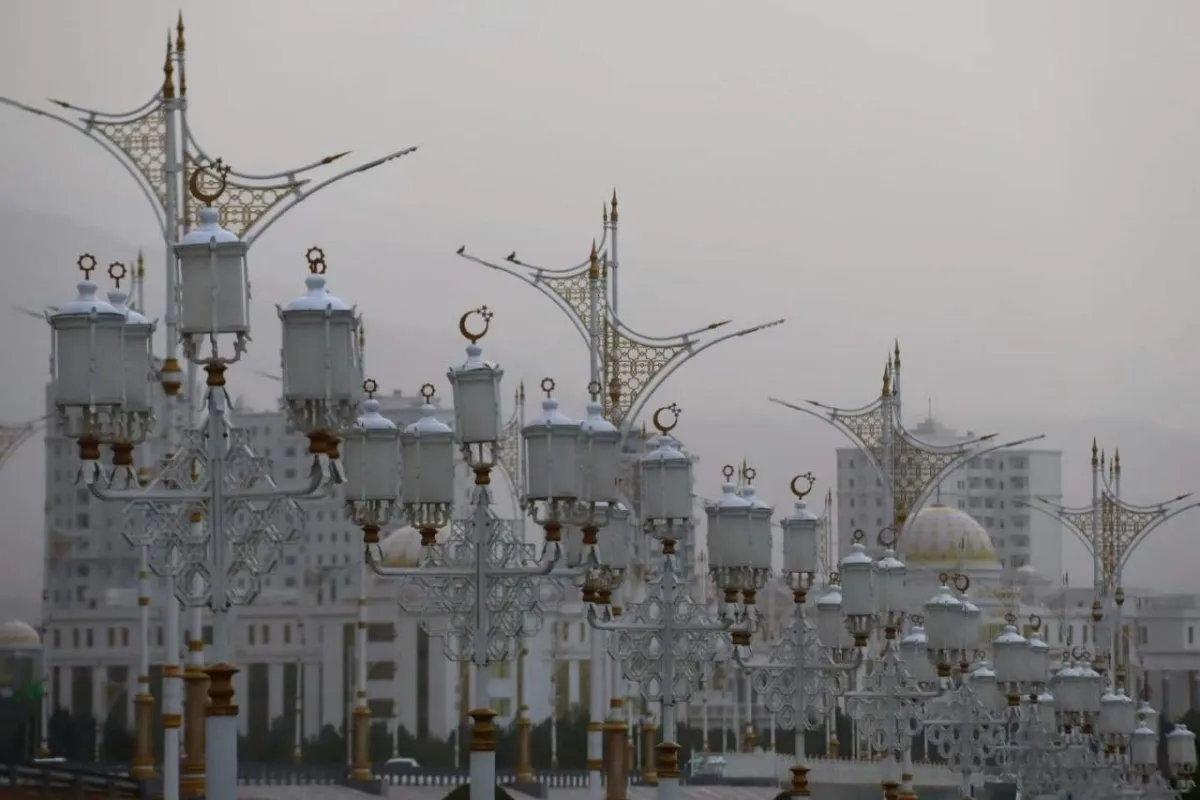
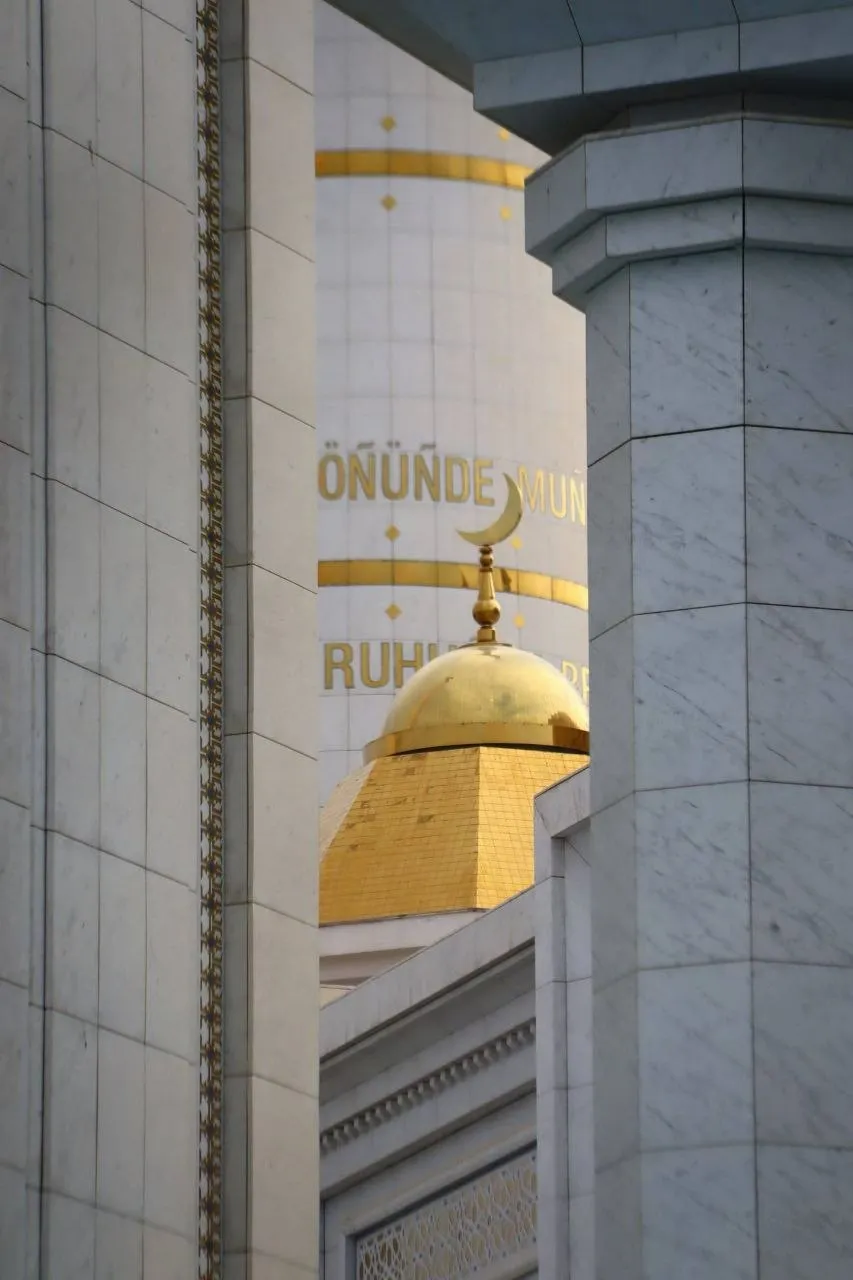
On the border of the boundless Karakum Desert and the foothills of the Kopet Dag mountain range rises one of the most unusual and futuristic cities on the planet — Ashgabat. Travelers from around the world know it as the "White Marble City" (White City Ashgabat). This title is officially recognized: in May 2013, the capital of Turkmenistan was listed in the Guinness World Records as the city with the highest concentration of white marble-clad buildings in the world. When the record was set, an area of just 22 square kilometers featured 543 new monumental buildings covered with over 4.5 million square meters of Italian Carrara marble.
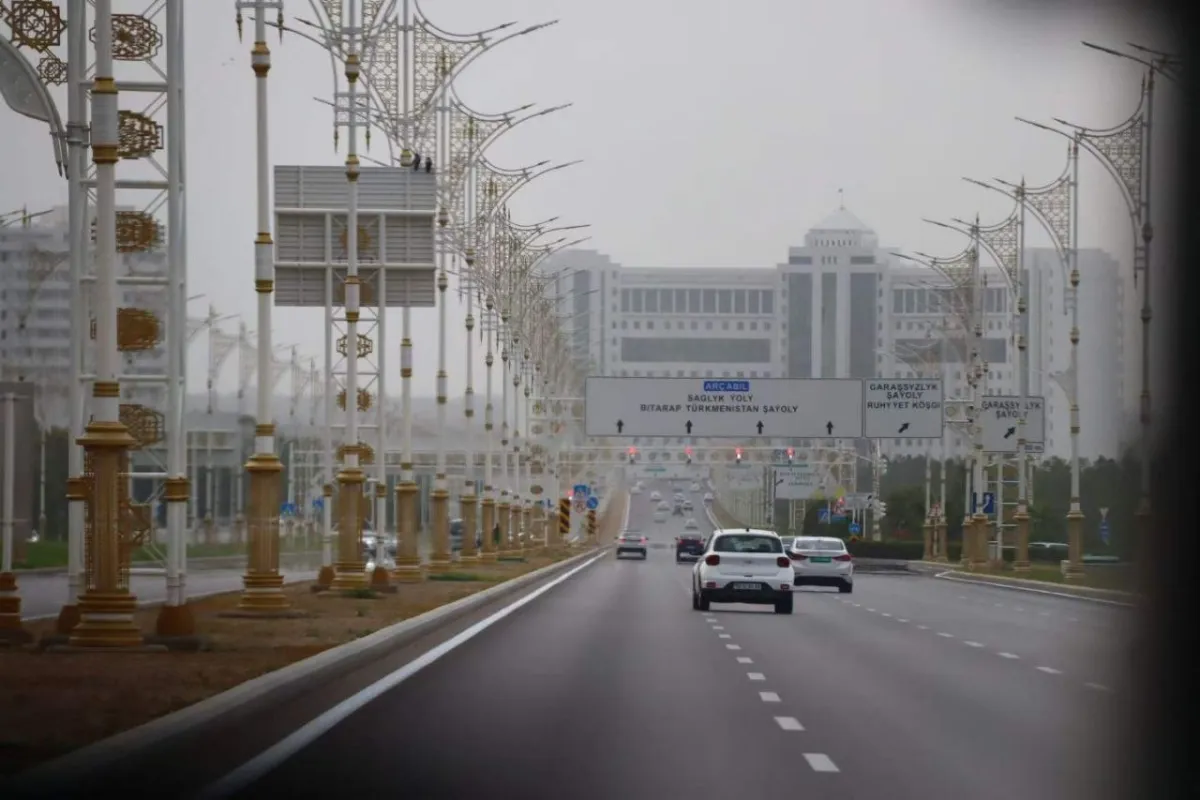
For travelers, visiting Ashgabat is an immersion into a unique aesthetic reality. Broad eight-lane avenues, immaculate cleanliness, golden domes, gleaming fountains, and monumental ensembles evoke the feeling of a movie set depicting a bright future. If you are planning an in-depth visit to the capital, we also recommend exploring our complete Ashgabat travel guide with an overview of its neighborhoods and history.
🌡️ Why Did Ashgabat Turn White? Architectural Philosophy
The decision to redesign the capital in a unified white aesthetic was made in the 1990s following the country's independence. This choice reflects both deep cultural symbolism and practical necessity:
- ☀️ Climatic necessity: In summer, temperatures in Ashgabat often exceed +40…+45°C. White marble effectively reflects solar radiation, preventing facades from overheating and easing the demand on air conditioning systems.
- 🕊️ Traditions and symbolism: In Turkmen culture, white ("ak") represents purity, prosperity, good intentions, and good fortune (ak ýol — "a bright path").
- 🎨 A distinctive architectural brand: Creating a unified, harmonious cityscape made Ashgabat instantly recognizable worldwide, setting it apart from other Central Asian capitals.
Most of the marble for major landmark projects was imported directly from Carrara, Italy — the very region that provided stone for Michelangelo's sculptures.
🏆 Major Architectural Landmarks and Guinness Records
Ashgabat holds numerous remarkable world records. The city is filled with grand monuments and structures that impress with their scale and geometry.
| Landmark | Dimensions | Record / Feature |
|---|---|---|
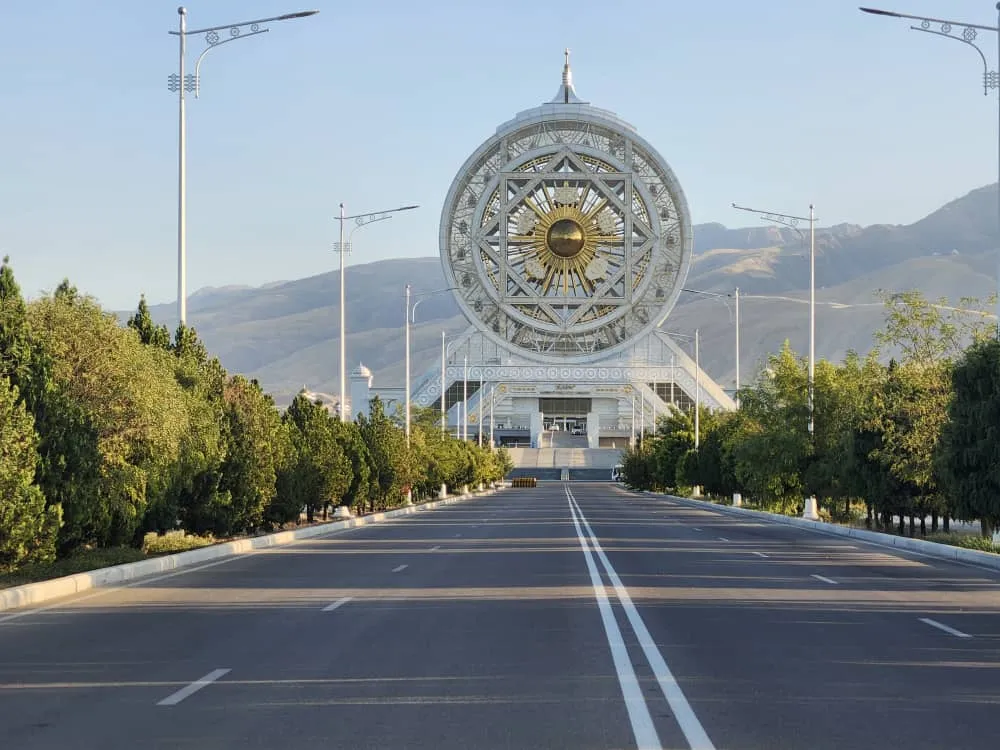
| 🎡 Alem Center | Wheel diameter of 47 m | World's largest enclosed Ferris wheel |
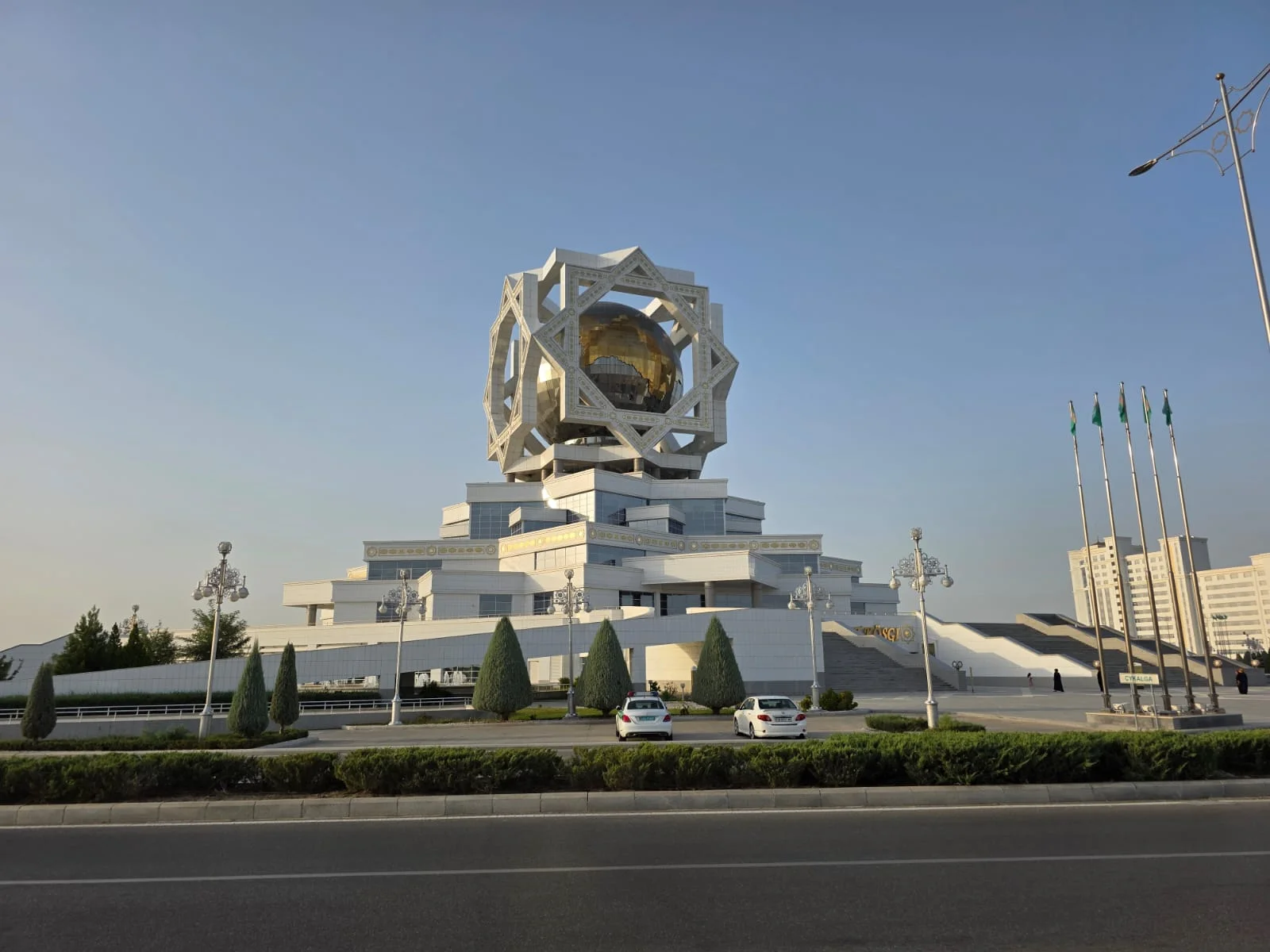
| 💍 Bagt Koshgi | 11 floors, 32 m diameter sphere | Shaped like the Star of Oguz Khan |
| 🏛️ Independence Monument | 118 m | Height symbolizes 27+91 (independence date) |
| 🏗️ Constitution Monument | 185 m | Second tallest structure in the country |
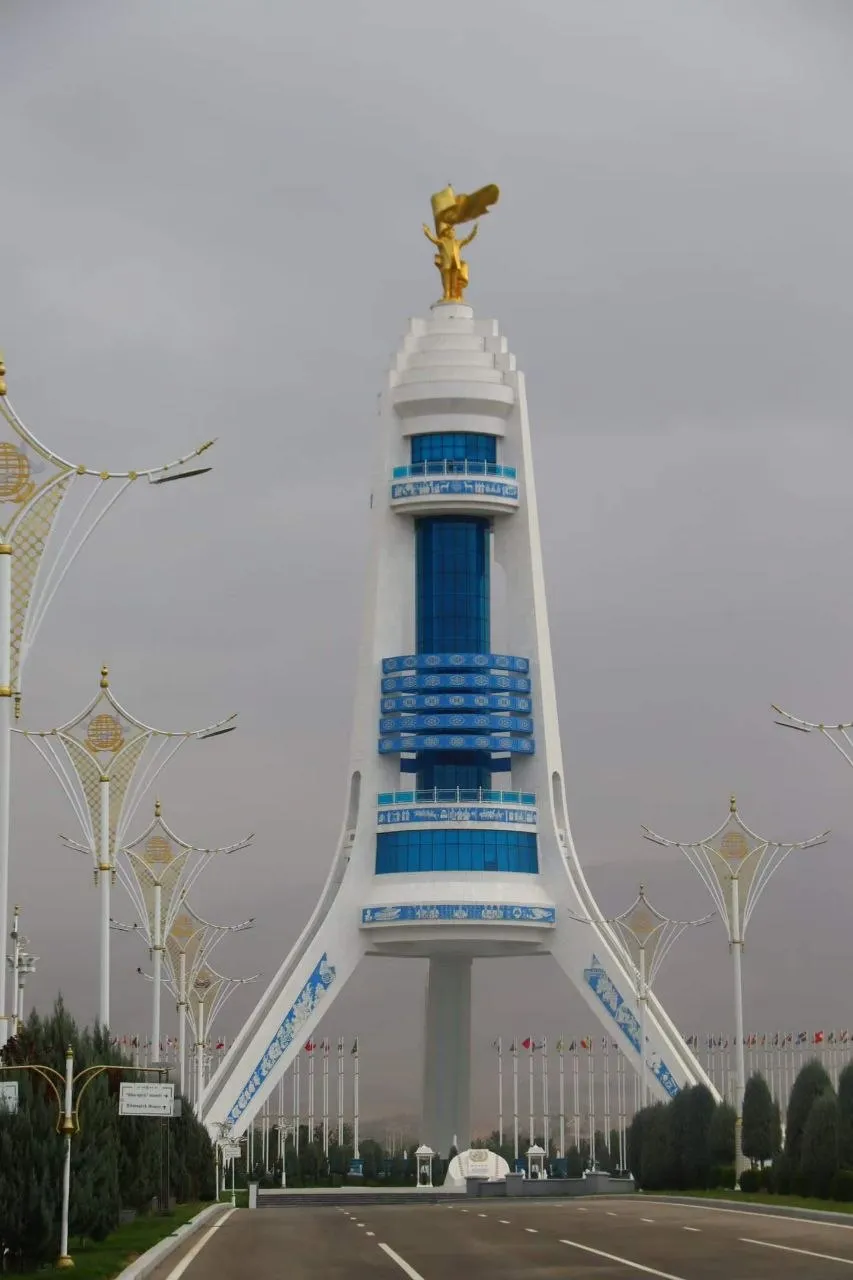
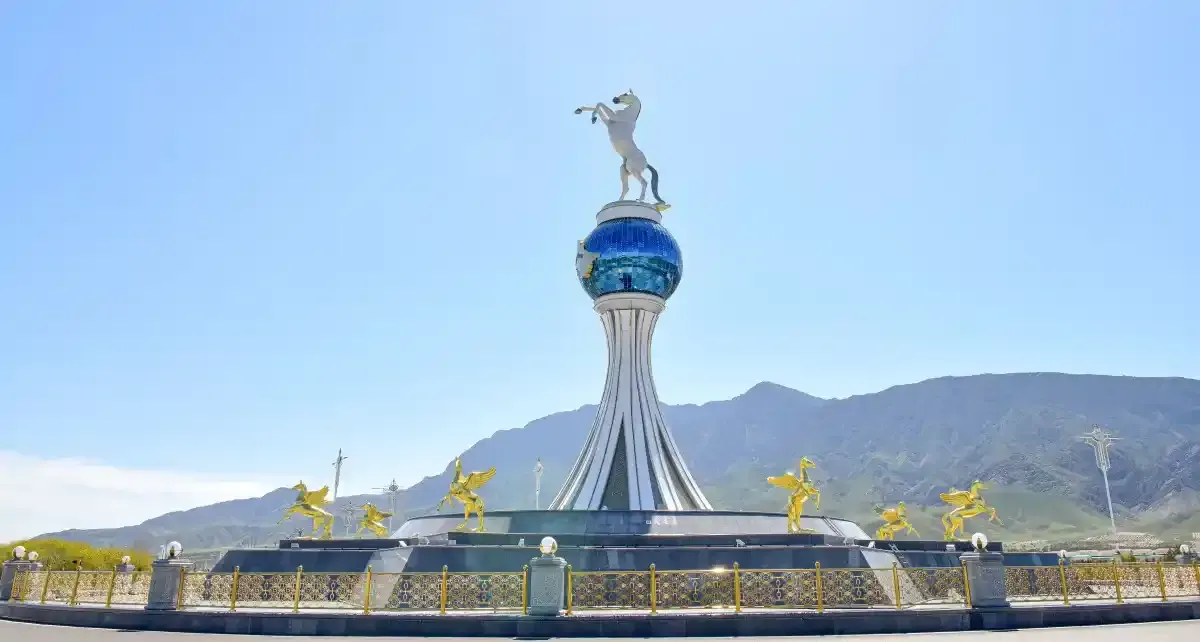
| 🗼 Neutrality Monument | 95 m | Three-legged arch topped with a golden statue |
| 📡 Turkmenistan TV Tower | 211 m, 3,240 m² star | World's largest architectural image of a star |
| ✈️ International Airport | Falcon-shaped (Lachin) | Largest carpet pattern (göl) on a terminal roof |
🎡 1. Alem Cultural and Entertainment Center
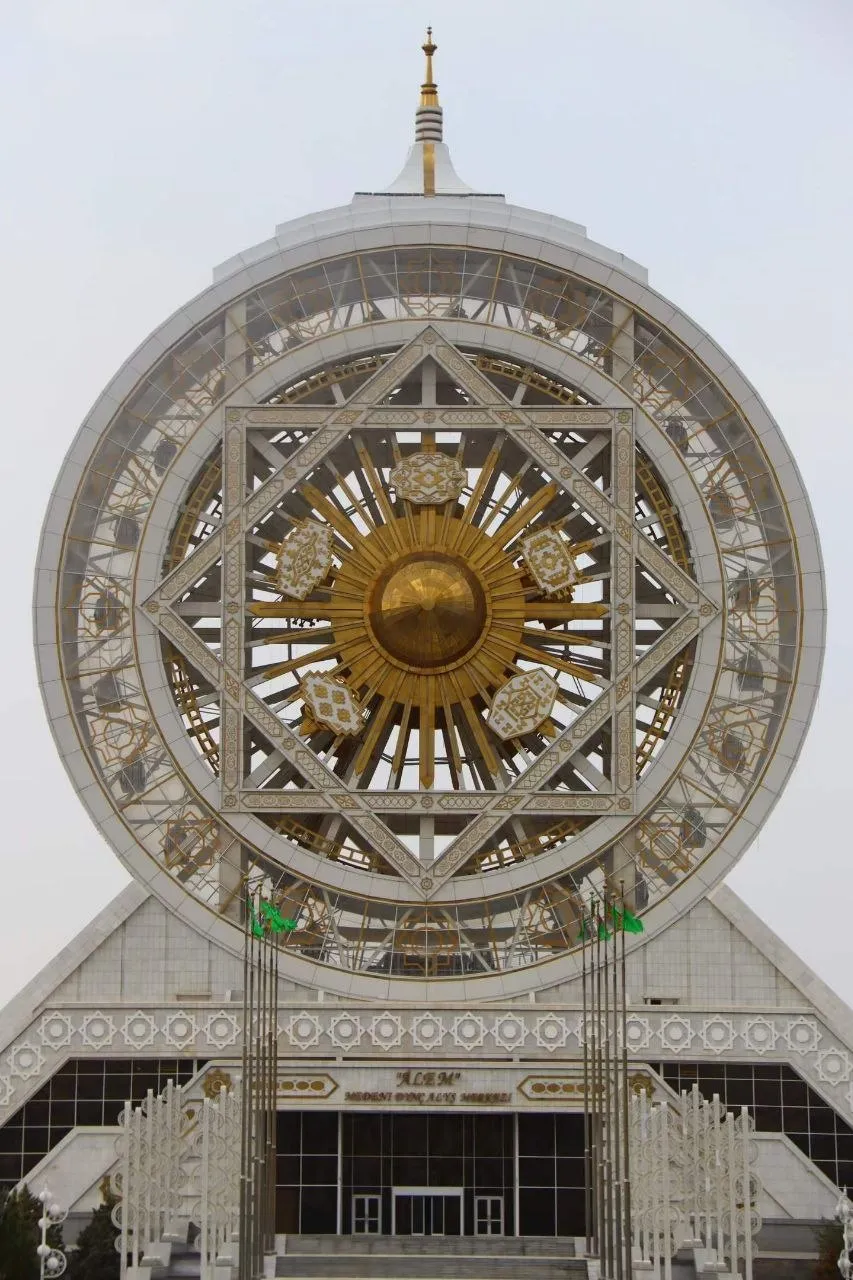
The Alem ("Universe") complex is crowned by a giant 47-meter diameter Ferris wheel enclosed within an intricate white metal and glass structure. It is recognized as the world's largest enclosed Ferris wheel by Guinness World Records. Its air-conditioned enclosed cabins offer panoramic views of the Kopet Dag foothills and the southern avenues of the capital.
💍 2. Bagt Koshgi Wedding Palace
One of the most prominent examples of Turkmen monumental architecture. The eleven-story building is designed in the shape of a tiered eight-pointed Star of Oguz Khan, topped with an enormous 32-meter geodesic globe displaying the map of Turkmenistan. At night, the structure is illuminated by hundreds of dynamic LED lights.
🏛️ 3. Constitution Monument and Independence Monument
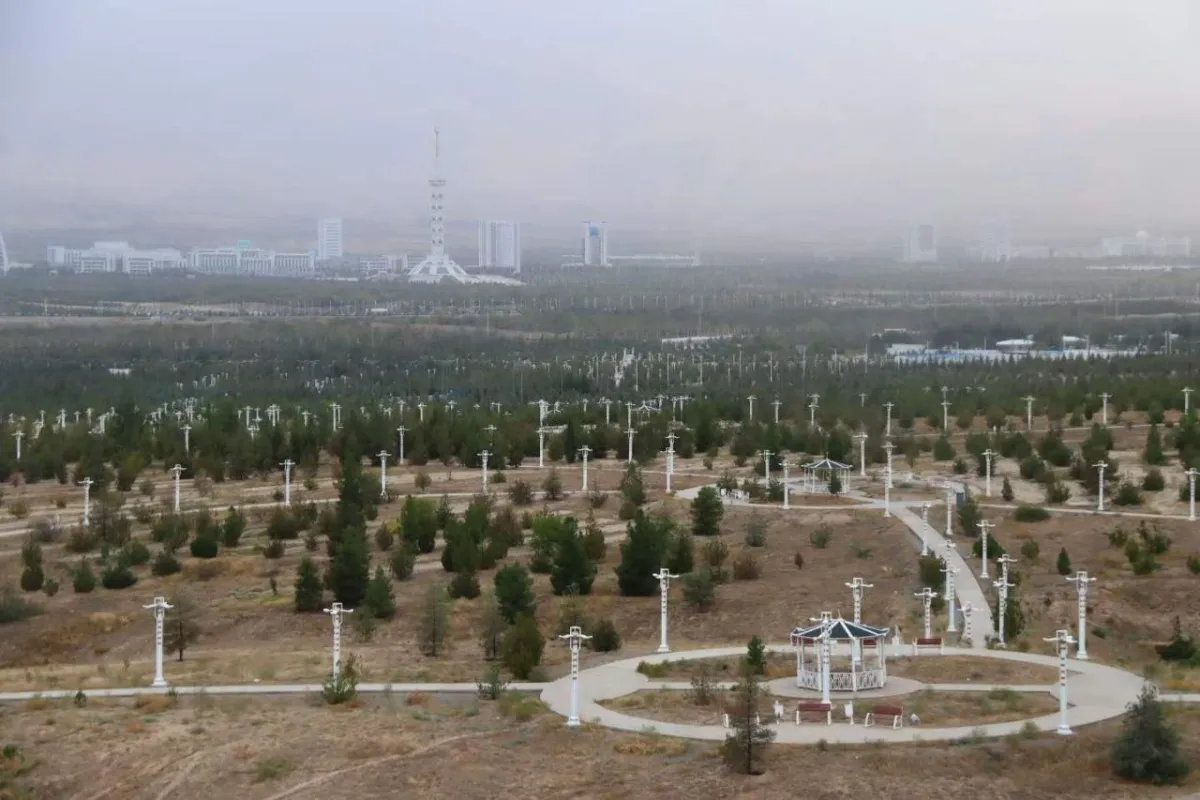
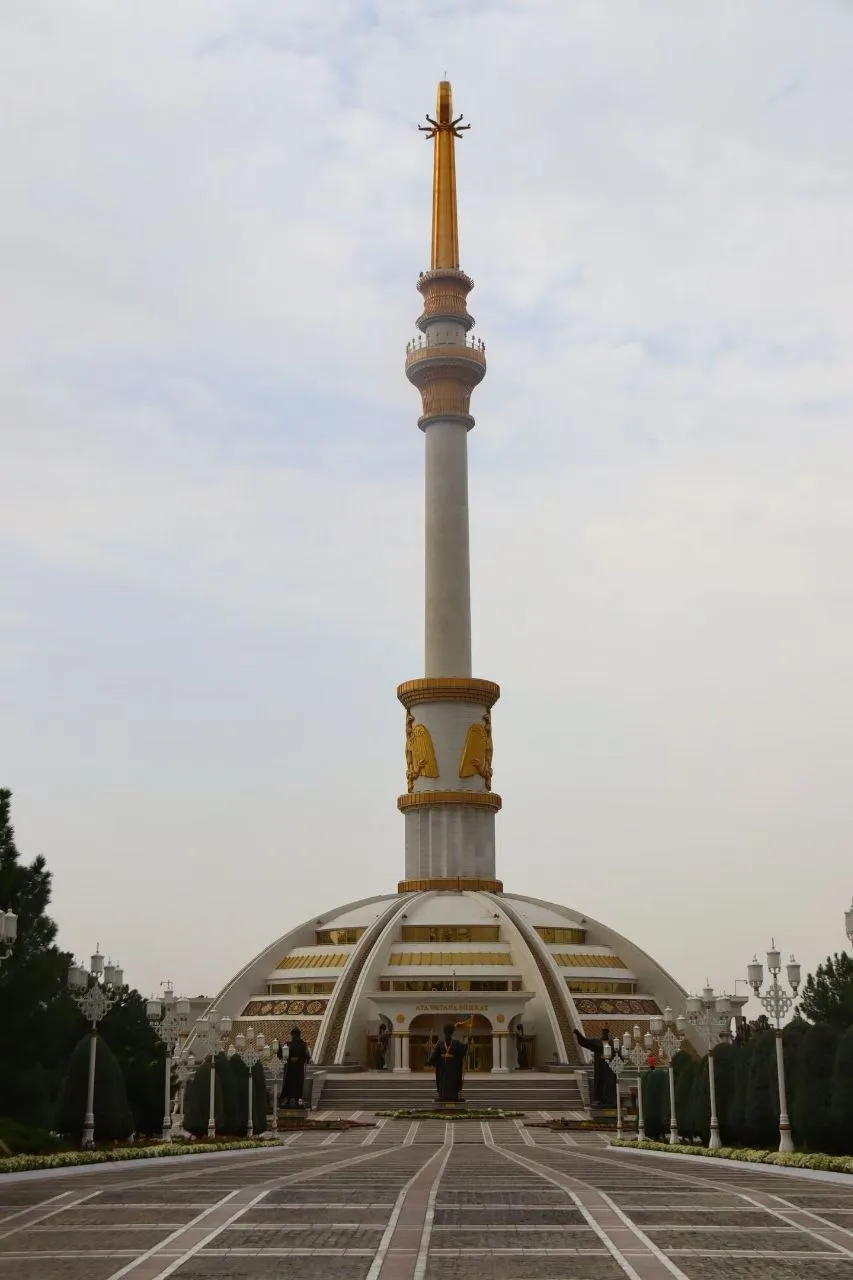
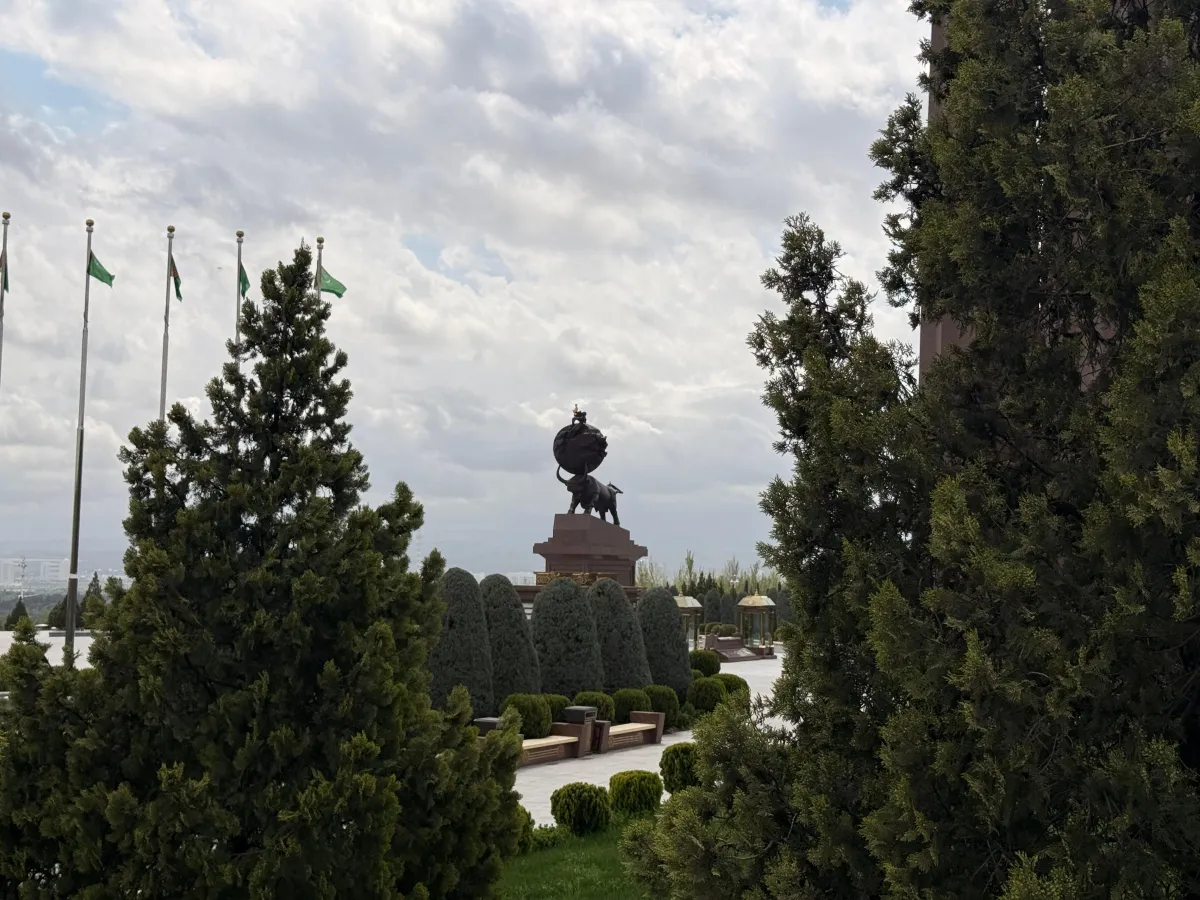
The Independence Monument (popularly nicknamed "the octopus" due to its base resembling a traditional nomadic tent) rises to a height of 118 meters — a figure representing the date of independence (27 + 91). It is surrounded by a landscaped park with bronze statues of national heroes and rulers. Nearby stands the 185-meter Constitution Monument, the second-tallest structure in the country.
🗼 4. Neutrality Monument
The famous 95-meter three-legged arch is topped by a 12-meter gold-plated statue of the first president, Saparmurat Niyazov. Situated on a scenic hill at the base of the mountains, the upper level features an observation deck accessible via a panoramic elevator.
📡 5. Turkmenistan TV Tower
Standing at 211 meters, this broadcast tower rests on a ridge of the Kopet Dag mountains. Its centerpiece is built in the shape of a massive eight-pointed Star of Oguz Khan covering 3,240 sq. meters — making it the world's largest architectural image of a star. At night, the illuminated star is visible from almost anywhere in the city and from planes approaching Ashgabat.
✈️ 6. Ashgabat International Airport
The country's primary air gateway is built in the shape of a soaring falcon (Lachin) with outstretched wings. Designed to accommodate millions of passengers, the terminal also holds a world record for the largest carpet ornament design (göl) adorning a terminal roof.
⚖️ Ashgabat's Contrasts: Between the Future and Ancient Traditions
Despite its ultramodern appearance, Ashgabat stays deeply connected to its heritage. To experience the true character of the city, combine your walks along marble avenues with visits to vibrant traditional spots:
- 🍈 Russian Bazaar ("Gulistan"): The bustling commercial hub in the city center. Here you can buy freshly baked chorek flatbreads, sweet Turkmen melons, dried fruits, halva, camel wool products, and fragrant spices.
- 🛍️ Altyn Asyr Oriental Bazaar (Tolkuchka): A massive market outside the city covering over 100 hectares. Sunday is the best day to visit for authentic handmade wool carpets, silver jewelry set with carnelian, and traditional don robes.
- 🧵 National Carpet Museum: Home to the world's largest hand-woven carpet, "The Golden Age of Saparmurat Turkmenbashi the Great," covering 301 square meters and weighing over a ton.
If you have limited time, a great option is the 2-day circular tour starting and ending in Ashgabat, covering both the futuristic capital and key nearby destinations.
🗺️ What to See Around the Capital
Ashgabat serves as an ideal base for day trips across southern and western Turkmenistan:
🏛️ Ancient Nisa (UNESCO)
Located just 15 km west of the center lie the ruins of Old and New Nisa, ancient capitals of the mighty Parthian Empire (3rd century BC – 3rd century AD). Excavations of the royal fortress, sanctuaries, and ivory rhyton storehouses reveal the splendor of an ancient civilization that rivaled Rome.
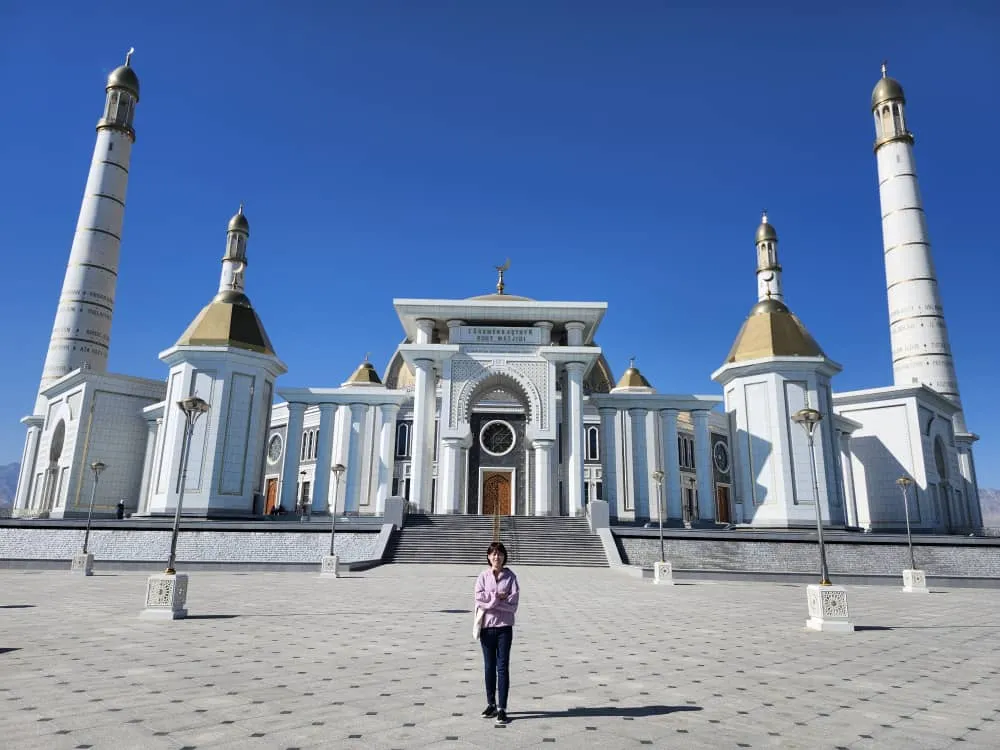
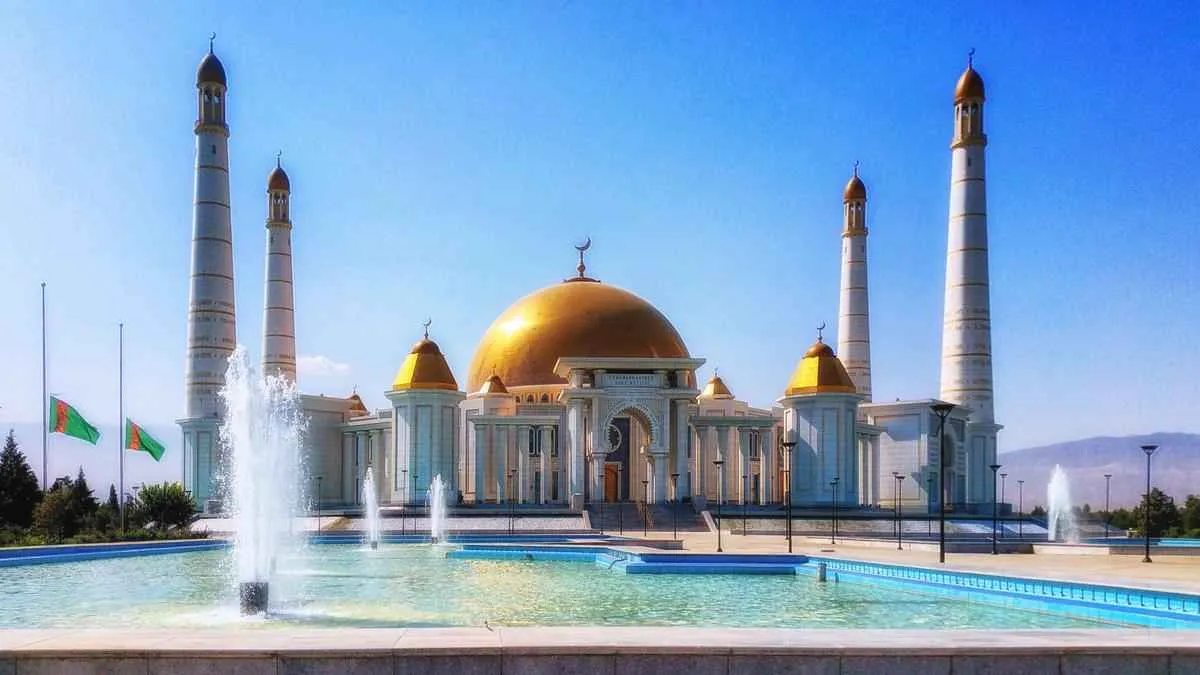
🕌 Turkmenbashi Ruhy Mosque in Gypjak
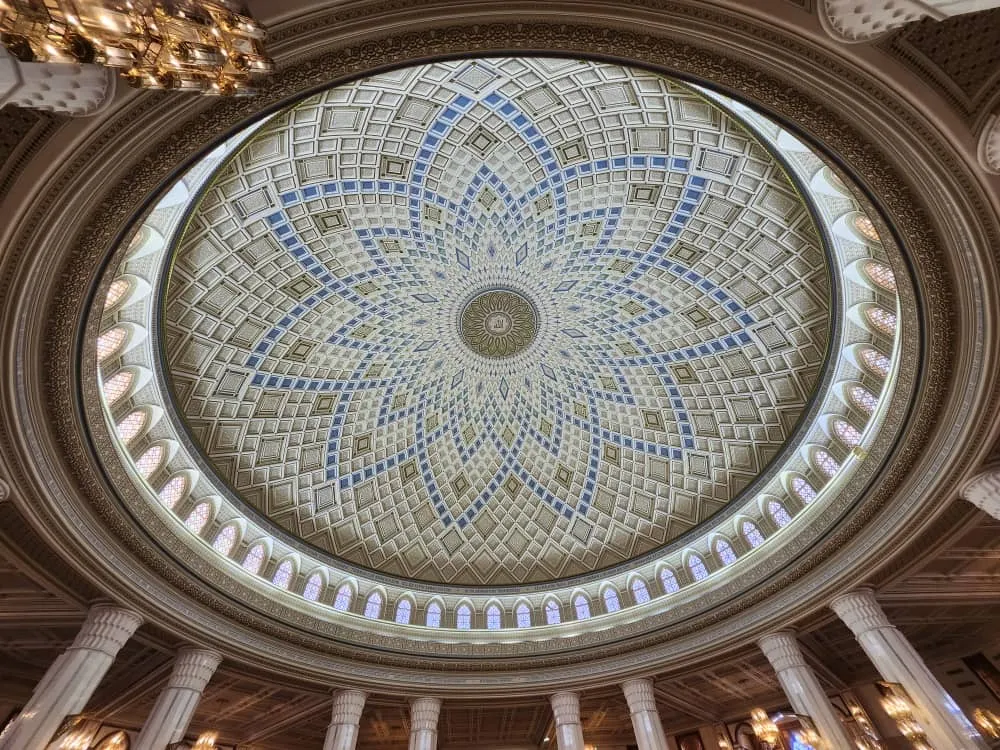
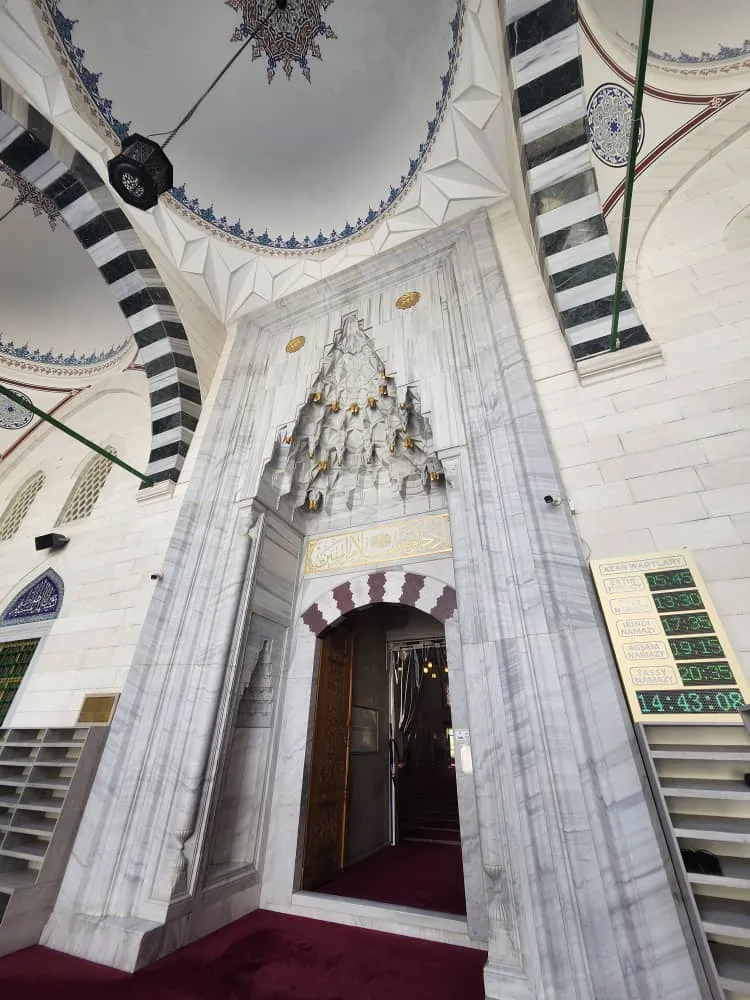
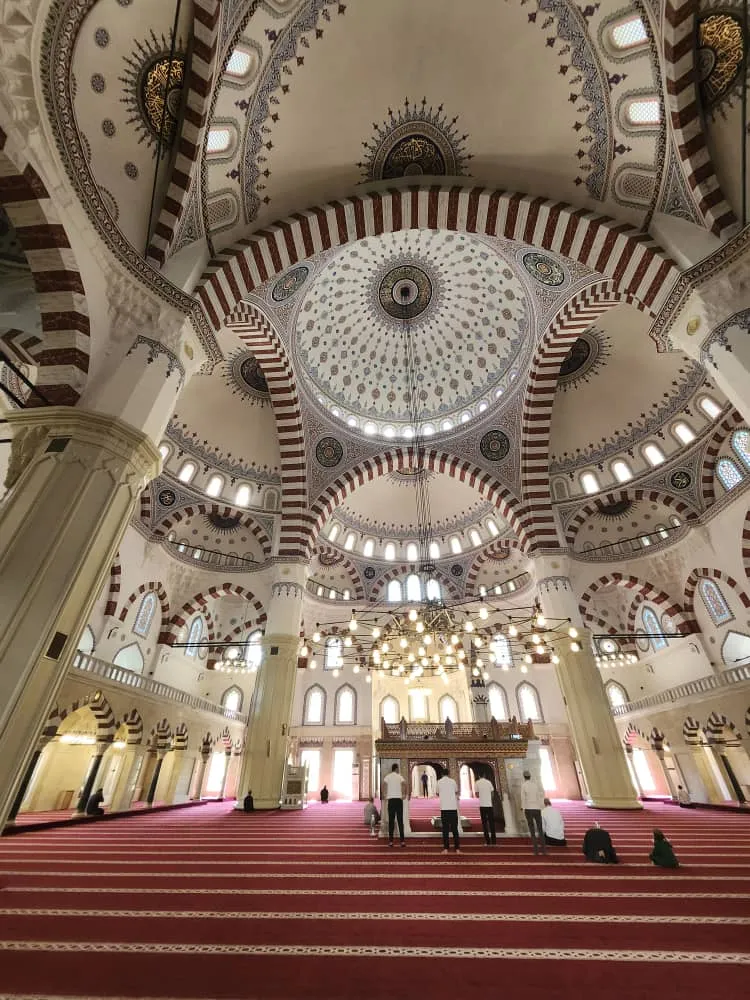
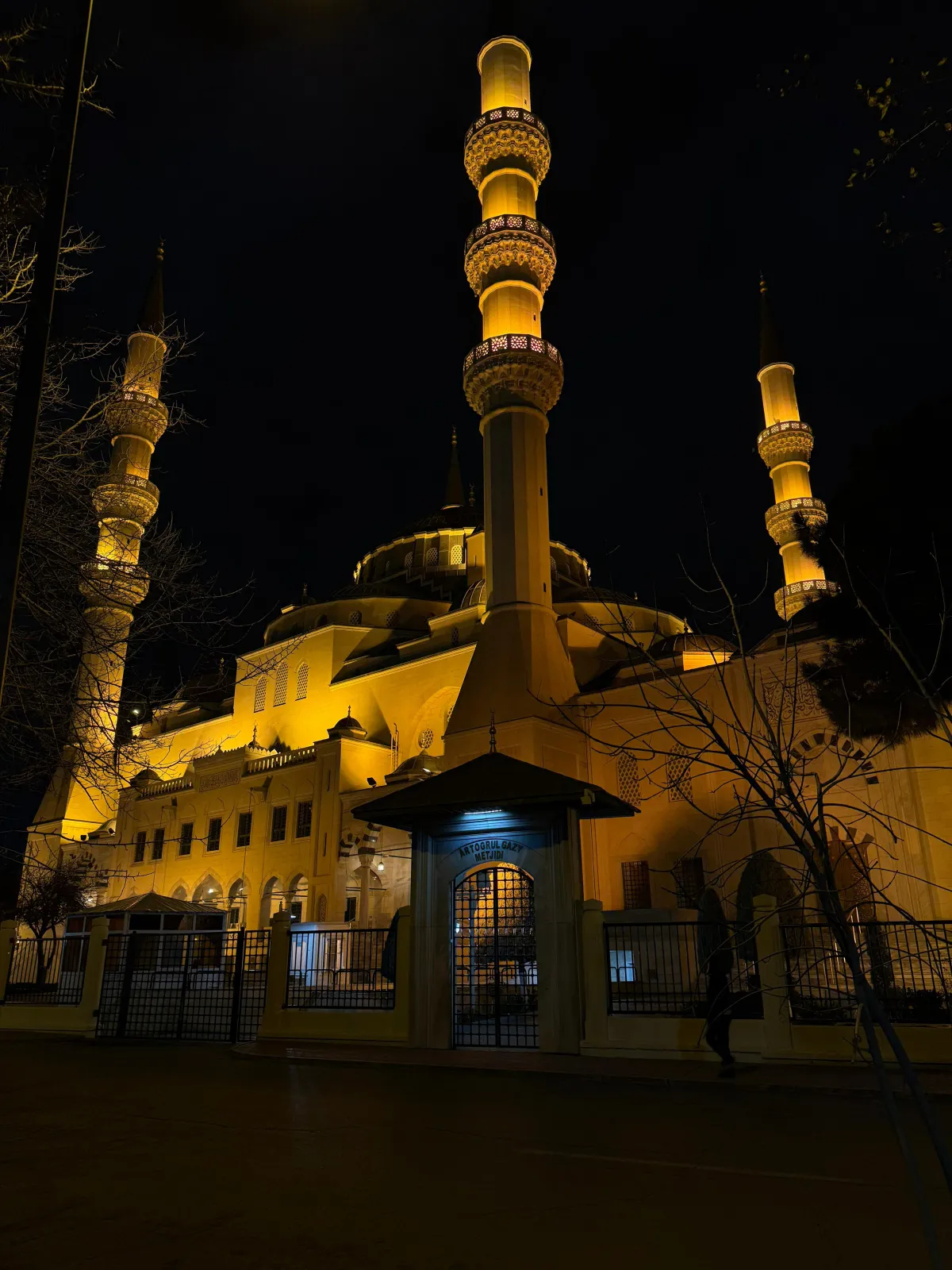
The largest single-domed mosque in Central Asia, capable of holding up to 10,000 worshippers. Built of pristine white marble with a 50-meter golden dome, the mosque is renowned for its intricate craftsmanship and expansive gardens with cascading fountains.
🏊 Kow Ata Underground Lake and Foothills
About 100 km from the capital lies the Bakharden Cave, home to the warm, mineral-rich underground lake of Kow Ata, where water temperatures stay around +33…+37°C year-round. From here, you can easily continue to the traditional ethnographic village of Nohur in the Kopet Dag mountains, famous for its ancient customs and unique terraced architecture.
📋 Practical Information for Travelers
Traveling to Ashgabat requires some preparation and an understanding of local customs. Here are key tips for a smooth trip:
📅 1. Best Time to Visit
The ideal travel seasons are spring (late March to May), when the foothills are lush with greenery and wild tulips, and autumn (September to November), featuring pleasant temperatures around +20…+25°C and an abundance of fresh melons and watermelons. Daytime summer heat in July and August can be intense.
🚕 2. Transportation and Local Customs
- 🚖 City taxis: Ashgabat has official municipal taxis (yellow and white cars). Hailing a car with a hand wave is also common practice. Fares within the city are standardized and affordable (typically 10–20 TMT per ride).
- 🤍 White vehicles: A unique feature of Ashgabat is the predominant preference for white or silver vehicles, which harmonizes with the city's white marble aesthetic.
- 🚌 Public transit: Modern Mercedes-Benz and Hyundai buses run on scheduled routes and are equipped with air conditioning and digital displays. Many bus stops throughout the city are also air-conditioned and fitted with TV screens.
📷 3. Etiquette and Photography Guidelines
Ashgabat is considered one of the safest and calmest capitals in the world, with virtually no street crime. However, basic rules should be observed:
- 🚫 Photography of government buildings, the Presidential Palace, military sites, police officers, and border control facilities is prohibited.
- ✅ Monuments, parks, museums, bazaars, and general public areas can be freely photographed with phones or cameras. When in doubt, it is best to ask your guide or nearby security personnel.
- 👗 The dress code is generally relaxed, though modest attire is recommended when visiting mosques and official institutions.
💰 4. Currency and Payments
The official currency is the Turkmen Manat (TMT). Acceptance of international bank cards (Visa, Mastercard) is very limited, so it is essential to carry cash in US Dollars (preferably crisp, new banknotes without tears or markings) for exchange at banks and authorized exchange offices.
🧭 How to Include Ashgabat in a Turkmenistan Itinerary
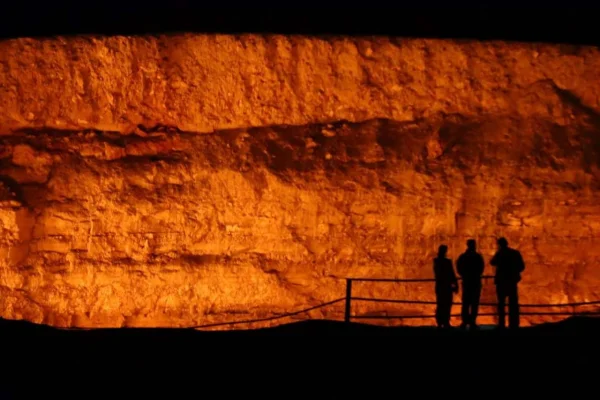
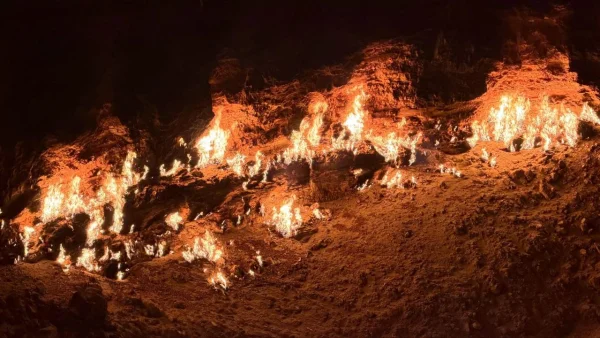
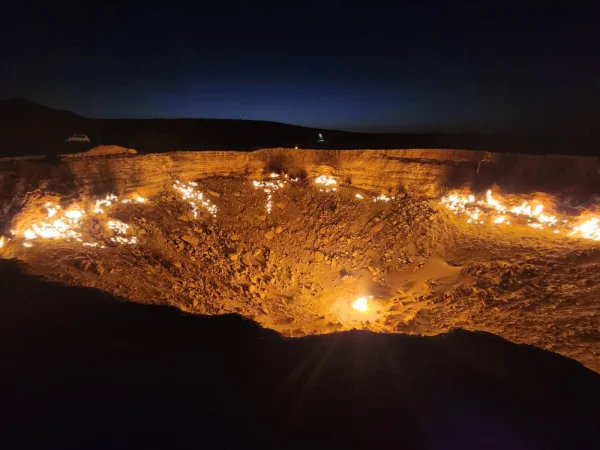
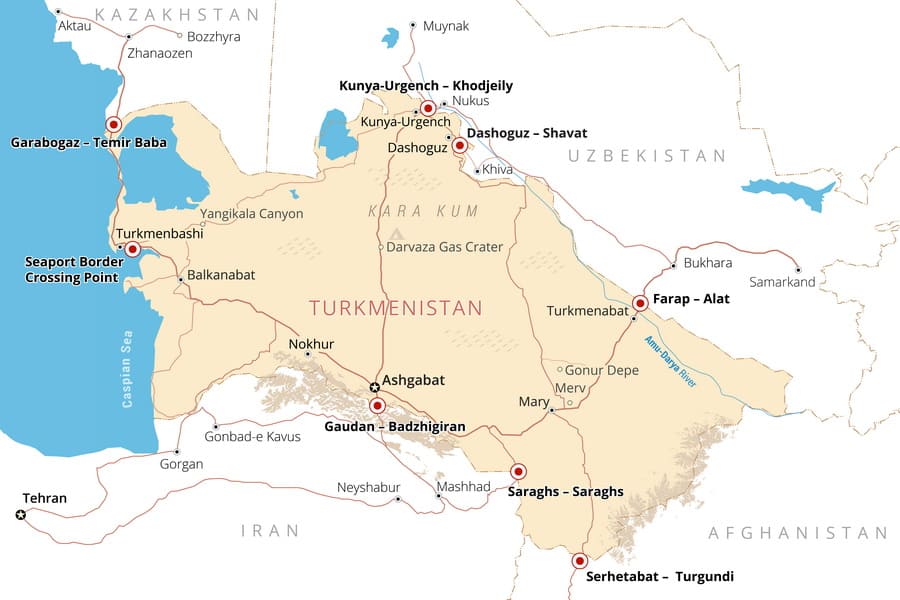
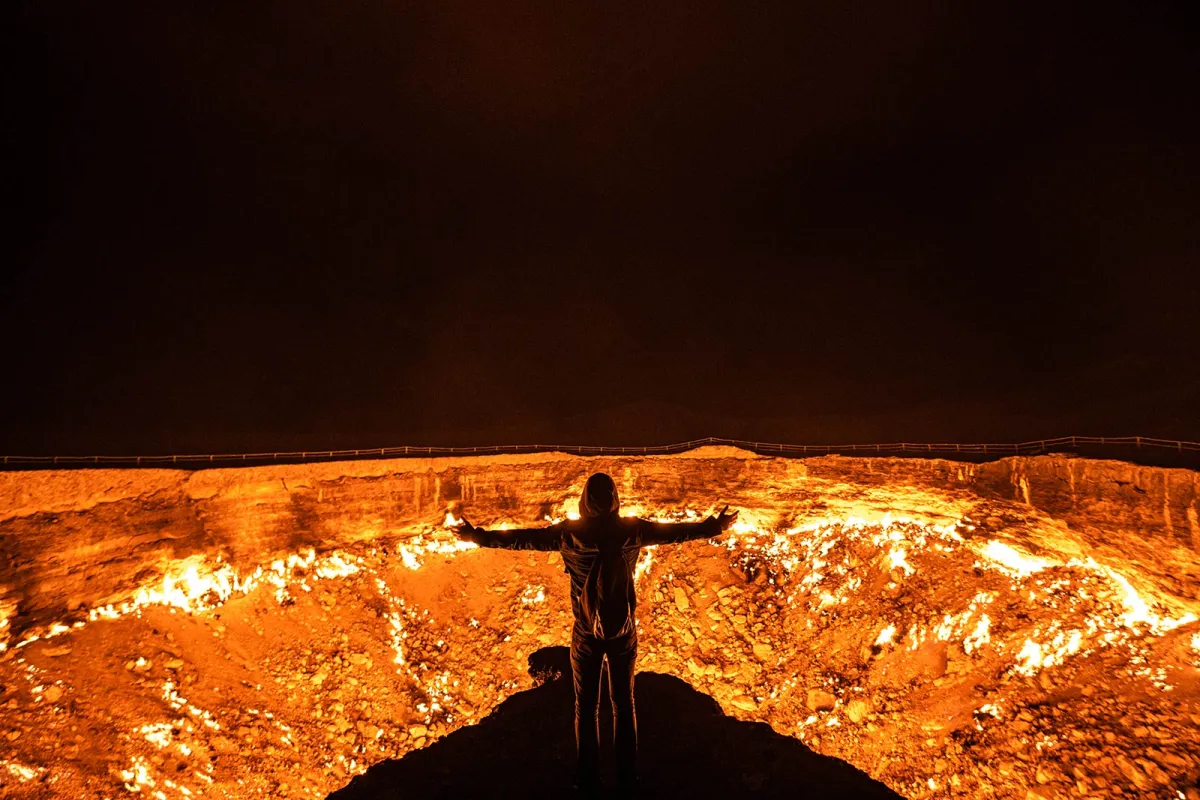
Most visitors combine exploring the white marble capital with trips to the country's premier natural and historical highlights. A popular choice is the well-rounded 4-day Turkmenistan tour: Ashgabat, Ancient Merv, and Darvaza. In four days, you will experience the futuristic architecture of the capital, explore the deep history of Ancient Merv on the Silk Road, and spend an unforgettable night by the glowing Darvaza Gas Crater ("Gates of Hell") in the Karakum Desert.
For travelers exploring the wider region on a multi-country route, the 5-day itinerary from Ashgabat via Merv and Darvaza to Khiva provides a seamless land crossing into Uzbekistan.
🏁 Conclusion
White marble Ashgabat is unlike any other capital city in the world. It is a destination defined by grand proportions, symmetrical architecture, and a remarkably peaceful atmosphere, where ancient nomadic heritage meets a visionary 21st-century cityscape. Whether enjoying an evening stroll down illuminated avenues or sharing tea at a traditional bazaar, Ashgabat leaves lasting memories that stay with you long after your journey ends.