🏛️ The Splendor of Ancient Gurganj: Introduction to the Heritage of Kunya-Urgench
In northern Turkmenistan, amid the vast plains of the Dashoguz Region and near the old bed of the Amu Darya River, rise the magnificent ruins of one of the grandest medieval metropolises of the East — Kunya-Urgench (ancient Gurganj, Jurjaniya). Once the illustrious capital of the mighty Khwarazmian Empire, this city was for centuries a vital crossroads of the caravan routes along the Great Silk Road, linking China, the Middle East, Rus, and Europe.
In 2005, the architectural and historical complex of Kunya-Urgench was officially inscribed on the UNESCO World Heritage List. This recognition affirmed the enduring value of its monuments: it preserves unique masterpieces of 11th–16th century Islamic and Khwarazmian architecture, renowned for their daring engineering solutions, impeccable geometric proportions, and unparalleled polychrome glazed ceramics. Alongside such legendary landmarks as Ancient Merv, Kunya-Urgench epitomizes the golden age of Central Asian civilizations.
For modern travelers, Kunya-Urgench is not merely an open-air museum, but a portal into an era of prominent scholars, daring architects, Sufi mystics, and formidable rulers. You can easily visit these sacred sites by choosing a convenient 1-day transit tour to Kunya-Urgench from Khiva to Khiva or Nukus or by including the monument in an extensive nationwide itinerary.
📜 Historical Chronicles: From Imperial Zenith to Devastating Sieges
The history of Kunya-Urgench spans more than two millennia. The city originated in antiquity, when the fertile delta of the Amu Darya was irrigated by an advanced network of canals. However, the true triumph of Gurganj began at the turn of the 10th and 11th centuries.
🎓 The Mamun Academy and the Golden Age of Science
At the end of the 10th century, Gurganj became the capital of a unified Khwarazm under the Mamunid dynasty. The city's rulers founded the renowned Mamun Academy — an intellectual hub that attracted the greatest minds of its time. In the shaded gardens and madrasahs of Gurganj worked polymath Abu Rayhan al-Biruni and the father of early modern medicine Abu Ali ibn Sina (Avicenna). Groundbreaking research was conducted here in astronomy, geodesy, mathematics, pharmacology, and philosophy.
👑 Capital of the Khwarazmian World Power
By the late 12th and early 13th centuries, under the Anushteginid dynasty (the Khwarazmshahs), Kunya-Urgench became the heart of a colossal empire stretching from the Caucasus and the Persian Gulf to the borders of India. The city amazed contemporaries with its splendid palaces, caravanserai, bustling bazaars with thousands of merchants, and slender minarets. It became Eurasia's major craft and trade hub.
⚔️ Dramatic Trials: Genghis Khan and Tamerlane
The city’s prosperity was abruptly halted in the spring of 1221, when the countless tumens of Genghis Khan’s sons — Jochi, Chagatai, and Ogedei — approached the walls of Gurganj. The siege lasted more than six months; the defenders fought fiercely for every quarter and street. Unable to break the citizens' spirit in direct combat, the Mongols breached the dam on the Amu Darya, flooding the flourishing metropolis and wiping most of its neighborhoods from the face of the earth.
Despite the catastrophe, Gurganj demonstrated a phenomenal capacity for revival. Absorbed into the Golden Horde, the city once again flourished as a wealthy trade hub. It was in the 14th century that governor Qutlugh-Timur and his wife Turabek-Khanum constructed the architectural masterpieces that survive to this day. However, in 1388, Amir Timur (Tamerlane), viewing Urgench as a dangerous commercial rival to Samarkand, besieged the city, razed its fortifications, and ordered its grounds to be sown with barley. The final blow was delivered by nature: in the 16th century, the Amu Darya permanently altered its course, veering northward toward the Aral Sea. Deprived of water, the inhabitants founded a new city (modern Urgench in Uzbekistan), while the ancient capital became known as Kunya-Urgench ("Old Urgench").
🕌 Top Attractions and Architectural Treasures of Kunya-Urgench
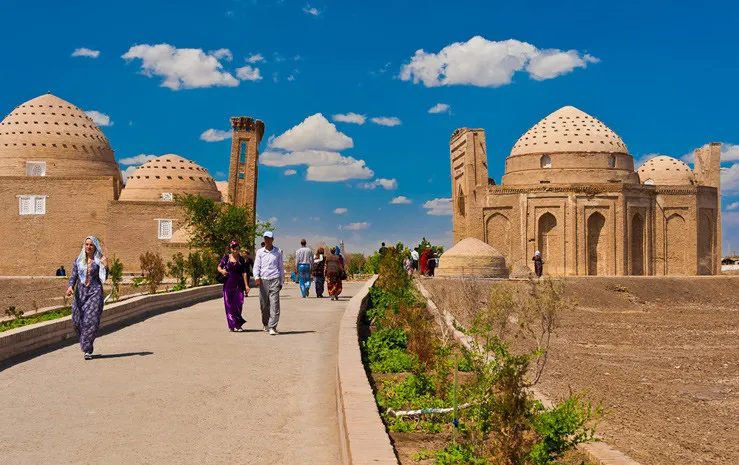
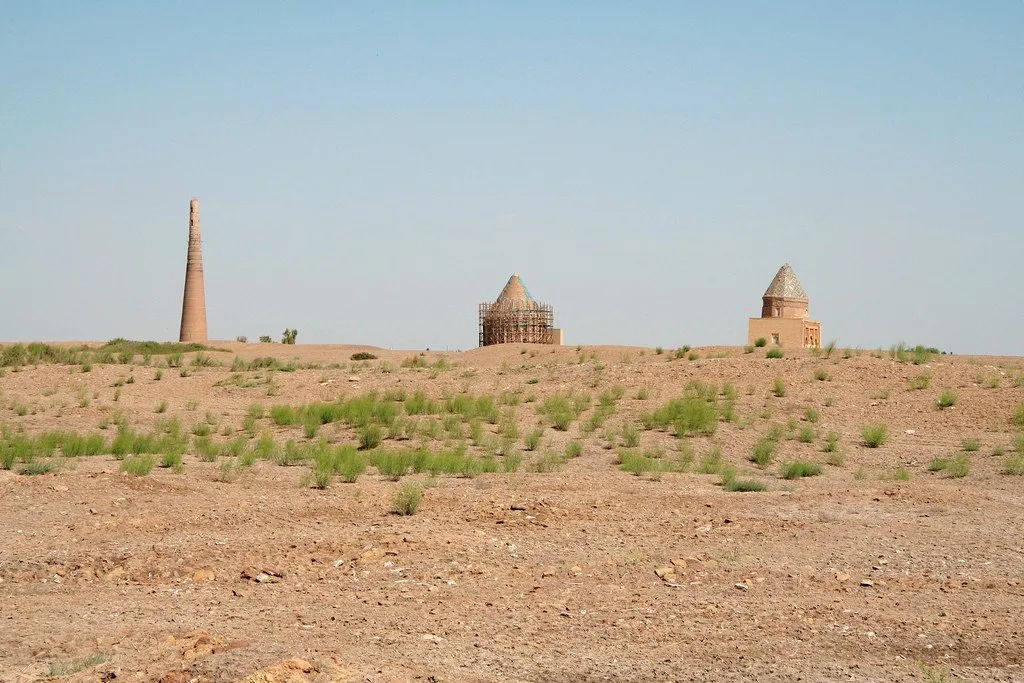
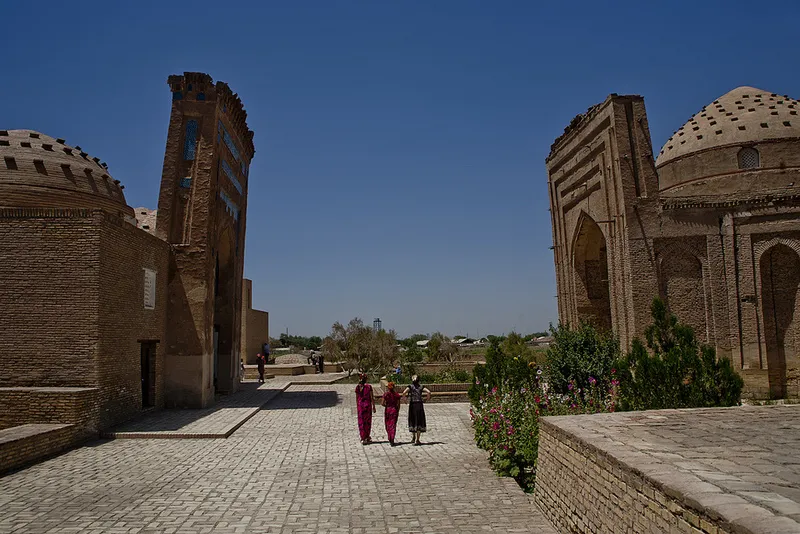
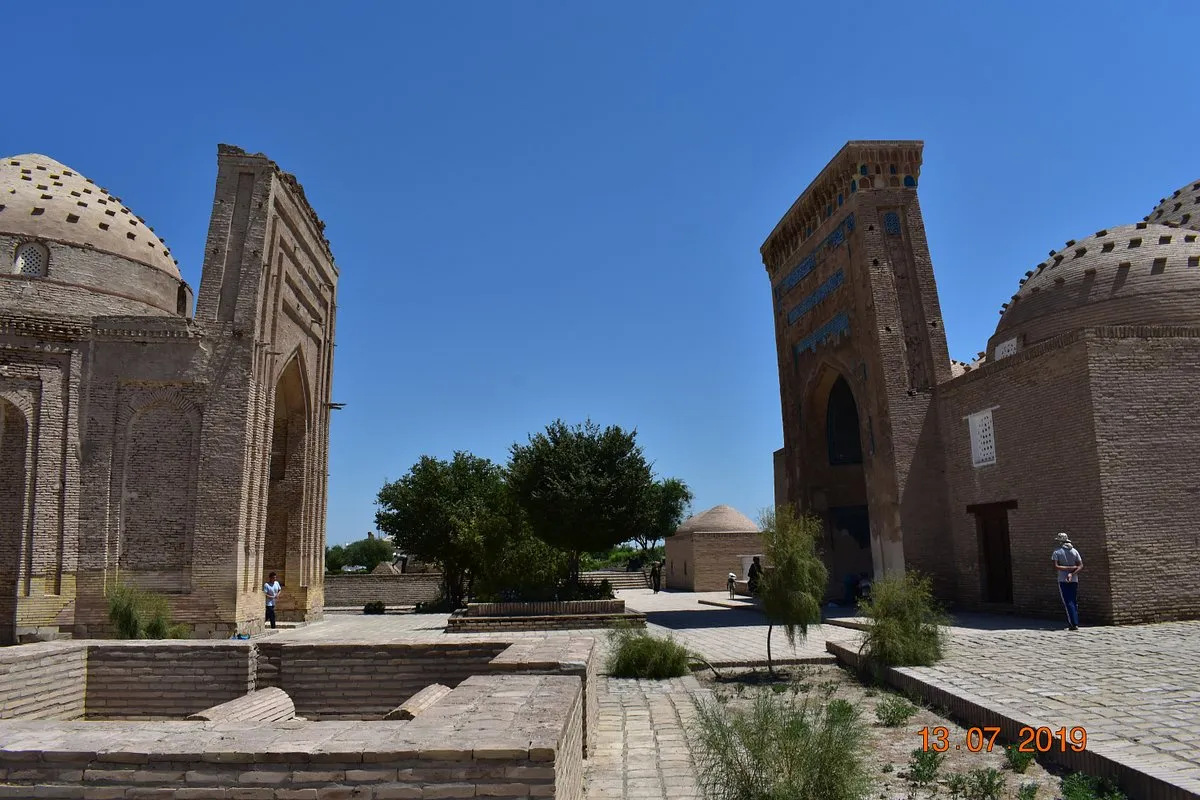
Today, the Kunya-Urgench Historical and Cultural Reserve covers a vast territory where isolated monuments of unmatched beauty rise against the steppe landscape. To fully appreciate their grandeur, it is worth setting aside ample time for a thoughtful exploration of each site.
| Monument | Century | Key Feature |
|---|---|---|
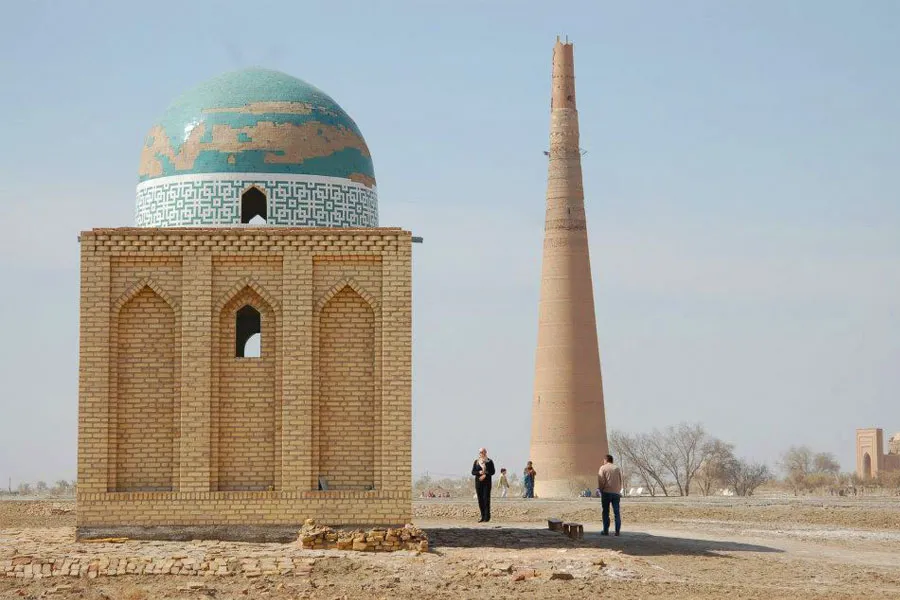
| 🗼 Kutlug-Timur Minaret | 14th | Central Asia’s tallest brick minaret (60 m) with a slight tilt |
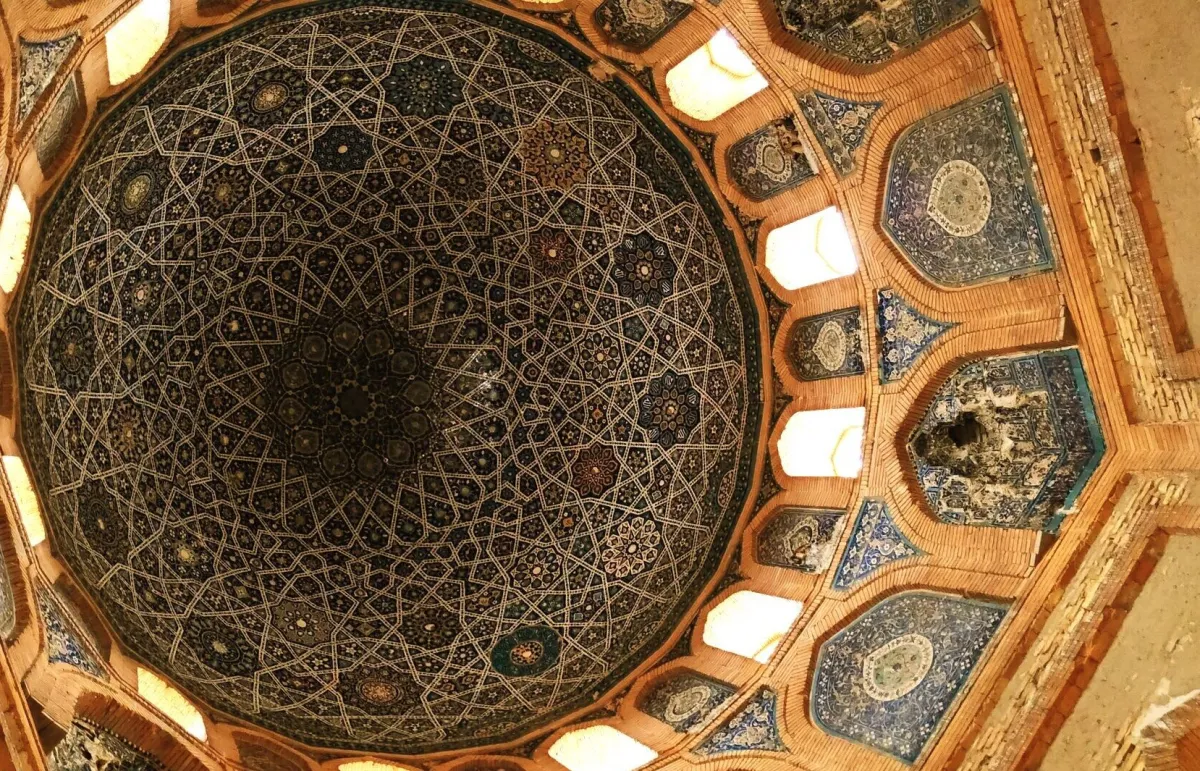
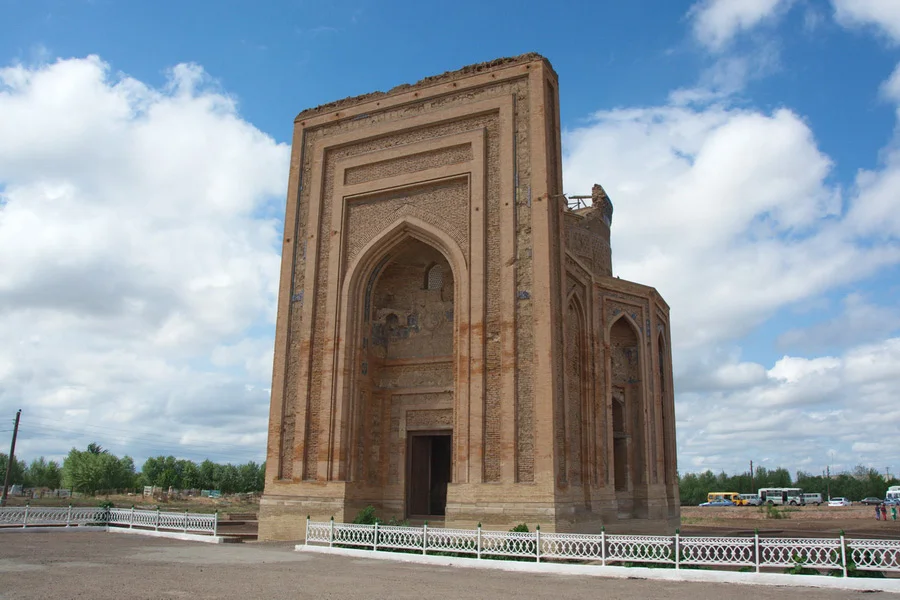
| 💠 Turabek-Khanum Mausoleum | 14th | Pinnacle of Khwarazmian art — dome featuring a mosaic "starry" pattern |
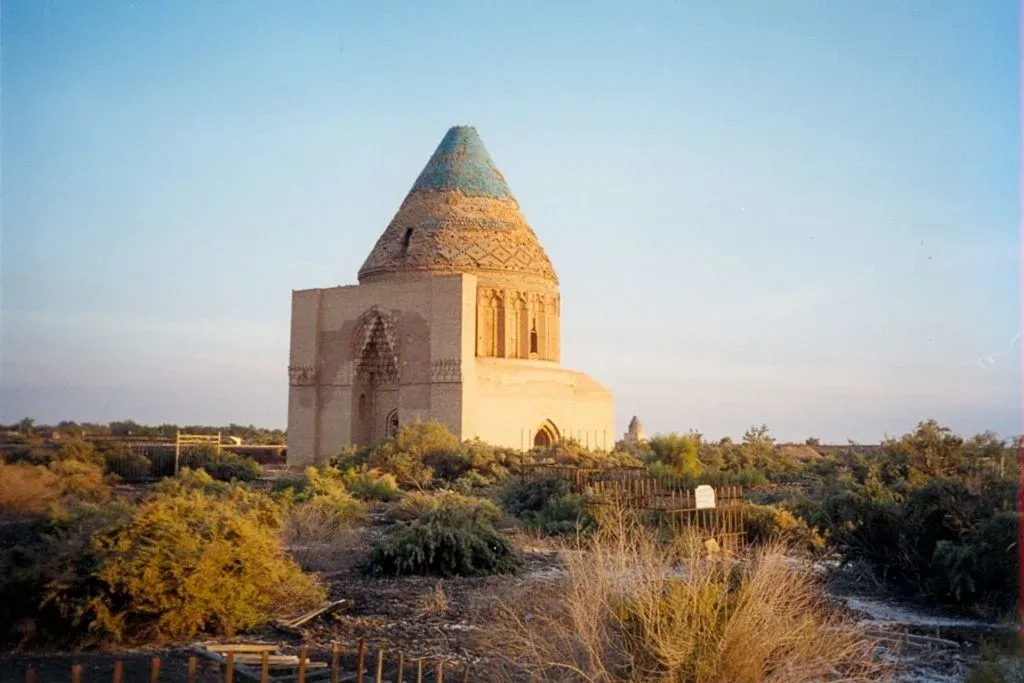
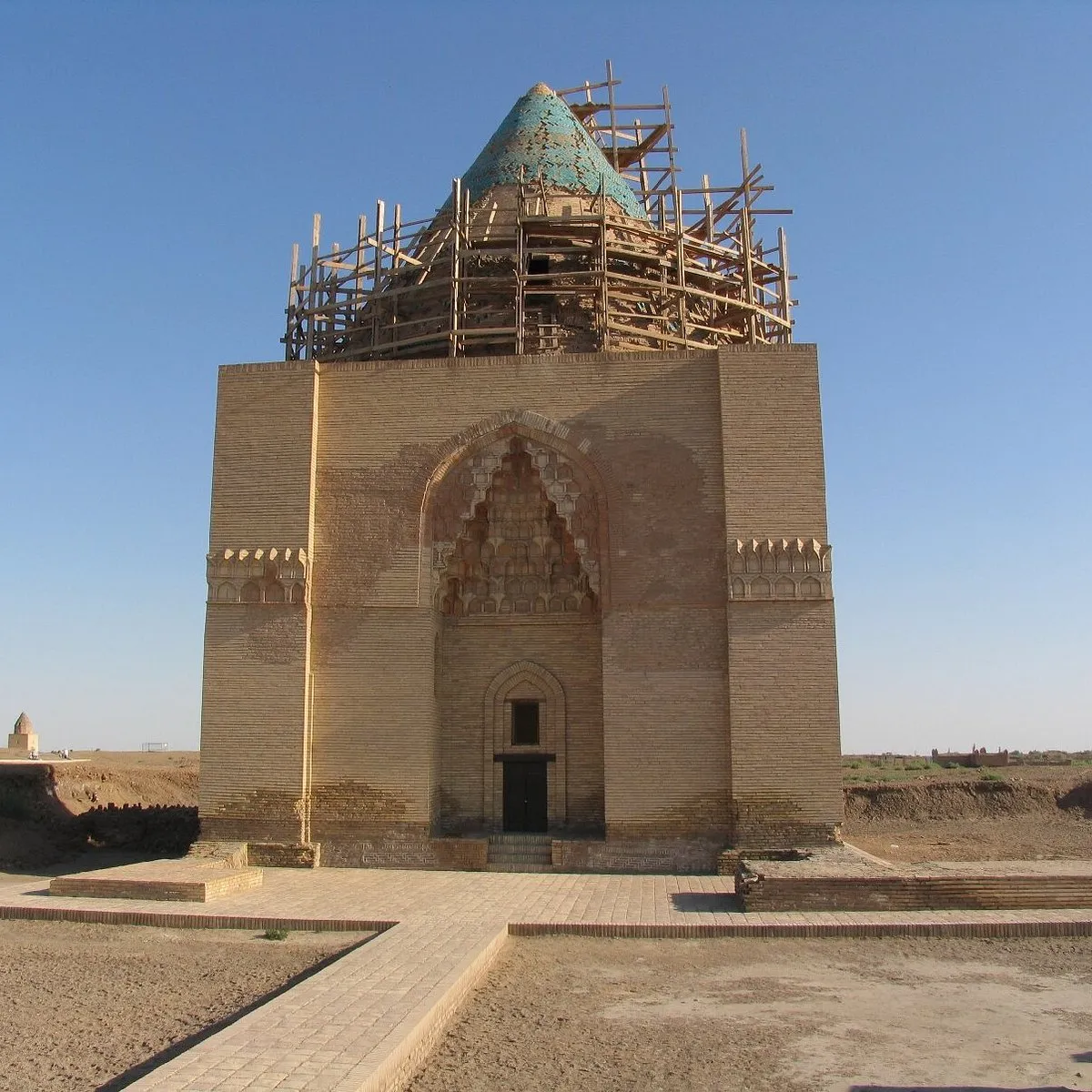
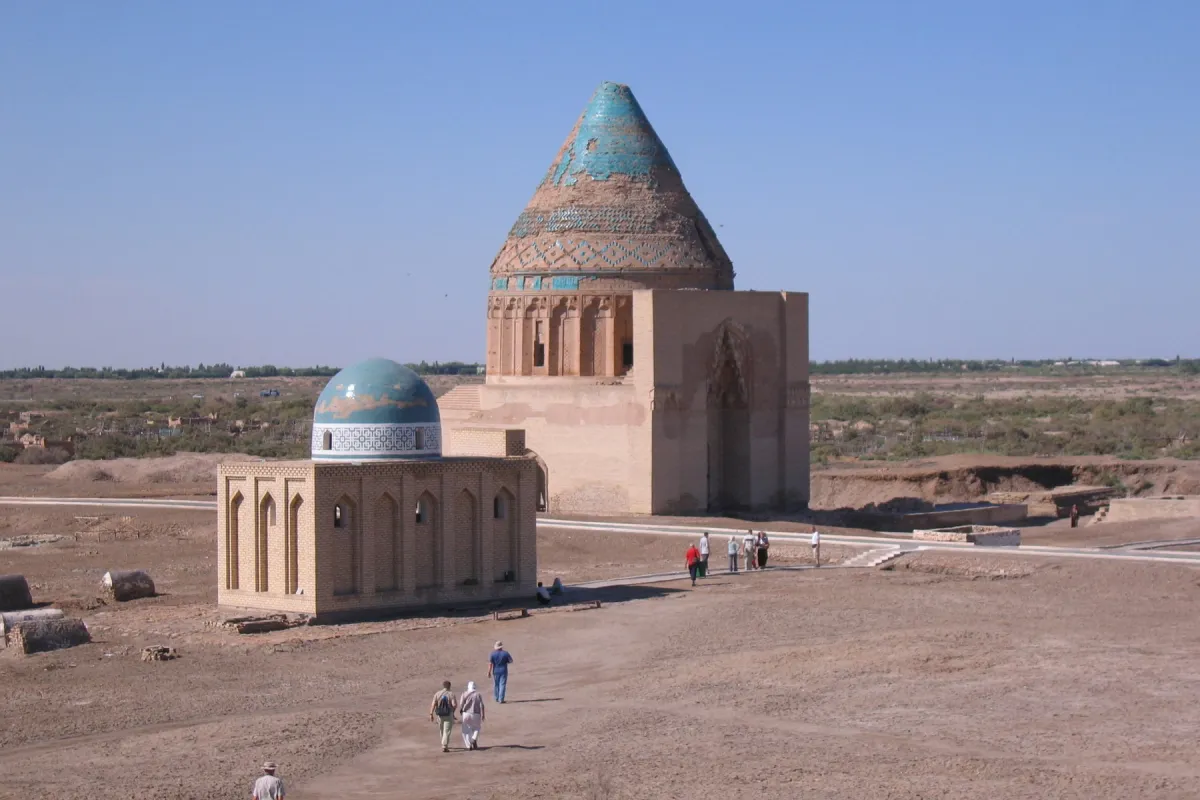
| ⛩️ Sultan Tekesh Mausoleum | 12th | Conical tent dome adorned with herringbone turquoise tiles |
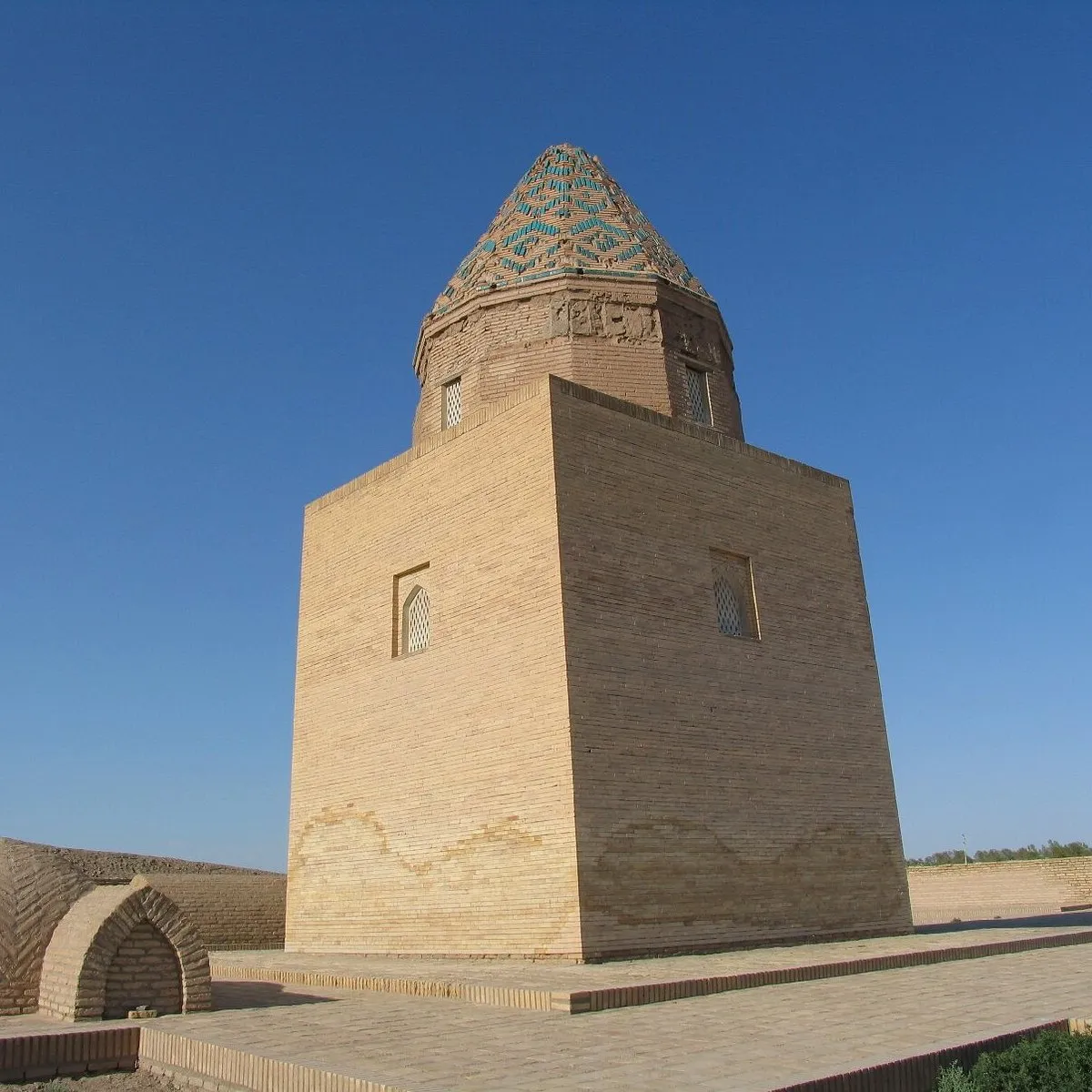
| 🕌 Il-Arslan Mausoleum | 12th | The city’s oldest building with a carved terracotta facade |
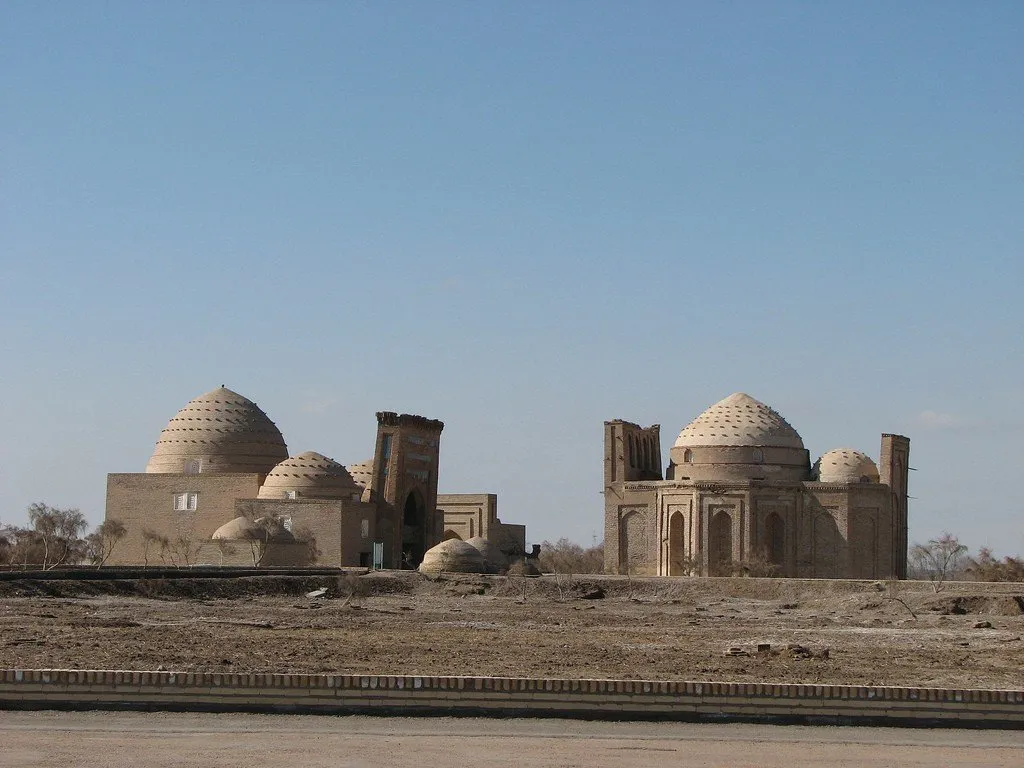
| 🕋 Najm al-Din al-Kubra Complex | 13th | Active Sufi pilgrimage destination |
| 🏰 Kyrkmolla Fortress | Hellenistic | Ancient Gurganj citadel offering panoramic views of the reserve |
🗼 1. Kutlug-Timur Minaret — The Vertical Landmark of the Medieval East
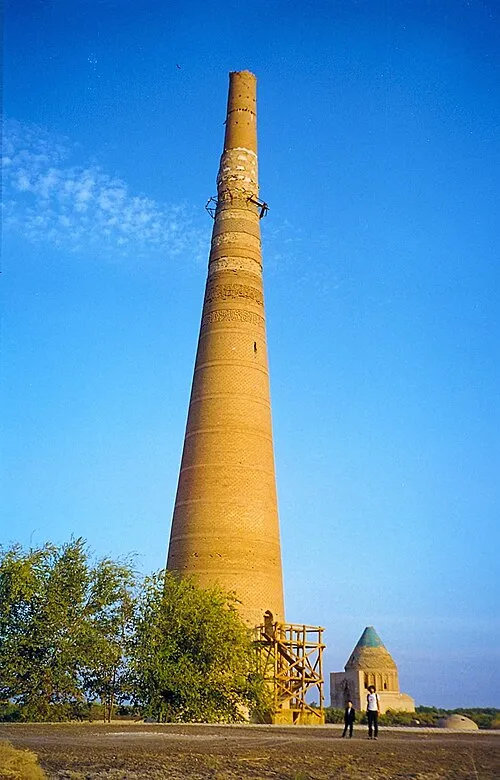
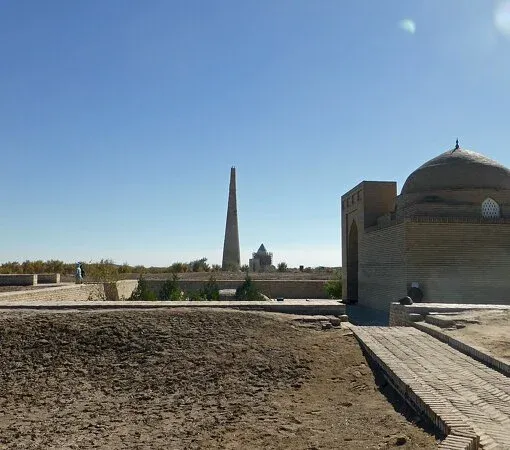
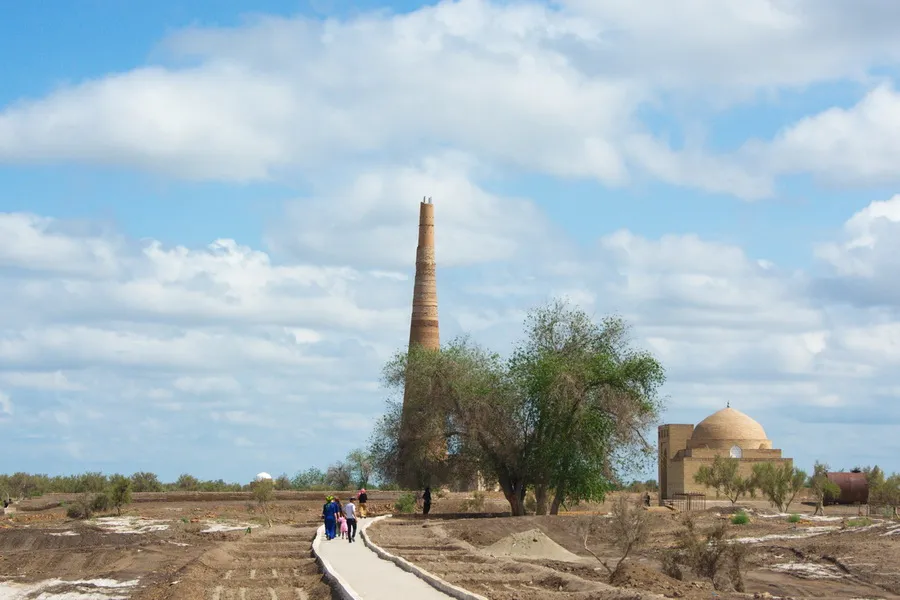
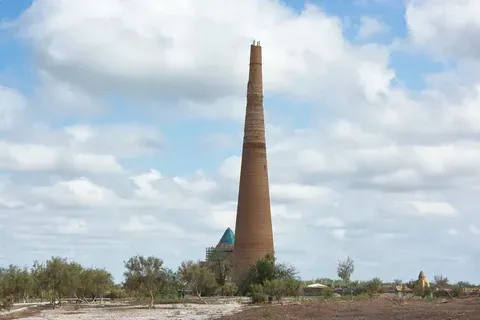
The quintessential symbol of Kunya-Urgench is the 60-meter Kutlug-Timur Minaret, erected in the 1320s–1330s. Before modern towers were built, it remained the tallest brick minaret in all of Central Asia. Its slender conical shaft, tapering upwards, is divided into 18 bands of decorative brickwork and elegant Kufic calligraphy in turquoise glaze. Notably, the minaret has a slight tilt due to seismic ground shifts, often earning it comparisons to the Leaning Tower of Pisa.
💠 2. Turabek-Khanum Mausoleum — A Poem in Turquoise Mosaic
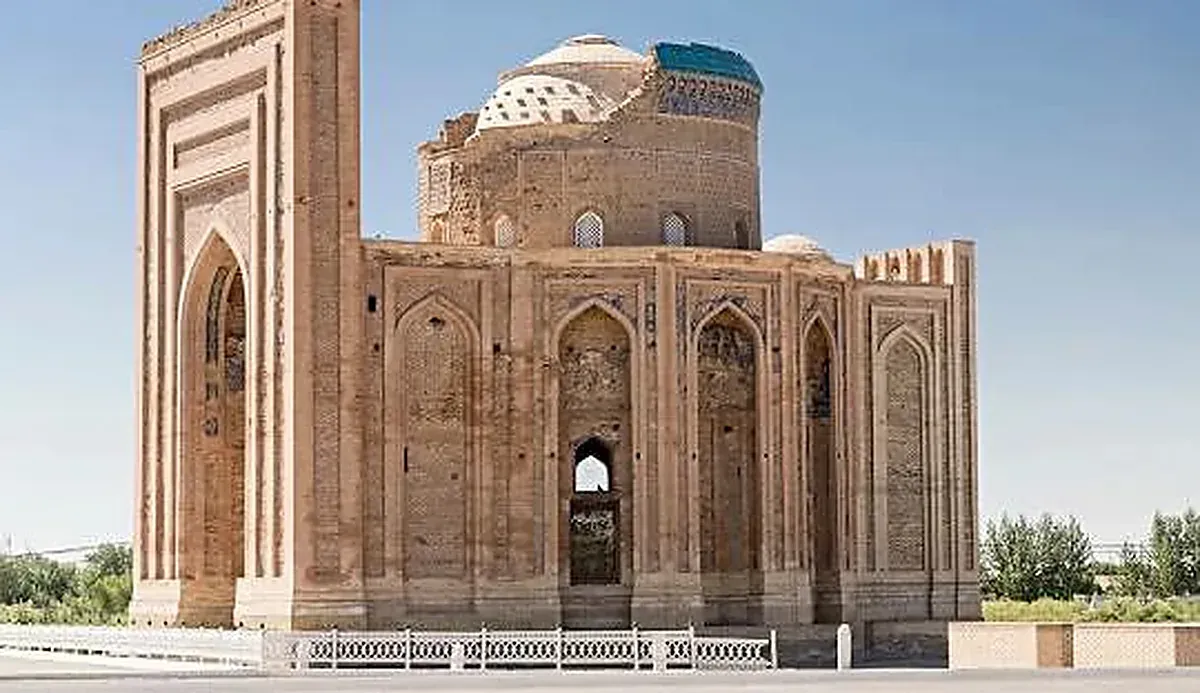
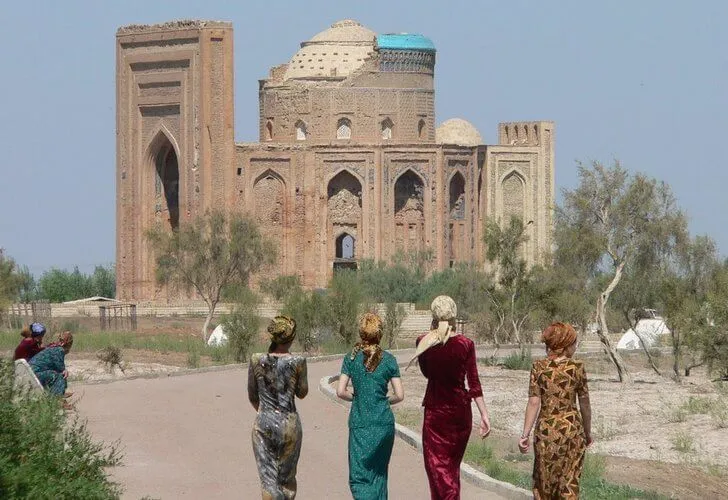
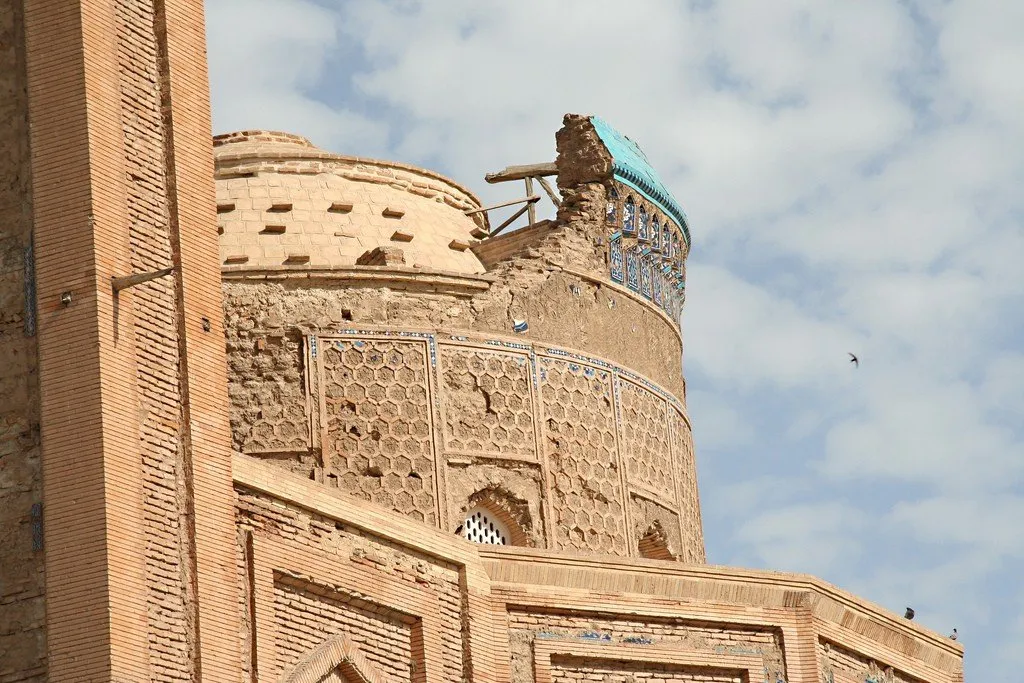
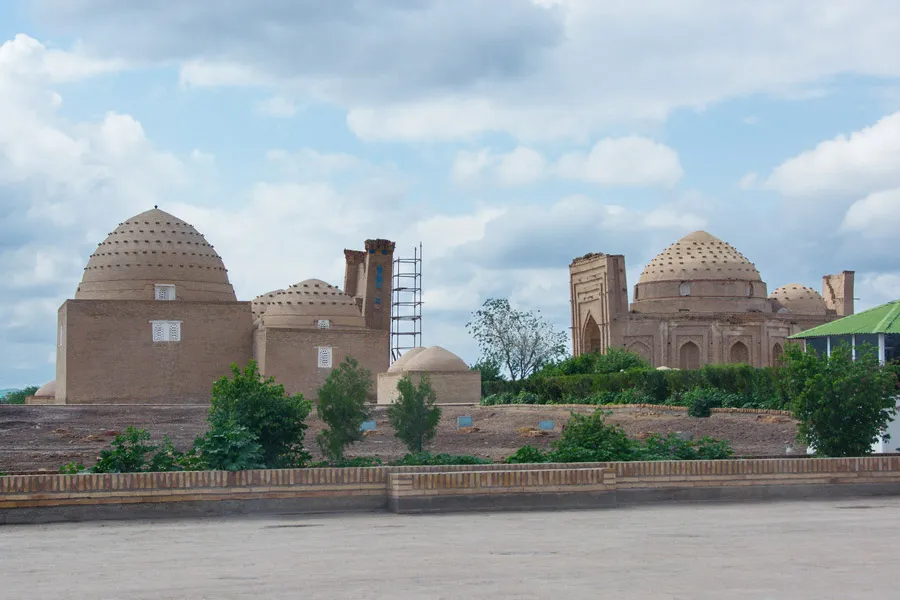
This 14th-century monument is recognized by UNESCO experts as the absolute zenith of Khwarazmian decorative arts. Built over the burial vault of Mongol princess Turabek-Khanum, the mausoleum is a sophisticated twelve-sided structure with a spacious hexagonal hall. The inner dome features an awe-inspiring mosaic rosette: hundreds of thousands of delicate tiles in sky-blue, sapphire, white, and gold hues form an intricate cosmogonic pattern symbolizing the eternal movement of the stars and the changing seasons.
⛩️ 3. Sultan Tekesh Mausoleum
Built at the end of the 12th century for Khwarazmshah Tekesh, this mausoleum showcases revolutionary engineering solutions. Resting on a massive square base is a high corrugated drum crowned by a soaring conical tent dome faced with vibrant turquoise herringbone tiles. This monumental structure served both as a tomb and as a beacon for caravans approaching the city across the desert.
🕌 4. Il-Arslan Mausoleum (Fakhr al-Din Razi)
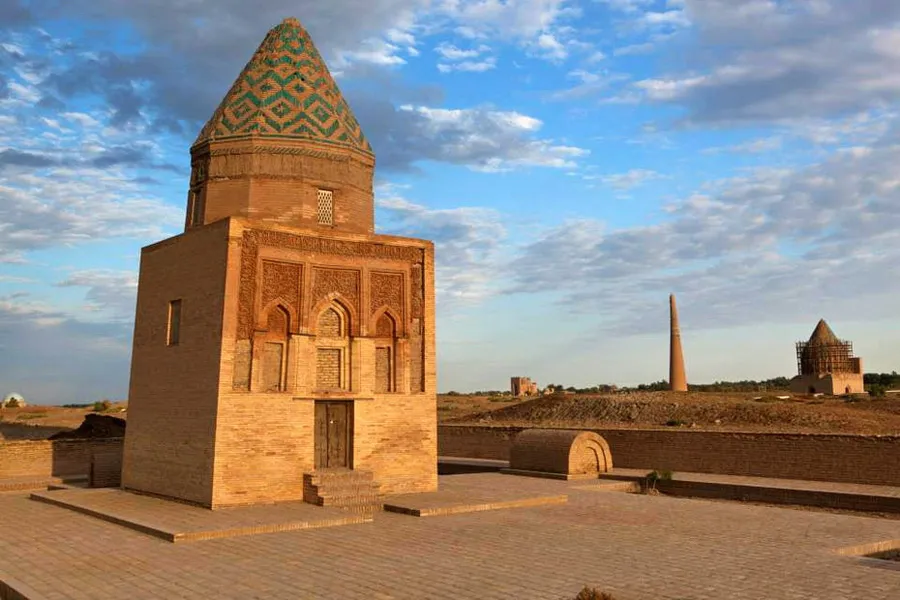
The oldest surviving building in Kunya-Urgench (second half of the 12th century). The mausoleum of Sultan Tekesh's father, Il-Arslan, stands out for its twelve-sided pyramidal tent dome and unique carved terracotta facade featuring delicate floral and calligraphic ornamentation. This architectural style served as a prototype for many later mausoleums across Iran and Transcaucasia.
🕋 5. Complex of Najm al-Din al-Kubra and Sultan Ali
A revered pilgrimage site for Muslims from around the world. Najm al-Din al-Kubra was an outstanding Sufi master and the founder of the Kubrawiya mystical order, who perished in 1221 defending his native city against the Mongols. A serene atmosphere reigns within the complex, where the tombstones are embellished with exquisite majolica and intricate calligraphic inscriptions.
🏰 6. Kyrkmolla Fortress ("Forty Mullahs") and Kone-Kala
To the north of the main mausoleums rises the hill of Kyrkmolla — Gurganj's most ancient citadel, dating back to the Hellenistic period. According to legend, during the Mongol siege of the city, forty Islamic scholars and clerics barricaded themselves inside the fortress and prayed to heaven for the salvation of sacred knowledge, after which the citadel concealed them from the invaders. Today, it is an earthen mound with fragments of fortress walls offering a captivating panoramic view over the entire historical reserve.
🏗️ The Architectural Phenomenon of Khwarazm and Its Global Influence
The monuments of Kunya-Urgench represent an exceptional chapter in world architecture. Khwarazmian master builders pioneered innovative techniques that later shaped the iconic monuments of Samarkand, Bukhara, Herat, and even the Safavid and Mughal empires in Persia and India. Key innovations include:
- 🔷 Complex squinch and pendentive systems: transitioning from a square base to an octagon and then to a circular dome base allowed the construction of colossal unsupported interior spaces.
- 🌐 Double-shell domes: the inner spherical dome ensured flawless acoustics and visual harmony inside the hall, while the high exterior tent provided a monumental silhouette visible from dozens of kilometers away.
- 🎨 Carved terracotta and underglaze painting: masterly clay-firing technology produced durable ceramics that have retained their brilliant luster over eight centuries.
Following the Mongol devastation, many master craftsmen of Urgench were taken captive or dispersed to other lands, enriching the architecture of the entire Islamic world with Khwarazmian traditions.
🚙 How to Get There and Practical Logistics
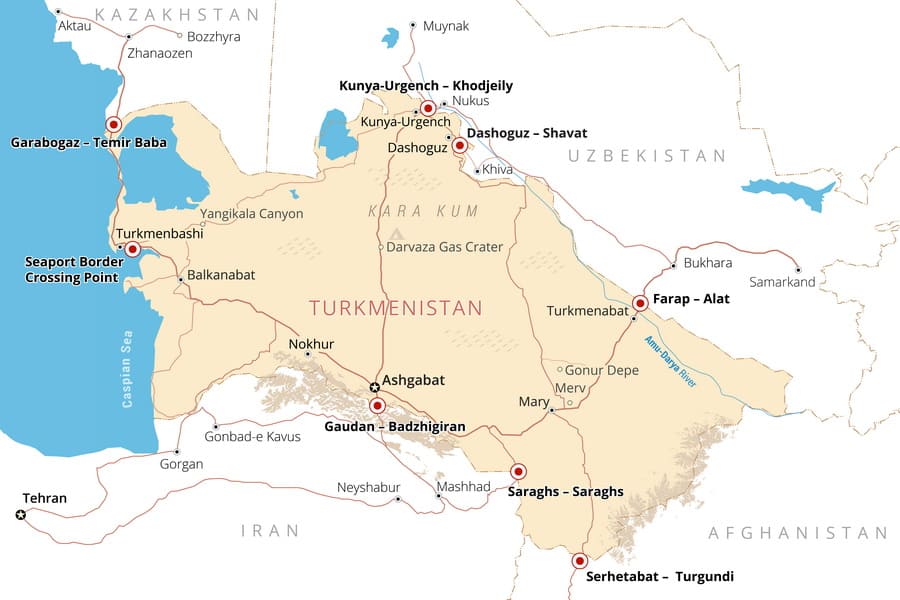
Kunya-Urgench is located approximately 480 km north of Turkmenistan’s capital and just 30 km from the border with Uzbekistan. Thanks to its advantageous location, a visit to the ancient city can be seamlessly integrated into various Central Asian itineraries.
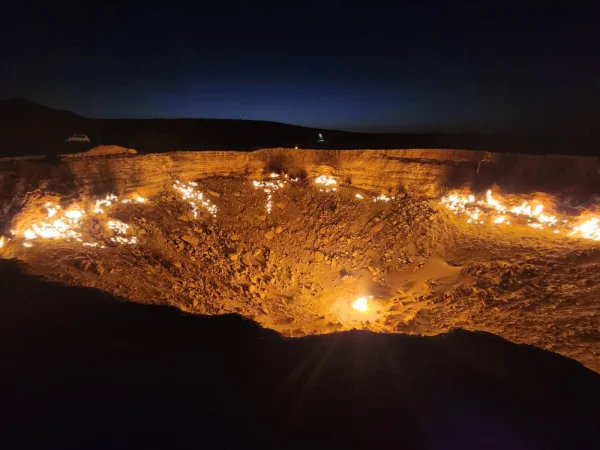
For travelers arriving from Uzbekistan, the most convenient option is the Shavat border crossing (from Khiva) or Dashoguz/Khojeyli (from Nukus). A comprehensive 5-day Turkmenistan transit tour: from Ashgabat to Khiva or Nukus via Merv and Darvaza allows you to experience the country’s premier wonders in a single seamless journey.
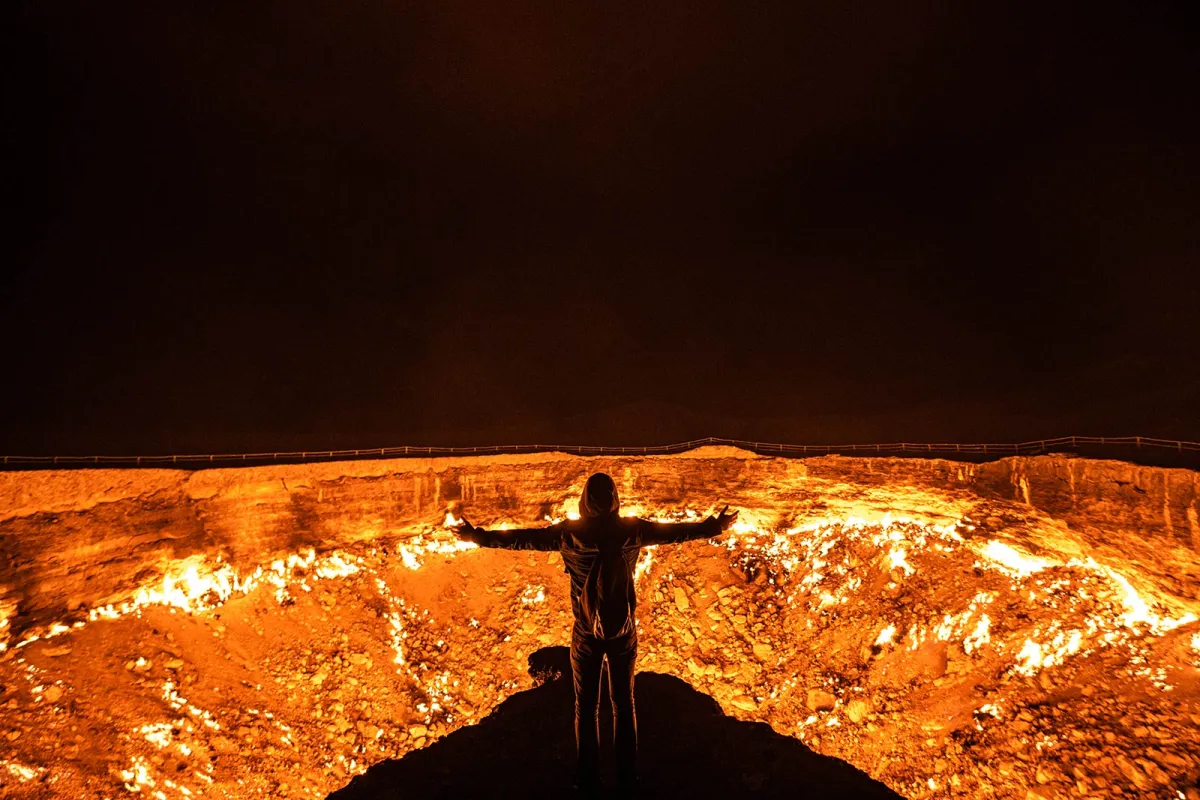
If you begin your Turkmenistan adventure in the south by flying into white-marbled Ashgabat, you can reach Dashoguz via a domestic flight with Turkmenistan Airlines (flight duration is around 50 minutes) or embark on an exciting 4x4 safari across the Karakum Desert with a stop at the famous gas crater. Well-crafted itineraries such as the 4-day Turkmenistan transit tour from Bukhara to Khiva or Nukus via Merv, overnight train, and Darvaza offer a balanced combination of history, comfort, and exotic allure.
💡 Travel Tips for a Perfect Visit
- 📅 Best Time to Visit: The most comfortable seasons to explore Kunya-Urgench are spring (mid-March to late May) and autumn (September to early November). Temperatures during these months range between +20°C and +28°C. In summer, temperatures often exceed +40°C, making daytime tours across open terrain challenging.
- ⏱️ Time Needed: Exploring the main monuments of the historical and cultural reserve takes 3 to 5 hours. We recommend starting your tour in the morning or a few hours before sunset, when the gentle light highlights the texture of ancient brickwork and the turquoise hues of the domes.
- 👗 Dress Code and Etiquette: As several mausoleums (notably the Najm al-Din al-Kubra complex) are active Sufi pilgrimage shrines, visitors should dress modestly: covering shoulders and knees. Women are advised to carry a scarf to cover their heads when entering shrines.
- 🎒 What to Bring: Comfortable walking shoes for dirt trails and sandy paths, a sun hat, sunscreen, plenty of drinking water, and local cash (Turkmen manat) for souvenirs and minor expenses.
- 📷 Photography: Taking photos of monument exteriors is freely permitted; however, when inside active shrines, please be respectful of local worshippers.
🗺️ Kunya-Urgench Among the Treasures of Turkmenistan
A visit to Kunya-Urgench offers a unique perspective on the region’s multilayered history. Whether your journey also encompasses dramatic natural landmarks such as the Yangykala Canyons with their pink cliffs, or a classic 4-day Turkmenistan tour: Ashgabat, Ancient Merv, and Darvaza Crater, ancient Gurganj serves as the essential thread weaving together nomadic freedom, oasis civilization, and the scientific brilliance of the medieval East.